
Last updated October 17, 2026
 Wrought iron
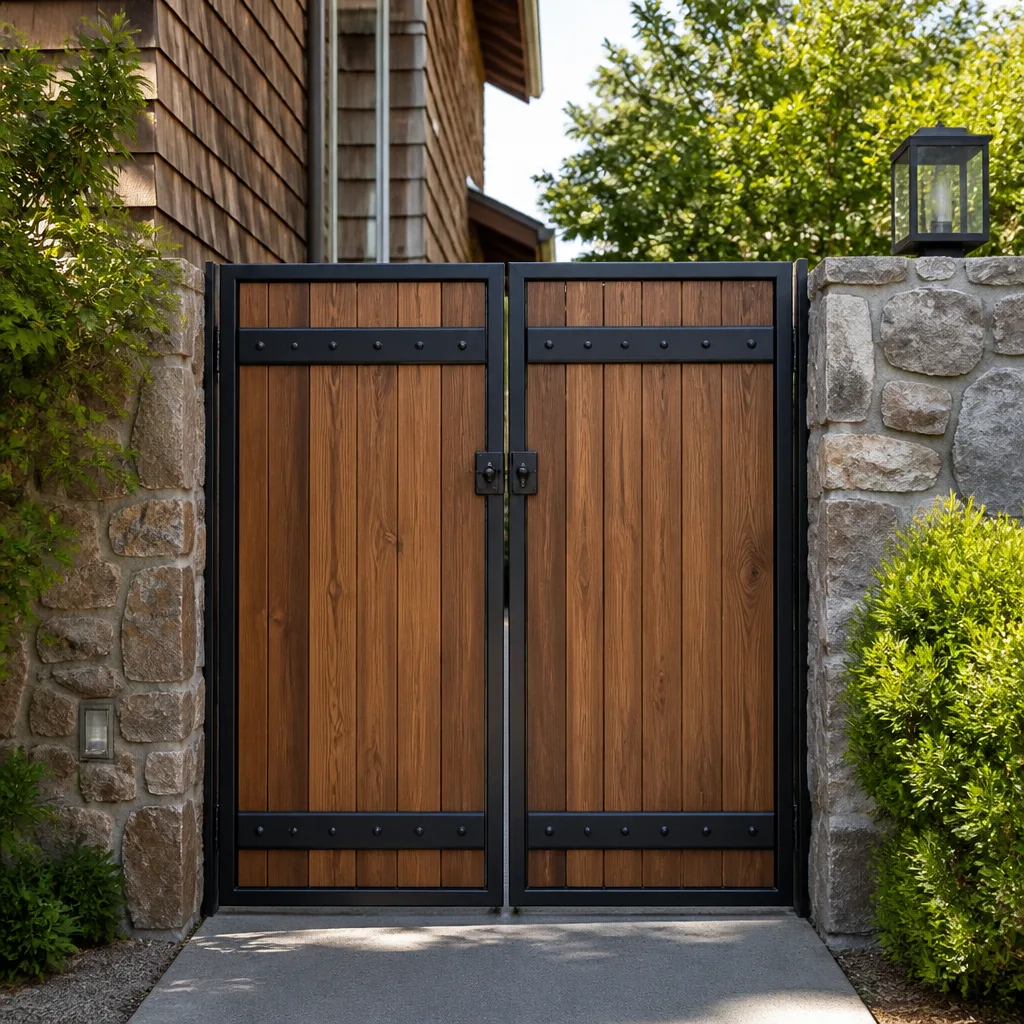 Wood & steel frame
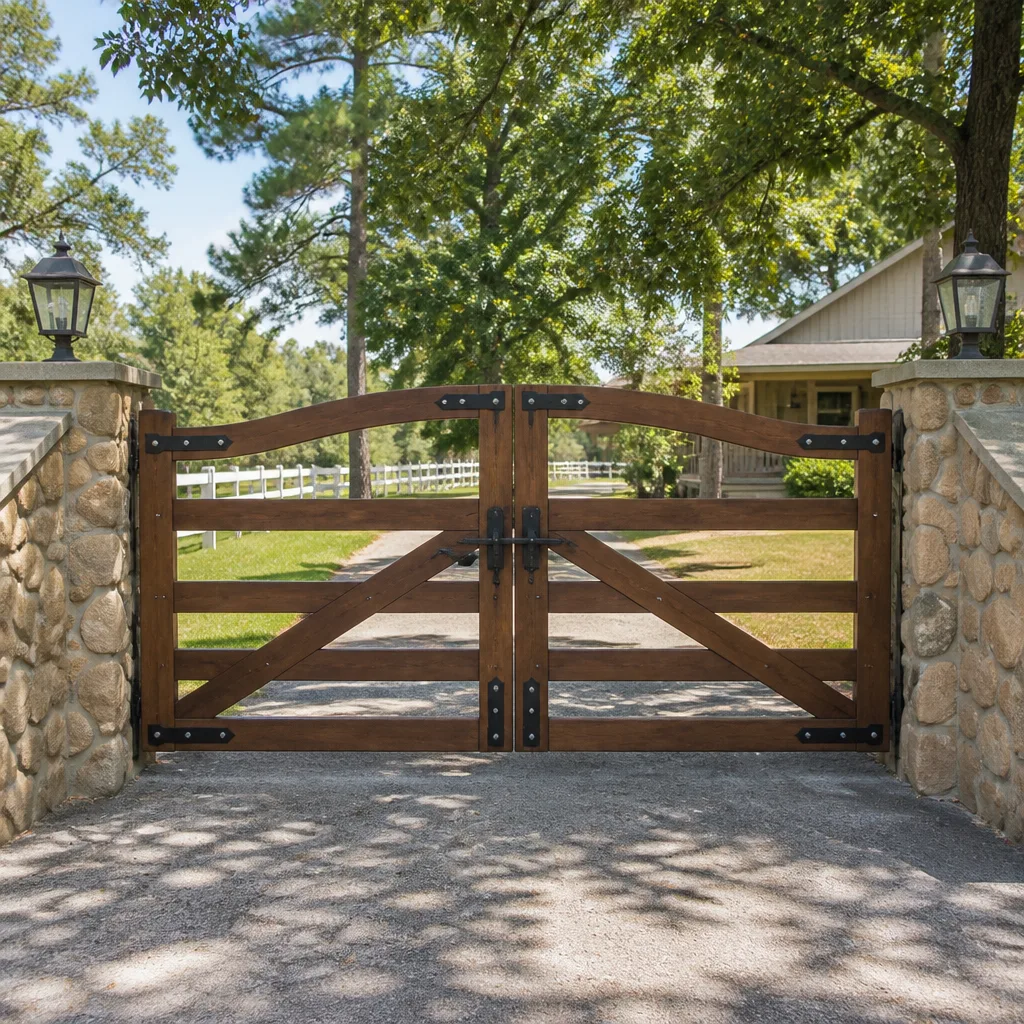 Farm & ranch
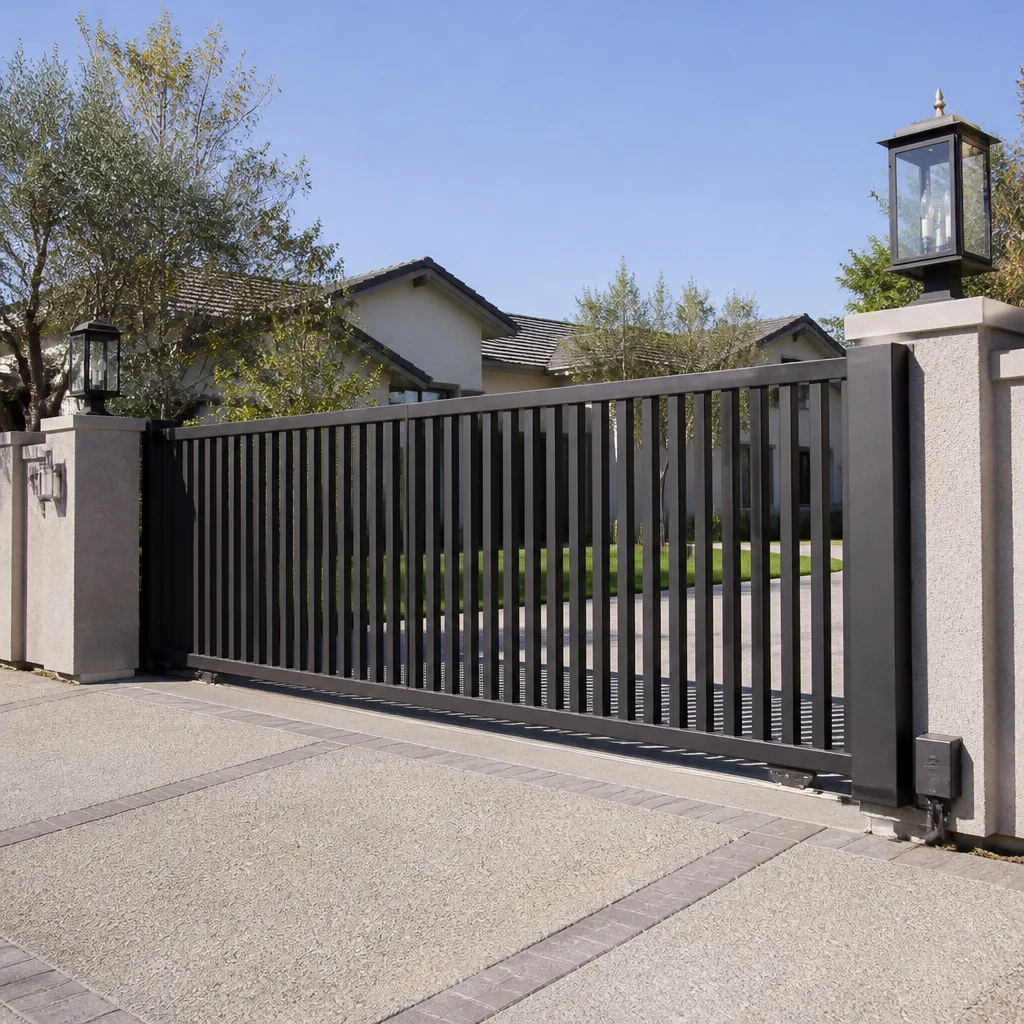 Sliding driveway gates
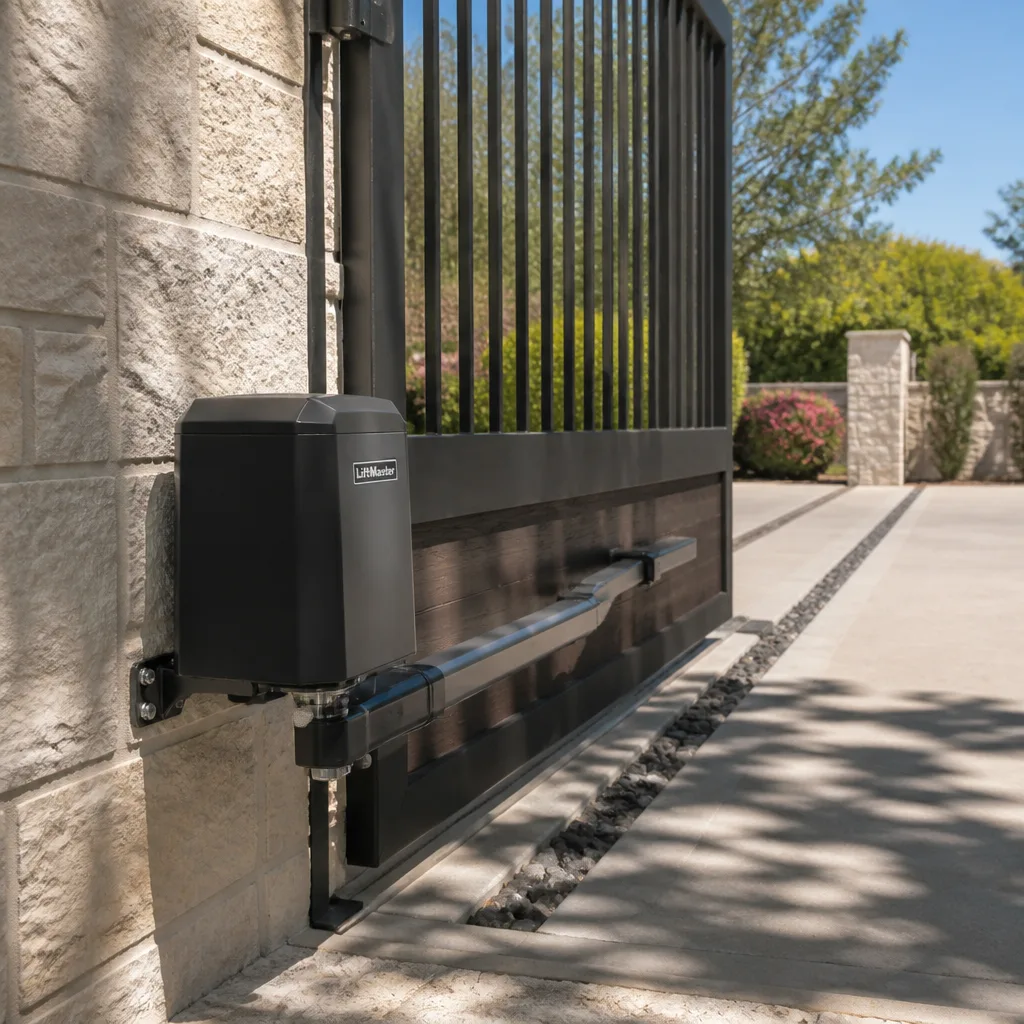 LiftMaster operators
Free on-site gate assessment - hinges, posts, and your LiftMaster or Nice gate operator checked before anything is quoted
The assessment is free and the quote is the invoice.
Get your free estimateDIY vs Professional Gate Repair: The Tampa Homeowner’s Decision Guide
Every gate comes down to two parts: the latch that holds it and the post that carries it. That’s the job we focus on at Latch and Post Gate Repair Tampa. Here’s the counterintuitive truth most Tampa homeowners discover too late: the DIY-versus-professional decision isn’t about how handy you are. It’s about which repairs fail loudly when you get them wrong, and which ones fail quietly, compounding damage for months until a $40 fix becomes a $1,400 rebuild. This guide sorts Tampa gate repairs into three tiers: safely DIY, DIY with documented risk, and professionally required. You’ll learn where your specific repair falls, what it actually costs in time and money, and when calling us first is the cheaper option.
Styles & brands we work with
Quick Answer
DIY gate repair in Tampa makes sense for latch adjustments, strike plate realignment, and manual bolt tightening. Professional repair is required for limit switch programming, control board replacement, post resetting in concrete, and most electric gate operator work. The dividing line isn’t skill: it’s whether the repair’s failure mode is obvious and contained, or silent and compounding. When rework risk is factored in, professional repair typically becomes cheaper than DIY around the $150 to $200 mark of parts and tool costs.
Table of Contents
- The Three Tiers of Gate Repair: What’s Actually Safe to Touch
- Why Tampa Gates Fail Differently Than Gates Anywhere Else
- Tier One: Latch and Strike Plate Work You Can Do Saturday Morning
- Tier Two: Hinges, Chains, and Sensors Where Mistakes Get Expensive
- Tier Three: Operator Programming, Control Boards, and Concrete Work
- The Honest Cost Comparison: DIY vs Professional in Tampa Dollars
- Florida Liability: When DIY Electric Gate Work Touches Insurance and Resale
- Why the Shoe Covers and Drop Cloths Matter More Than You’d Think
- Common Mistakes to Avoid
- When to Call a Professional
- Frequently Asked Questions
- The Bottom Line
The Three Tiers of Gate Repair: What’s Actually Safe to Touch
We’ve repaired thousands of gates across Tampa, and almost every repair falls into one of three categories. The category determines whether you should reach for a wrench or a phone. Here’s the framework we use when a friend asks us whether they can tackle something themselves.
Tier One: Safely DIY. These repairs have obvious, immediate failure modes. If you get it wrong, the gate still works, just poorly. You’ll notice the problem the same day and can readjust. Latch realignment, strike plate shimming, and bolt tightening live here. A misaligned latch doesn’t rust a hinge or bend a post. It just annoys you until you fix it properly.
Tier Two: DIY with documented risk. These repairs can be done by a competent homeowner, but the failure mode is quieter and the secondary damage is real. Hinge replacement, chain tensioning, and basic photo sensor alignment fall into this bucket. A hinge installed slightly out of plane wears unevenly. A chain tensioned too tight stresses the operator motor. These problems take weeks or months to surface, by which point the repair is no longer simple.
Tier Three: Professionally required. These repairs involve either stored kinetic energy, embedded concrete, or low-voltage control logic where a mistake creates a problem you can’t see until something expensive breaks. Limit switch programming on a LiftMaster LA400. Control board replacement on a Viking operator. Resetting a post in a Tampa slab. We’ll cover each tier in detail below, including what tools you actually need and where the knowledge gap usually lives. If you’re dealing with a gate that won’t open at all, start with our Gate Repair in Tampa page for an overview of what we fix.
Why Tampa Gates Fail Differently Than Gates Anywhere Else
Tampa’s climate is uniquely hard on gate hardware. It’s not the heat, though that matters. It’s the combination of salt air, afternoon thunderstorms, and sandy soil that works against every fastener, hinge, and post on your property.
Salt air from Tampa Bay accelerates corrosion on zinc-plated hardware at roughly twice the rate of inland Florida. A hinge that lasts 15 years in Lakeland might fail in 8 years in Westchase or Palma Ceia. We see this regularly: gate hardware in South Tampa neighborhoods near the water corrodes faster than identical hardware in New Tampa or Wesley Chapel.
The afternoon thunderstorm cycle creates another problem: repeated wetting and drying of gate posts set in sandy soil. Tampa’s soil doesn’t grip concrete the way clay-heavy soil does further north. A post that’s been in the ground for a decade can start leaning after a few seasons of heavy rain followed by dry heat, because the soil around the footing compacts and shifts. This is why post resetting is such a common repair call for us in Tampa specifically.
Then there’s the operator side. Electric gate operators in Tampa contend with humidity that gets inside control boards and corrodes relay contacts. A control board that would last 12 years in Arizona might develop intermittent faults in 6 years here. The brands we service most often in Tampa are Mighty Mule, LiftMaster, and Viking, and each has a distinct failure profile we’ve learned over the years. A Viking operator’s limit switches fail differently than a LiftMaster’s. A Mighty Mule’s control board is more forgiving of voltage fluctuations than a BFT’s. This matters when you’re deciding whether to attempt a repair yourself, because the diagnostic step is where most DIY attempts go sideways.
Tier One: Latch and Strike Plate Work You Can Do Saturday Morning
If your gate sags, sticks, or won’t stay closed, the problem is usually the latch or the strike plate. These are the repairs we genuinely encourage homeowners to try themselves. Here’s why: the failure mode is loud and immediate. You’ll know in five minutes whether you fixed it.
A typical Tampa latch adjustment costs about $15 to $40 in parts if you need a new latch body, and about 90 minutes of your time if you’re doing it for the first time. The tools are basic: a screwdriver, an adjustable wrench, and sometimes a drill with a small bit. You don’t need a torque wrench or a multimeter. You don’t need to understand control board logic or operator force profiles.
Here’s a step-by-step that works for most residential gate latches:
- Check the gate’s resting position. Close the gate and look at where the latch bolt meets the strike plate. If it’s off by more than a quarter inch, the latch will bind or fail to engage.
- Adjust the strike plate, not the latch. The strike plate is the metal bracket mounted on the post. Loosen its screws, shift it a quarter inch in the direction needed, and retighten. This is easier than moving the latch body and usually solves the problem.
- Tighten every visible fastener. Tampa’s humidity expands and contracts wood and metal at different rates, which loosens screws over time. A five-minute bolt-tightening pass around the hinges and latch often fixes a sagging gate without any further work.
- Lubricate the latch mechanism. Use a dry lubricant on the internal latch parts. We choose pet-safe lubricants where there’s a choice, and that’s a good rule for any Tampa home with dogs or cats that might nose around the gate area.
If the gate still won’t latch after these four steps, the problem is likely the hinges or the post itself, not the latch. That moves you into Tier Two territory. Our Latch and Post Gate Repair Tampa home page covers what we find most often when a latch adjustment doesn’t resolve the problem.
Tier Two: Hinges, Chains, and Sensors Where Mistakes Get Expensive
This is the tier where we see the most expensive DIY mistakes happen. Not because homeowners lack skill, but because the failure mode is quiet. A hinge installed one degree out of plane looks fine on day one. Six months later, the gate has sagged enough to drag on the driveway, and now you’re also replacing the wheel guide and possibly bending the frame back into alignment.
Hinge replacement. This is physically straightforward but geometrically unforgiving. The two hinges must sit on exactly the same vertical axis, or the gate’s weight distribution shifts and the hinge pins wear unevenly. Tampa’s sandy soil means the post may have shifted slightly since original installation, so you’re not just swapping hardware; you’re compensating for years of subtle ground movement. A typical hinge replacement on a Tampa residential gate runs between $180 and $320 for the pair installed by a professional. The DIY version costs $40 to $90 in hardware, but if the alignment is off, the rework includes new hinges, potentially a repositioned gate, and sometimes repair to damaged gate frame sections. The math changes fast.
Chain tension. On chain-driven operators, tension that’s too tight puts constant load on the motor and sprocket bearings, shortening their life. Tension that’s too loose causes the chain to slap and skip, which wears teeth and can cause the gate to stop midway. The correct tension is specific: you should be able to depress the chain about half an inch at the midpoint of its free span. We’ve replaced motors in Tampa that died early because a well-meaning homeowner tightened a chain “for safety” and unknowingly ran the operator under constant strain for a year.
Photo sensor alignment. Basic sensor cleaning and alignment is approachable, but Tampa’s afternoon sun can produce false obstruction readings even on correctly aligned sensors. The sensors need to be aligned within a few degrees and shielded from direct sunlight. If you’re getting intermittent reversing behavior, clean the lenses first with a dry cloth, then check that the sensors are at the same height and facing each other squarely. If the problem persists, it’s likely a wiring or control board issue, which belongs in Tier Three.
For more complex mechanical failures, or if your gate has stopped responding altogether, our Gate Repair in Tampa page walks through what a professional diagnostic visit covers.
Tier Three: Operator Programming, Control Boards, and Concrete Work
This is the tier where DIY attempts create problems that are more expensive than the original repair would have been. The common thread is invisible failure: you can’t see the damage you’re causing until something fails catastrophically, often weeks or months later.
Limit switch programming. Modern operators like the LiftMaster LA400 and Viking units use limit switches to tell the control board where the gate’s open and closed positions are. These switches are adjusted not just for position but for the operator’s torque-force relationship. Here’s the scenario we opened with: adjusting a swing arm operator’s limit switches without understanding that relationship can cause the arm to shear a mounting bracket the next time the gate hits an obstruction. That bracket replacement runs around $400 in Tampa, plus the service call, making the DIY attempt more expensive than the original professional visit would have been. The limit switches have to be set so the operator stops applying force at the right moment in the arm’s arc. Too aggressive and the arm tears its mount; too conservative and the gate won’t fully close.
Control board replacement. A control board swap on a Mighty Mule or LiftMaster operator isn’t just unplugging the old board and plugging in the new one. The replacement board must be configured for your specific operator model, gate weight, and safety accessory setup. Getting this wrong means the operator may work for a few days, then behave erratically, or fail to reverse when it should, or not recognize the photo sensors and battery backup. Tampa’s humidity also means connections need to be sealed properly, or corrosion will undo your work within a season.
Post resetting in concrete. A leaning gate post in Tampa cannot be fixed by shoving dirt around the base or driving a wedge. The post needs to be excavated, the old footing removed, and a new footing poured at the correct depth for our soil conditions. This is heavy, precise work. A post set even two degrees off vertical translates to significant gate misalignment at the latch end. And if the post carries an operator arm or a slide track, the tolerance is tighter still. Wet concrete takes days to cure to working strength in Tampa’s humidity, so this is a multi-day project, not a weekend task.
For electric gate work specifically, our Electric Gate Repair in Tampa page explains what’s involved in diagnosing and repairing operator problems.
The Honest Cost Comparison: DIY vs Professional in Tampa Dollars
Let’s put actual numbers on the DIY-versus-professional question for the three most common Tampa gate repairs. These figures reflect what we’ve seen in the Tampa market, where labor rates and parts availability differ from other Florida cities.
Latch adjustment: DIY cost is $0 to $40 in parts and about 90 minutes. Professional cost is typically $95 to $150. Verdict: DIY is reasonable if the problem is truly a latch alignment issue. You’ll save around $100, and the worst-case failure is mild inconvenience.
Hinge replacement: DIY cost is $40 to $90 in hardware, plus 3 to 4 hours, plus the cost of any specialty tools you don’t own. Professional cost is $180 to $320. Verdict: this is the tipping point. If you already own the tools and understand the alignment geometry, DIY can work. If you’re buying tools and learning as you go, the professional option is often cheaper when you factor in rework risk. A misaligned hinge job that needs to be redone professionally costs more than hiring the professional in the first place.
Operator limit switch adjustment: DIY cost is $0 in parts but requires a multimeter, the service manual, and an understanding of torque-force relationships. Professional cost is $130 to $220 depending on the operator model. Verdict: professional is the financially rational choice. The bracket shear scenario described earlier costs $400 in parts plus a service call, which is more than twice the cost of the original professional limit switch adjustment.
Full electric gate repair: This is our Electric Gate Repair in Tampa specialty, and pricing varies by the specific failure. What’s consistent: we provide a written price before any work starts, every single visit. You’ll know the exact number before we touch anything, and the price is quoted and agreed before any work begins.
Here’s the honest math on when professional repair becomes cheaper than DIY. Add up your parts, tools, and a realistic estimate of your time at even $25 an hour. Then estimate the cost of redoing the job if it fails. If that total exceeds the professional quote, the professional is the cheaper option, not just the safer one.
Florida Liability: When DIY Electric Gate Work Touches Insurance and Resale
This is the section most DIY gate repair guides skip entirely, and it’s the one that matters most for Tampa homeowners in the long run. Florida’s insurance and real estate markets make unpermitted electrical work a liability that extends far beyond the gate itself.
Electric gate operators run on low-voltage DC power, which tempts homeowners into thinking the work is inconsequential. The wiring itself may be low-voltage, but it connects to a control board that manages a moving object weighing hundreds of pounds. That control board also interfaces with your home’s electrical system through the operator’s transformer. When a homeowner modifies or repairs any part of this system without the proper documentation, they’ve created an unpermitted electrical alteration.
Here’s what that means in practice. If a gate-related electrical fault causes property damage or injury, your homeowner’s insurance carrier may investigate whether any unpermitted electrical work contributed to the incident. They’re not being unreasonable; they’re looking for a coverage determination. An unpermitted alteration can complicate or even void a claim, especially if the work was performed on a safety-critical component like a reversing mechanism or photo sensor circuit.
For home resale, the issue surfaces during inspection. Florida home inspectors are increasingly thorough about gate operators, particularly for homes in Tampa neighborhoods like Carrollwood, Westchase, and New Tampa where electric gates are common. An inspector who finds non-factory wiring or evidence of amateur modifications to the operator will flag it. That flag becomes a negotiating point for the buyer and a repair cost for the seller. The repair cost at that point is often higher than the original professional visit would have been, because now the work must be brought to code, not just made functional.
Cody Beckman, our owner, has been working on Tampa gates since 2009, and he’s watched this scenario play out many times. The pattern is consistent: a homeowner saves $150 on a DIY control board replacement, then spends $600 to $900 two years later having the work corrected during a home sale. If you’re doing electric gate work yourself, you’re not just risking the gate. You’re creating a documentation gap that follows the property.
Why the Shoe Covers and Drop Cloths Matter More Than You’d Think
Here’s a question worth asking: why should a gate repair company care about what happens inside your home when the work is happening outside at the gate line? The answer has to do with how gate repairs interact with the rest of your property, especially in Tampa.
Gate repair technicians frequently need to access the operator’s power source, which often lives in the garage or on an exterior wall adjacent to finished space. That means walking through the house or across the driveway and into the garage. If the technician’s boots are carrying Tampa grit from the driveway, that grit ends up on your floors. If they’re setting tools down while working on a control panel, those tools are resting on a surface that matters to you.
We lay drop cloths on the floor and put on shoe covers before we step inside. Your floors stay clean. We choose pet-safe lubricants where there’s a choice, and we can schedule around nap time if quiet matters. If your gate is near pool equipment, turf, or a finished driveway, the cleanup routine matters even more: metal shavings from a hinge replacement can damage turf, and oil from a chain can stain a paver driveway permanently.
This is the Cedarwell C.A.R.E. values in practice: Clean up like it’s our own home; Ask before we move or touch anything; Respect the family’s time and quiet hours; Explain the price before the work. These aren’t add-ons or upsells. They’re the routine on every visit, documented with a cleanup photo before the technician leaves. A written price is delivered before any work begins, every single visit, with no pressure to accept.
The broader point: a professional’s accountability extends to the environment around the gate, not just the gate itself. That accountability is part of what you’re paying for, and it’s part of why the professional option often delivers better value even on repairs where the mechanical work seems approachable. If you’re considering a new gate or a full replacement, our Gate Installation in Tampa page covers what a full installation includes.
Common Mistakes to Avoid
- Skipping the diagnostic step. Most DIY gate repairs fail at the beginning, not the end. The homeowner identifies the symptom (gate won’t close) and guesses at the cause (misaligned latch), when the real cause is a worn hinge or a shifted post. Spend the time to diagnose properly before buying parts.
- Tightening a chain “for safety” without understanding tension specs. We covered this earlier, but it bears repeating because it’s the most common cause of premature operator motor failure we see in Tampa. Too tight is worse than too loose.
- Using the wrong lubricant. Grease attracts Tampa’s sandy grit and turns into a grinding paste on hinges and chains. Use a dry lubricant for latches and hinges, and a chain-specific lubricant for chains. Avoid WD-40 for anything besides freeing stuck parts; it’s not a lubricant.
- Ignoring the gate’s weight when adjusting an operator. An operator’s force settings must match the gate’s actual weight and condition. A gate that’s gained weight through water absorption or modifications needs different settings than a brand-new gate. Guessing here damages the operator.
- Drilling into a post to mount hardware without checking what’s inside. Some Tampa gate posts carry wiring for lights, keypads, or the operator itself. Drilling blind can sever a wire and turn a $30 hinge fix into an electrical troubleshooting job.
- Failing to document the original wiring before disconnecting anything. If you’re replacing a photo sensor or a keypad, photograph the wiring connections before you disconnect them. Control board terminals are not always labeled clearly, and reassembling from memory is where many DIY repairs go wrong.
- Treating a gate that reverses unexpectedly as a nuisance rather than a symptom. An operator that reverses without obstruction is telling you something: misaligned sensors, a failing control board, or wiring damage. Ignoring it because the gate “mostly works” leads to a harder failure later.
When to Call a Professional
Call a professional when the repair involves the operator’s control board, limit switches, or any component that governs how the gate interacts with obstructions. A gate that doesn’t reverse when it should is a safety problem, not a convenience problem, especially in a Tampa home with kids and pets. Call when the post itself is leaning, when concrete work is required, or when you’ve attempted a Tier Two repair and the problem persists. And call when you simply don’t have the diagnostic tools or the time. Latch and Post Gate Repair Tampa offers free estimates in Tampa, and every visit includes a written price before any work starts. Call (850) 789-6299 and a live person will answer, any hour of the day or night.
Frequently Asked Questions
Gate repair in Tampa typically costs between $95 and $320 depending on the specific repair. Latch adjustments run $95 to $150, hinge replacements $180 to $320, and electric operator repairs like limit switch adjustments run $130 to $220. You’ll see the exact number in writing before we touch anything, and the price is quoted and agreed before any work begins. For a realistic estimate on your specific repair, call (850) 789-6299 for a free estimate.
You can clean and align photo sensors, tighten visible wiring connections, and replace a keypad battery. You should not attempt limit switch programming, control board replacement, or any work involving the operator’s force settings. These repairs require an understanding of the torque-force relationship and the safety circuit logic, and getting them wrong can cause secondary damage that’s more expensive than the original repair.
We’re factory-trained on the brands Tampa families actually own, including LiftMaster, FAAC, BFT, Linear, Viking, Ghost Controls, DoorKing, Elite, and Mighty Mule. Whether your operator is a Viking swing arm or a Ghost Controls slide operator, the right fix happens on the first visit.
Most gate repairs don’t require a permit, but any electrical work that alters the operator’s wiring or control system can create an unpermitted alteration that affects homeowner’s insurance coverage or a future home sale in Florida. If you’re unsure whether your repair touches the electrical side, call us and we’ll tell you straight. We don’t upsell unnecessary permits, but we also won’t let you create a documentation gap that bites you at closing.
Most latch adjustments and operator diagnostic visits are completed in a single visit of one to two hours. Post resetting and some control board replacements require more time because of concrete curing and configuration testing. We’ll tell you the timeline before we start, and it’s part of the written price you receive up front.
With Latch and Post Gate Repair, yes. Every visit includes shoe covers and drop cloths where the technician enters your home, plus a photo of the clean-up before the technician leaves. We choose pet-safe lubricants where there’s a choice, and we can schedule around nap time if quiet matters in your household. It’s the Cedarwell C.A.R.E. routine on every job, not an add-on.
The Bottom Line
The DIY-versus-professional gate repair decision in Tampa comes down to failure modes, not skill. Latch work? Grab a screwdriver and go. Hinge work? Proceed only if you understand alignment geometry and own the tools. Operator programming, control boards, and concrete? The financial risk of getting it wrong exceeds the professional repair cost, sometimes by a factor of two or three. Tampa’s salt air, sandy soil, and humidity add a layer of complexity that generic DIY guides rarely address. And when you do hire a professional in Tampa, the care routine matters: a written price before work starts, shoe covers and drop cloths on every visit, and a technician who respects your floors, your pets, and your quiet hours. Call (850) 789-6299 for a free estimate, and a live person will answer, any time of day or night.
Written by Cody Beckman, Owner at Latch and Post Gate Repair Tampa, serving Tampa since 2009.
See the difference
 Before
 After
After Before
 After
After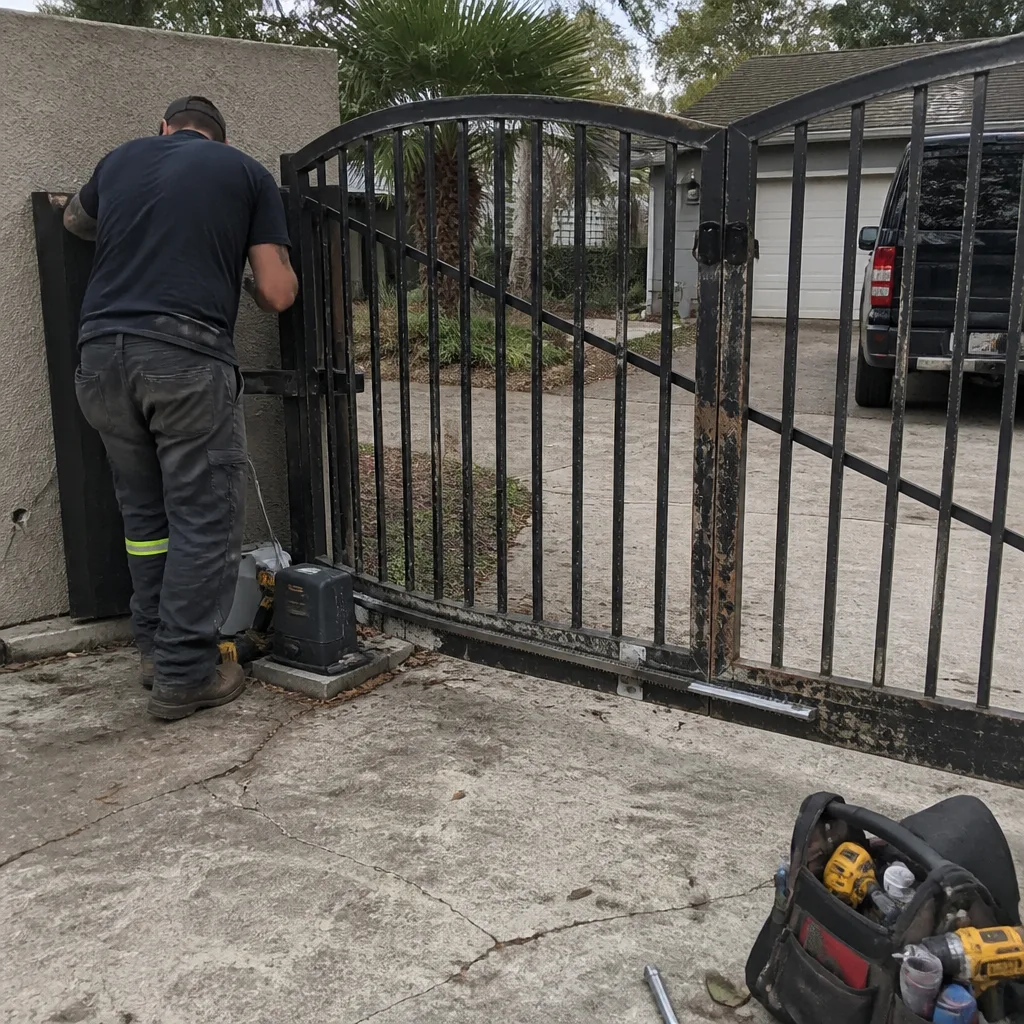 Before
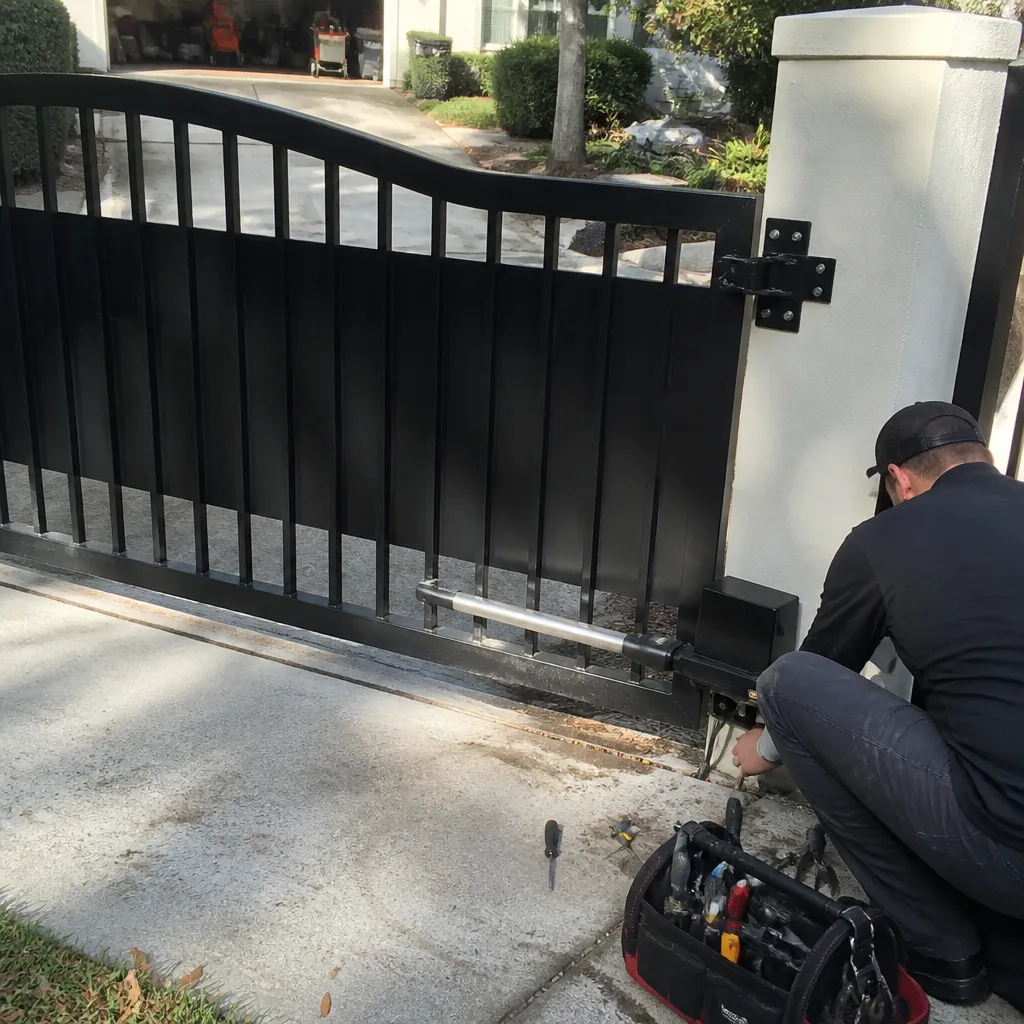 After
After