
Last updated October 17, 2026
 Wrought iron
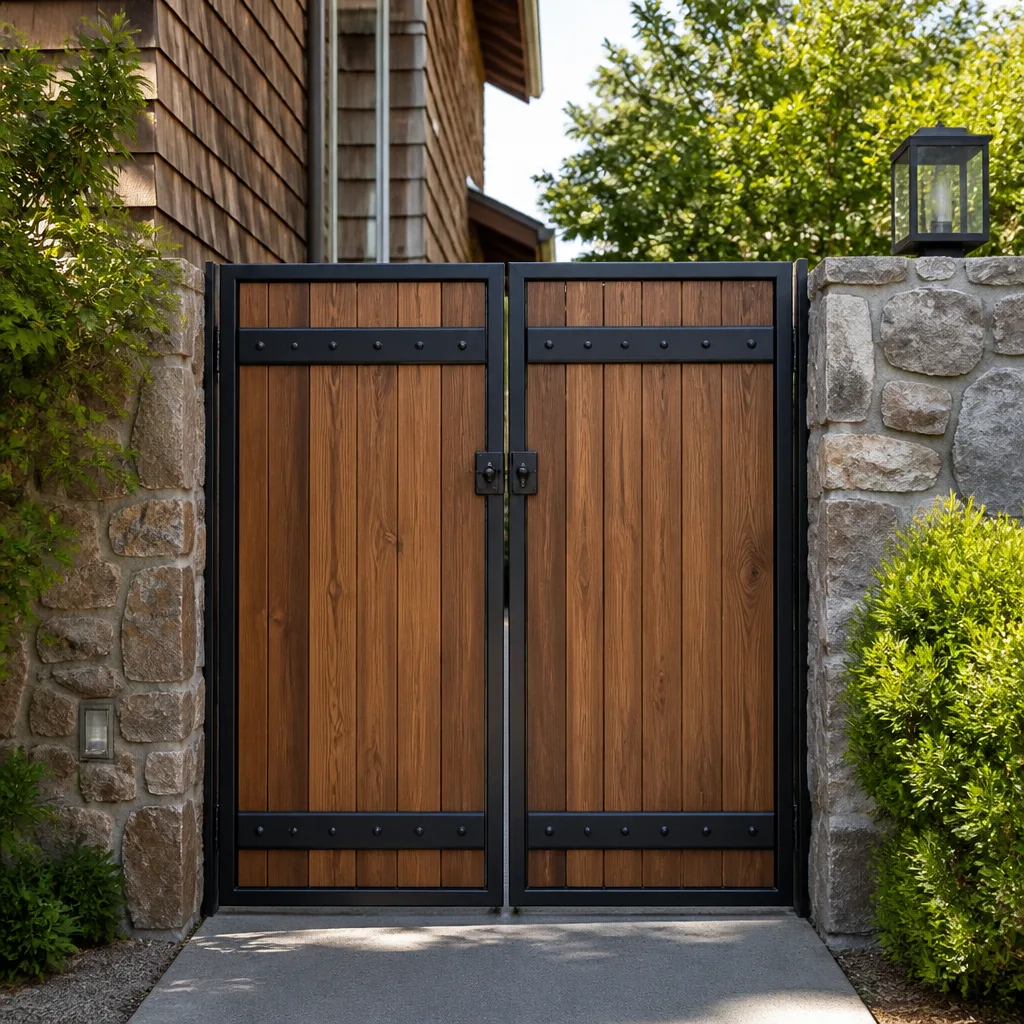 Wood & steel frame
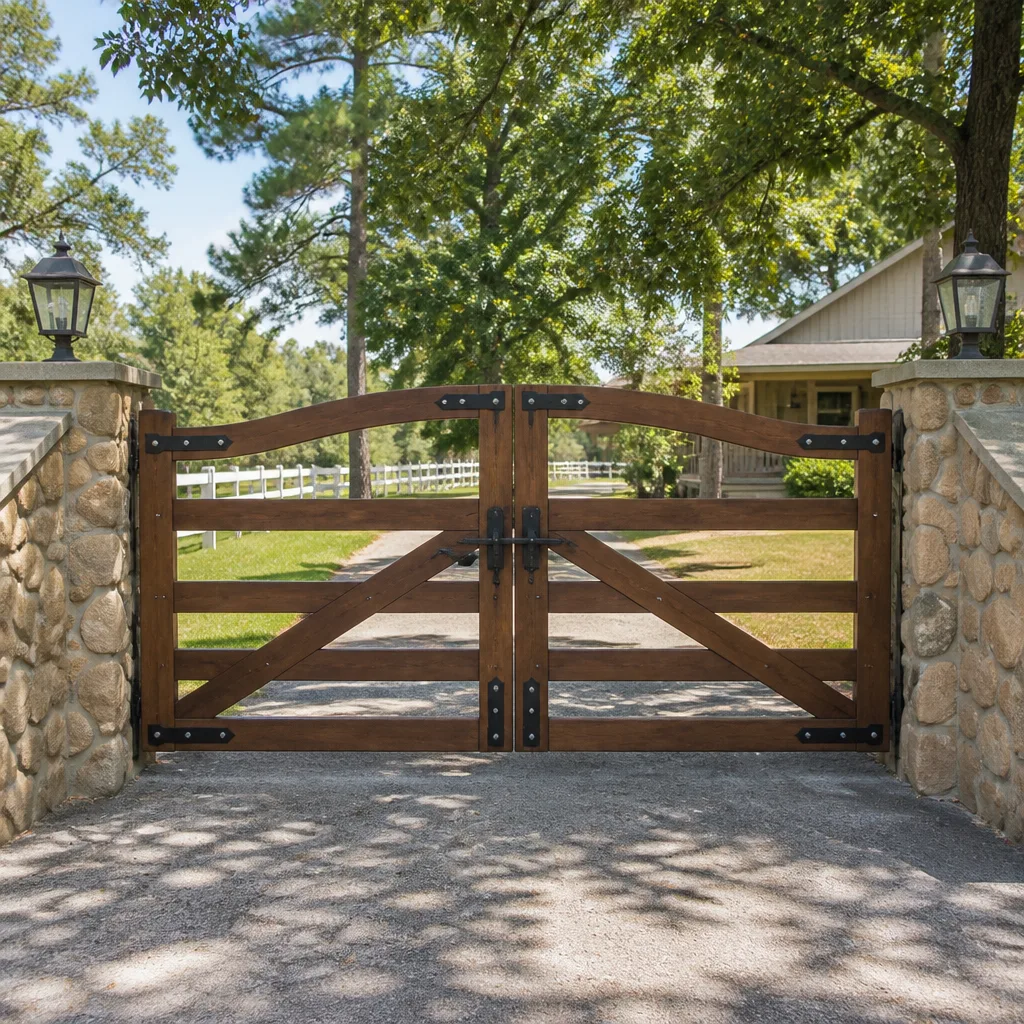 Farm & ranch
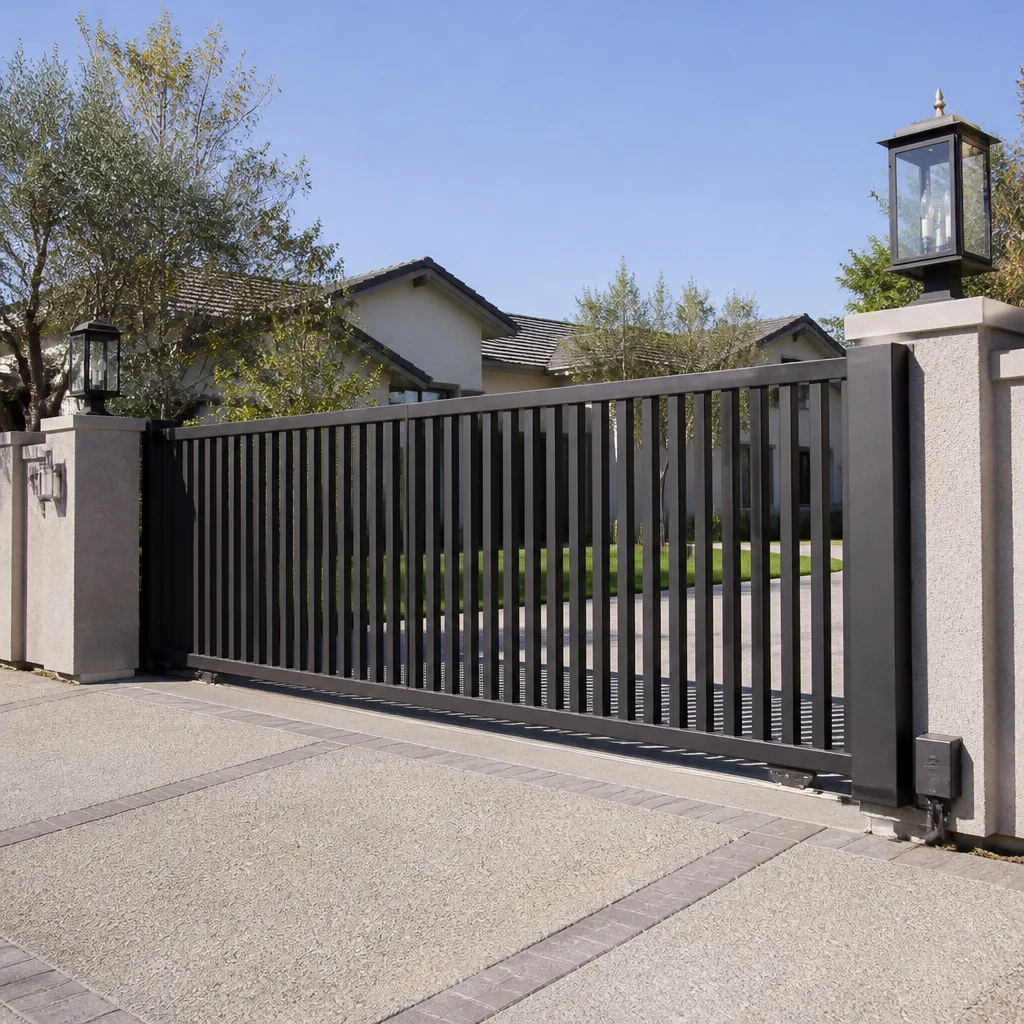 Sliding driveway gates
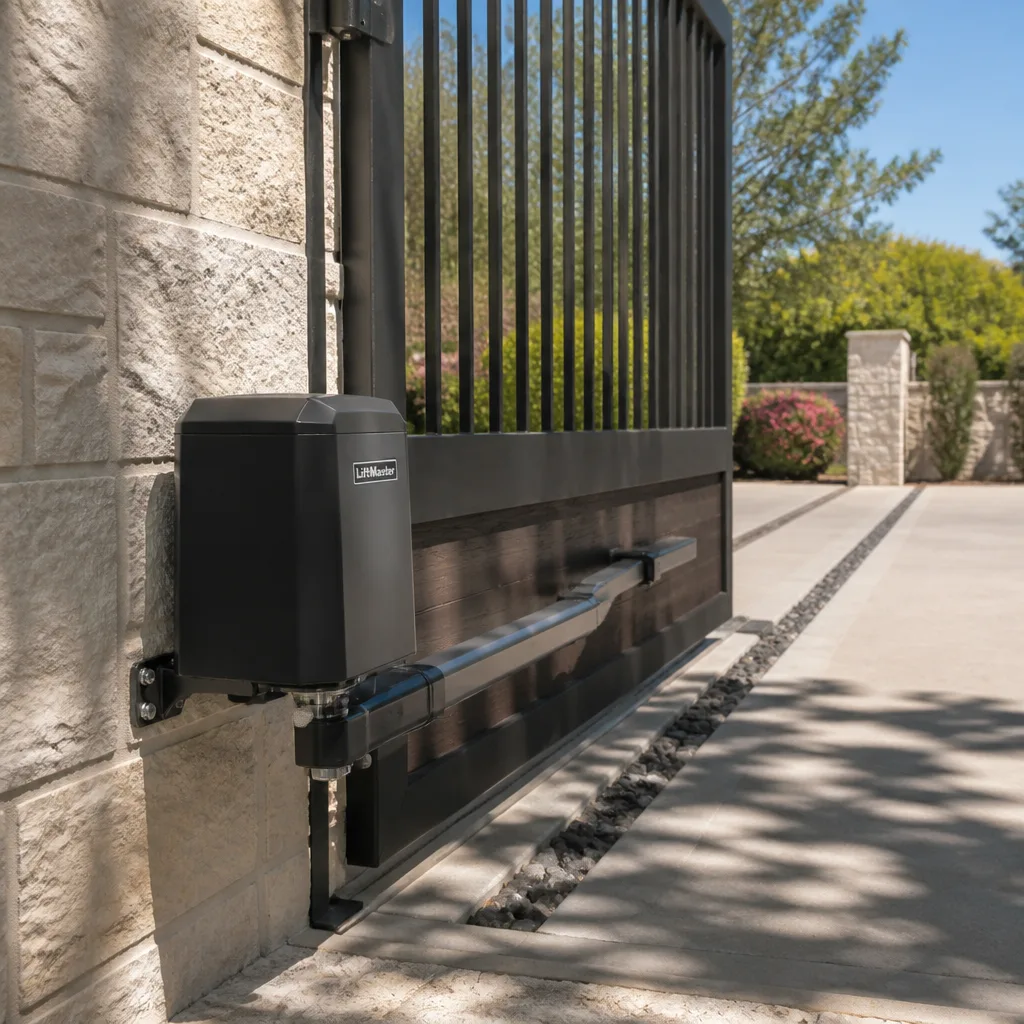 LiftMaster operators
Free on-site gate assessment - hinges, posts, and your LiftMaster or Nice gate operator checked before anything is quoted
The assessment is free and the quote is the invoice.
Get your free estimateGate Repair Cost Breakdown: The Tampa Homeowner’s Reference for 2026
The most expensive gate repair mistake Tampa homeowners make isn’t hiring the wrong contractor. It’s approving a motor replacement when the actual problem is a $45 limit switch. That misdiagnosis happens more often than you’d think, usually when a technician gets paid on commission rather than flat-rate labor. This guide unpacks every cost variable in the Tampa Gate Repair services market so you can read a quote the way a trained eye does: line by line, knowing exactly what’s fair, what’s inflated, and what’s missing.
Styles & brands we work with
Quick Answer
Gate repair in Tampa typically costs between $75 and $3,200, depending on what’s actually broken. A standard latch replacement runs $75 to $120, a spring swap $120 to $220, and a full electric operator replacement can climb past $3,000 for brands like DoorKing or Viking when new wiring and safety edges are involved. You’ll find a complete tiered breakdown below, along with the four variables that legitimately move the price and the pricing structure that protects you from surprises.
Table of Contents
- The 2026 Tiered Cost Reference for 12 Common Tampa Gate Repairs
- The Four Variables That Legitimately Move the Price
- Flat-Rate vs. Time-and-Materials: Who Carries the Risk
- OEM vs. Aftermarket Parts: When Each One Makes Sense
- What a 365-Day Warranty Is Actually Worth in Dollars
- Permits and Tampa Code: What Adds Cost and What Doesn’t
- How a Thorough Gate Repair Visit Should Go, Step by Step
- Common Mistakes to Avoid
- When to Call a Professional
- Frequently Asked Questions
- The Bottom Line
The 2026 Tiered Cost Reference for 12 Common Tampa Gate Repairs
Here is what we see in Tampa day to day. These numbers reflect the local market in 2026, not national averages. Coastal air, sandy soil, afternoon thunderstorms, and the sheer number of gates in neighborhoods like Davis Islands, Carrollwood, and New Tampa all play a role in what breaks and what it costs to fix.
| Repair Type | Typical Tampa Price Range (2026) | Notes |
|---|---|---|
| Latch replacement | $75 – $120 | Most common residential call. Parts are off-the-shelf for most fences. |
| Hinge replacement (pair) | $90 – $180 | Gate weight and post condition affect labor time. |
| Gate sag adjustment | $110 – $200 | Often includes anti-sag kit or re-welding aluminum frame. |
| Spring replacement | $120 – $220 | Heavy gates may require two springs. Includes tension calibration. |
| Drop rod / cane bolt replacement | $80 – $140 | Simple fix that keeps a double gate from bouncing open. |
| Post reset (concrete re-set) | $250 – $500 | Sandy soil in Tampa shifts posts; sometimes excavating and repouring is the only durable fix. |
| Limit switch replacement | $45 – $90 (part) + $90 – $150 (labor) | The $45 part that prevents a $1,500 motor replacement. |
| Circuit board replacement | $180 – $400 | Brand-dependent. Board availability is the real variable here. |
| Photo eye / safety sensor replacement | $110 – $180 | Required for automatic gates under UL 325 and Tampa code. |
| Electric operator replacement (entry-level, Mighty Mule) | $700 – $1,300 | Includes arm or ram, control board, remote programming. |
| Electric operator replacement (mid-tier, LiftMaster or Linear) | $1,200 – $2,200 | Higher cycle ratings, better surge protection for Tampa lightning season. |
| Complete electric system replacement (DoorKing, Viking, FAAC) | $2,200 – $3,500+ | Commercial-grade operator, new safety edges, loop detectors, possibly new conduit. |
Every one of these numbers should appear in writing before work starts. Not an estimate by email after the fact. A written price you see and approve at the gate, before the first tool comes out. That structure alone tells you plenty about how a company does business. It’s the difference between a repair and a negotiation after the fact.
Most homeowners never see this next part. We lay drop cloths on the garage floor before unboxing a new operator, and we put on shoe covers before stepping inside to reach the control panel. That’s part of our Latch and Post Gate Repair Tampa home routine on every single job. Your floors stay clean. The box, the foam, the zip ties all leave with us.
The Four Variables That Legitimately Move the Price
A $200 quote and a $1,200 quote for what sounds like the same repair are not necessarily a scam. They’re often the result of four real variables. Here’s what they are and how to tell which one is driving your number.
1. Gate material and weight
A steel driveway gate weighs several hundred pounds. A tubular aluminum pool gate weighs maybe 40. That weight drives hinge selection, spring sizing, and the operator horsepower required. A technician who quotes a spring replacement without asking the gate’s material or swinging it through its full arc is guessing. In Tampa, where ornamental steel gates bake in the sun and salt air works on every exposed fastener, material matters more than it does in drier inland markets.
2. Operator brand and parts availability
LiftMaster and Linear parts are stocked locally in Tampa. FAAC and BFT parts often ship from regional distributors. Viking and DoorKing parts, especially for commercial-grade operators, can take two to five days. That parts lead time doesn’t change the part price much, but it changes the labor scheduling and sometimes the emergency service premium. The brand of operator you have is as much a logistics question as a quality question.
3. Access difficulty
Tight side yards, gates set back behind decorative pillars, roots through the conduit, fences that have sagged over the post, ivy that’s grown over the hinge bolts. All of that is labor time. In older Tampa neighborhoods like Seminole Heights, we regularly see 1920s-era post footprints that are no longer square, or brick pillars that make pulling new conduit a two-hour job instead of a 30-minute one. The gate didn’t get more expensive; the access did.
4. Permit requirements
Simple hardware swaps rarely touch Tampa’s permitting requirements. But when a gate moves, when a post gets re-set on a different footprint, or when a new automatic gate system introduces entrapment-protection devices under UL 325, the work may need to follow code as a new installation rather than a repair. That’s not padding. It’s the difference between a repair and a code-compliant installation, and it shows up in the final number. More on that below.
Flat-Rate vs. Time-and-Materials: Who Carries the Risk
There are two pricing structures in gate repair, and they split risk in opposite directions. Neither is inherently dishonest. But one of them changes the homeowner’s exposure dramatically when the job goes sideways.
Time-and-materials means you pay for every hour worked and every part used, however the job unfolds. If the technician finds a rusted hinge pin, a cracked post, and a corroded control board in the same visit, you pay for all of it. The problem: when the technician is the one deciding how much time it takes, and you’re the one paying by the hour, the incentive structure is not yours. That’s not an accusation against the trade. It’s just math.
Flat-rate means the contractor quotes a fixed price for a defined repair, and that number doesn’t move even if the job takes longer than expected. The contractor carries the efficiency risk. The homeowner carries none, as long as the scope of work was defined clearly up front. The catch is hidden damage. What happens when the technician opens the gearbox and finds a gear tooth missing? That’s scope change, and it should trigger a second written price, not a vague “we’ll sort it out.”
That’s the structure we use at Gate Repair in Tampa: a written price before work begins, and if hidden damage changes the scope, a second written price before that additional work starts. No surprises on the back end. The homeowner never pays an inflated invoice because someone discovered something mid-repair that no one could have predicted from the outside.
OEM vs. Aftermarket Parts: When Each One Makes Sense
This is the part of the quote most homeowners skip, and it’s where a lot of money hides. The same size capacitor, the same limit switch, the same photo eye can come in an OEM box or an aftermarket bag. The price difference is real. The risk difference is also real.
For sliding gate operators, the three brands we see most often in Tampa are LiftMaster, Linear, and DoorKing.
LiftMaster has a deep aftermarket. You can find third-party control boards, limit kits, and remotes easily. Some are genuinely decent. Some fail early and burn out the transformer in the process. For a limit switch, the aftermarket part is fine, it’s a mechanical microswitch. For a control board, we recommend OEM every time. The board is the brain of the system, and a $60 savings on a $280 part is not worth a callback on a gate you can’t open.
Linear parts are modestly priced to begin with. The aftermarket savings are small. We almost always install OEM Linear boards, receivers, and sensors. It simplifies warranty. If a part fails under warranty, Linear honors it, and there’s no argument about the sourcing.
DoorKing is the other end of the spectrum. These are commercial-grade operators used on many Tampa estate gates and gated communities. Aftermarket parts rarely exist for DoorKing, and when they do, they’re either used pulls or generic substitutes. The risk calculation is straightforward: an entrance gate that fails because of a cheap substitute part is a bigger problem than a few hundred dollars of savings. OEM DoorKing parts are the only defensible choice for the critical components.
Here is a simple rule of thumb we give our Tampa customers: mechanical parts are usually okay aftermarket. Circuit boards, safety edges, and gearboxes are not. The split is between what moves and what thinks.
What a 365-Day Warranty Is Actually Worth in Dollars
Warranty length is where cheap repairs get expensive and thorough repairs get cheap, but only when you compare them correctly. Most Tampa gate companies offer a 30-day warranty on repairs. Some offer 90 days. We back every repair and installation with the 365-Day Done Right Promise: if the repair isn’t right, we make it right, no argument and no fine print.
The way to compare a warranty is to calculate the effective cost of the repair over the period you’re actually going to need it.
Say a latch replacement costs $90 from a company with a 30-day warranty, and $110 from a company with a one-year warranty. If the latch works for the full year, the first company is $20 cheaper. But if the latch fails on day 60, the first company charges you $90 again, possibly more. Total cost: $180. The one-year company comes back and fixes it for $0 under warranty. Total cost: $110.
Now apply that logic to an electric operator replacement. A $1,500 job with a 30-day warranty that fails on day 120 is a $3,000 job by the end of the year. A $1,700 job backed by a one-year promise is still $1,700. That $200 difference is the cheapest insurance in the gate world.
In our experience, the failures that happen in the first month are installation errors. The failures that happen in months two through twelve are part defects or premature wear. If your warranty ends on day 30, you’re only covered for the first category. That’s the math.
Permits and Tampa Code: What Adds Cost and What Doesn’t
Tampa’s building code treats some gate work as a repair and some as a new installation. The line matters because it changes what’s required.
Replacing a latch, a hinge, a spring, a limit switch, a photo eye, or a circuit board on an existing gate is repair work. It doesn’t require a permit in Tampa in the typical case. It’s maintenance on an existing assembly.
Resetting a post in a new location, widening a gate opening, adding an automatic operator to a gate that never had one, or running new electrical service to the gate is installation work. That can trigger permit requirements, especially for automatic gates with entrapment protection. Under UL 325 and the applicable Tampa code, automatic gates must include monitored safety edges, photo eyes, and proper ground connections (our Gate Repair Maintenance Checklist for Tampa Homeowners covers how to verify these). A gate that opens and closes by remote without these protections isn’t simply a convenience; it’s an incompletely protected installation.
A permit adds cost: the application fee, the inspection scheduling, and the labor of making the installation code-compliant. When we quote Electric Gate Repair in Tampa, we tell you in the written estimate whether the job falls under the repair or installation classification. You’ll know before we start. Not after.
How a Thorough Gate Repair Visit Should Go, Step by Step
Here’s what a proper visit looks like, in the order a careful technician should do things. This is the same sequence we follow, and it’s one you can use to evaluate any Tampa gate company’s work.
- Look at the whole gate before touching anything. A technician should swing the gate through its full arc, watch the hinges, check the post for lean, and inspect the operator arm if there is one. The actual problem is often not where the noise is coming from.
- Explain what was found in plain language. You should hear the diagnosis in terms you understand. If the technician can’t explain it, the repair plan is probably wrong.
- Provide a written price before any work starts. Not a verbal number. Not a rough range. A written price for the specific repair. This is the moment the homeowner should never have to ask for.
- Confirm the part choices before installing. OEM or aftermarket, new or used. You deserve to know exactly what’s going into your gate and why.
- Protect the home during the work. Shoe covers before stepping inside. Drop cloths where parts will be unpacked. The repair is for your gate, not your floors.
- Test the repair through its full range of motion. Open and close the gate several times, check the auto-reverse if it’s electric, and confirm the safety sensors respond.
- Walk you through the repair before leaving. Show you the replaced part, explain what it does, and demonstrate that the gate now works correctly.
- Clean up and document it. The old parts go out to the truck. The work area gets swept. A clean-up photo confirms it. The site should look the way it did when the crew arrived, minus the broken part.
That’s the Cedarwell C.A.R.E. routine: Clean up like it’s our own home. Ask before we move or touch anything. Respect the family’s time and quiet hours. Explain the price before the work. It’s not complicated. It’s just the difference between a visit and a service.
Common Mistakes to Avoid
- Approving a motor replacement without a second opinion. On electric gates, the majority of openers that get condemned for a dead motor actually have a failed capacitor or a bad limit switch. If the quote is over $1,000 and the technician hasn’t tested the limit switch, get a second set of eyes.
- Choosing a contractor because the hourly rate is lowest. Time-and-materials billing with an unmotivated technician can cost more than a higher flat rate from a focused one. Compare the written price, not the stated rate.
- Skipping the permit conversation. In Tampa, some gate work is a repair and some is an installation. Ask which one you’re paying for. If the answer is vague, the invoice might get vague too.
- Accepting a 30-day warranty without doing the math. A one-year warranty protects you through the period when part defects actually show up. Run the numbers on the effective cost before choosing the cheaper quote.
- Ignoring the safety edges on an automatic gate. UL 325 exists because children and pets can be injured by a closing gate. A gate functioning without entrapment protection isn’t a small issue.
- Buying the cheapest aftermarket board. The control board is the component most likely to cause a cascade failure if it’s poorly made. Save on mechanical parts. Don’t save on the board.
When to Call a Professional
Call a professional as soon as you notice the gate dragging, the opener straining, or the hinges creaking in a way they didn’t before. Small problems on gates become expensive problems on posts and operators, and in Tampa’s humidity, corrosion works faster than you’d expect. Springs that are not calibrated are not a DIY job. Gate springs store tension, and a sudden release can be dangerous. We see more preventable post damage from ignored hinge wear than from any other single cause.
Gate Installation in Tampa, whether you’re adding a new gate to the property or replacing an old one that’s past repair, is measured work. We come out, take the measurements, review the access and the power run, and give you a written price before any commitment. Latch and Post Gate Repair Tampa offers free estimates to homeowners throughout Tampa. Call (850) 789-6299.
Frequently Asked Questions
Gate repair in Tampa typically costs between $75 for a simple latch replacement and $3,500 for a complete electric operator replacement. The most common repairs we perform fall between $100 and $400. Your exact number depends on the gate material, the operator brand, the access, and whether the job is a repair or a code-regulated installation. Call (850) 789-6299 for a written estimate at no charge.
For most mechanical repairs, yes. Latch replacements, hinge swaps, spring calibrations, and limit switch diagnostics are usually completed in a single visit. Electric operator replacements where parts are in stock can also be done same day. If a part has to ship from a regional distributor, which happens with some FAAC and Viking components, we’ll tell you the lead time before you approve anything.
A Mighty Mule electric operator replacement in Tampa typically runs $700 to $1,300, including the operator, mounting hardware, control board, and programming of one or two remotes. If the old wiring or safety sensors need to be replaced as part of the installation, add $100 to $300. The written price will show you the breakdown before we begin.
A LiftMaster residential gate operator replacement in Tampa runs $1,200 to $2,200, depending on the model and whether safety edges and photo eyes are included. LiftMaster parts are locally available, which keeps labor scheduling straightforward. OEM parts are the default recommendation for the control board and transformer.
No. Our service calls in Tampa are quoted as flat-rate repairs. We provide a written price before any work begins, and the estimate is free. If you decide not to proceed, that’s the end of it. No charge for the visit, no obligation to proceed.
Every repair and installation we perform is backed by the 365-Day Done Right Promise. If the work isn’t right, we make it right within a year of the original service, no argument and no fine print. The frame of comparison matters: a 30-day warranty costs less up front but leaves you exposed during the period when part defects actually appear.
The Bottom Line
Gate repair costs in Tampa run from $75 to over $3,000, and the difference between the low and the high end is completely explainable once you can see the variables: gate material, operator brand, access difficulty, and permit requirements. The pricing structure matters as much as the price itself. A written flat-rate price before work begins protects you from the invoice that grows with every hour. A one-year promise on the repair protects you from paying twice. For more guides & resources, visit our blog. The most expensive mistake isn’t a bad contractor. It’s approving a big repair without understanding the small part that actually failed.
Written by Cody Beckman, Owner at Latch and Post Gate Repair Tampa, serving Tampa since 2009.
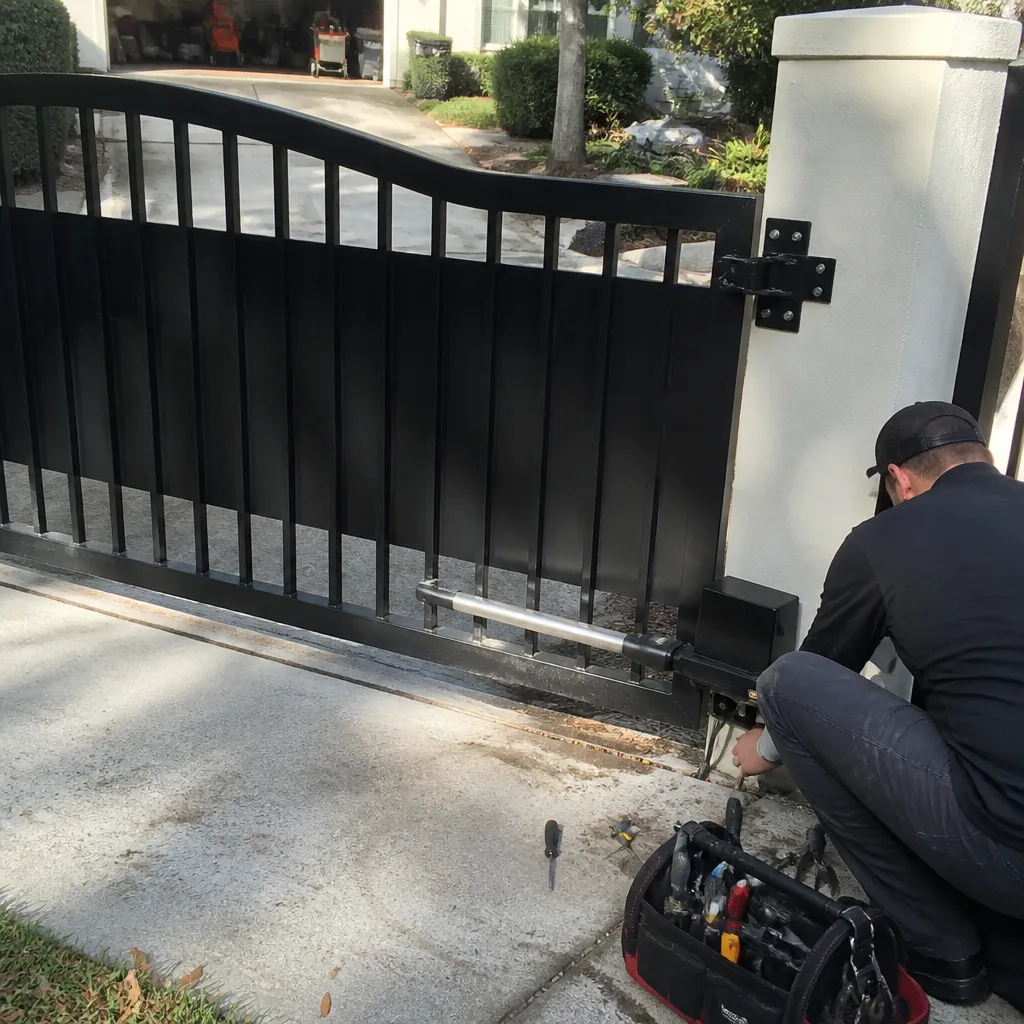
See the difference
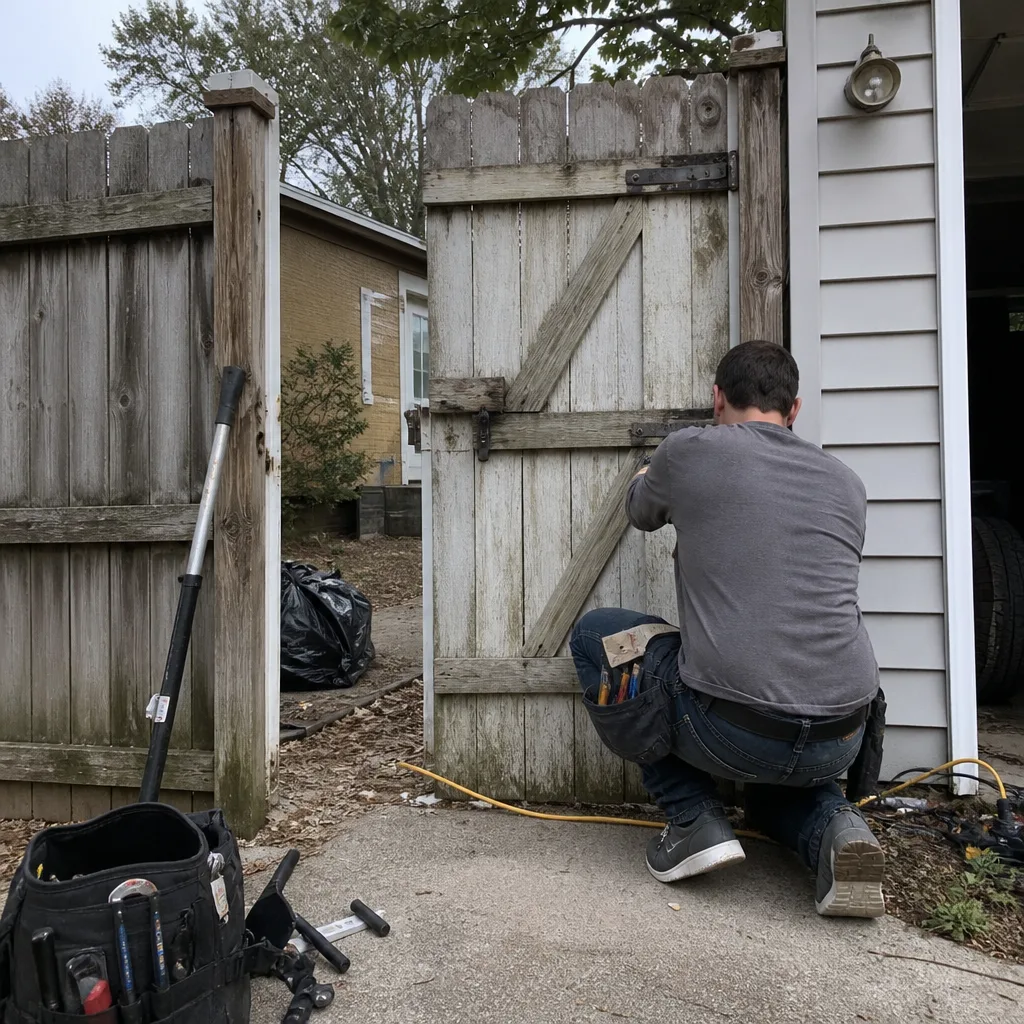 Before
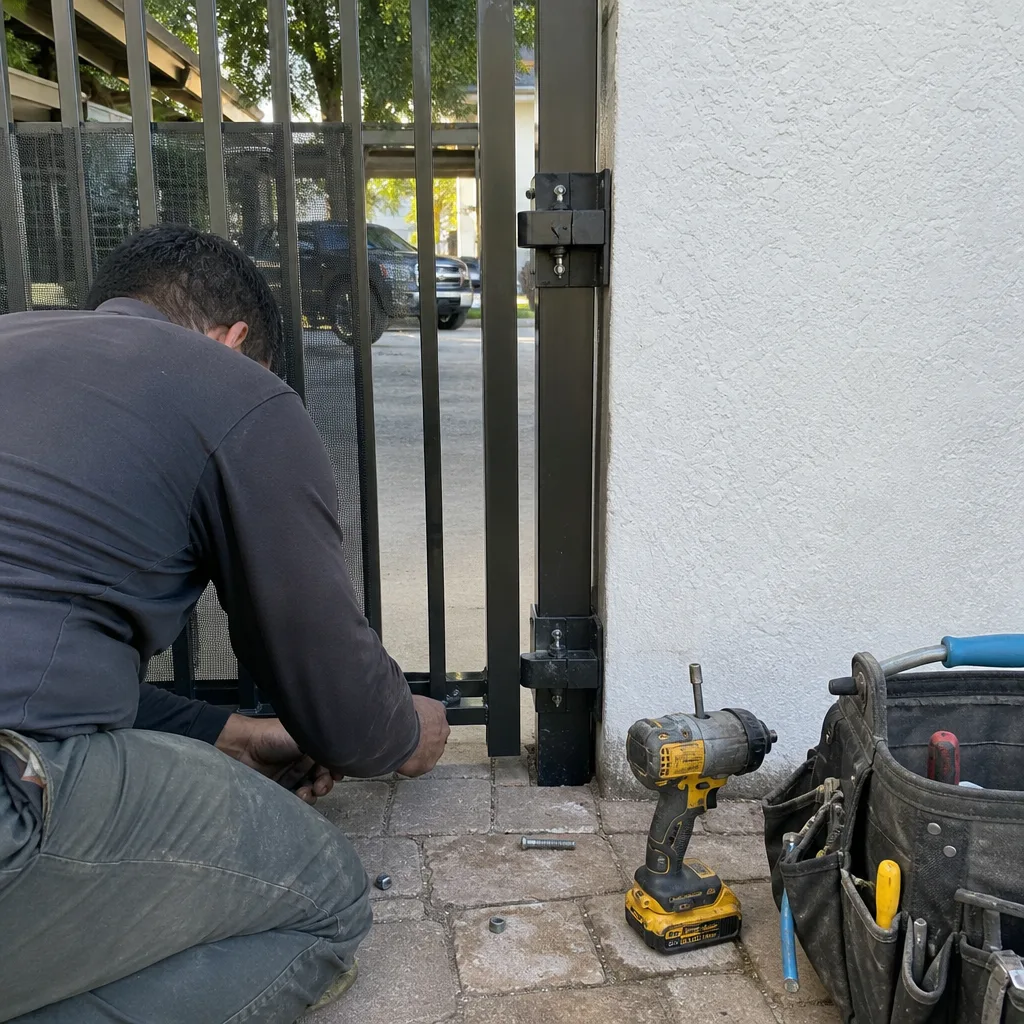 After
After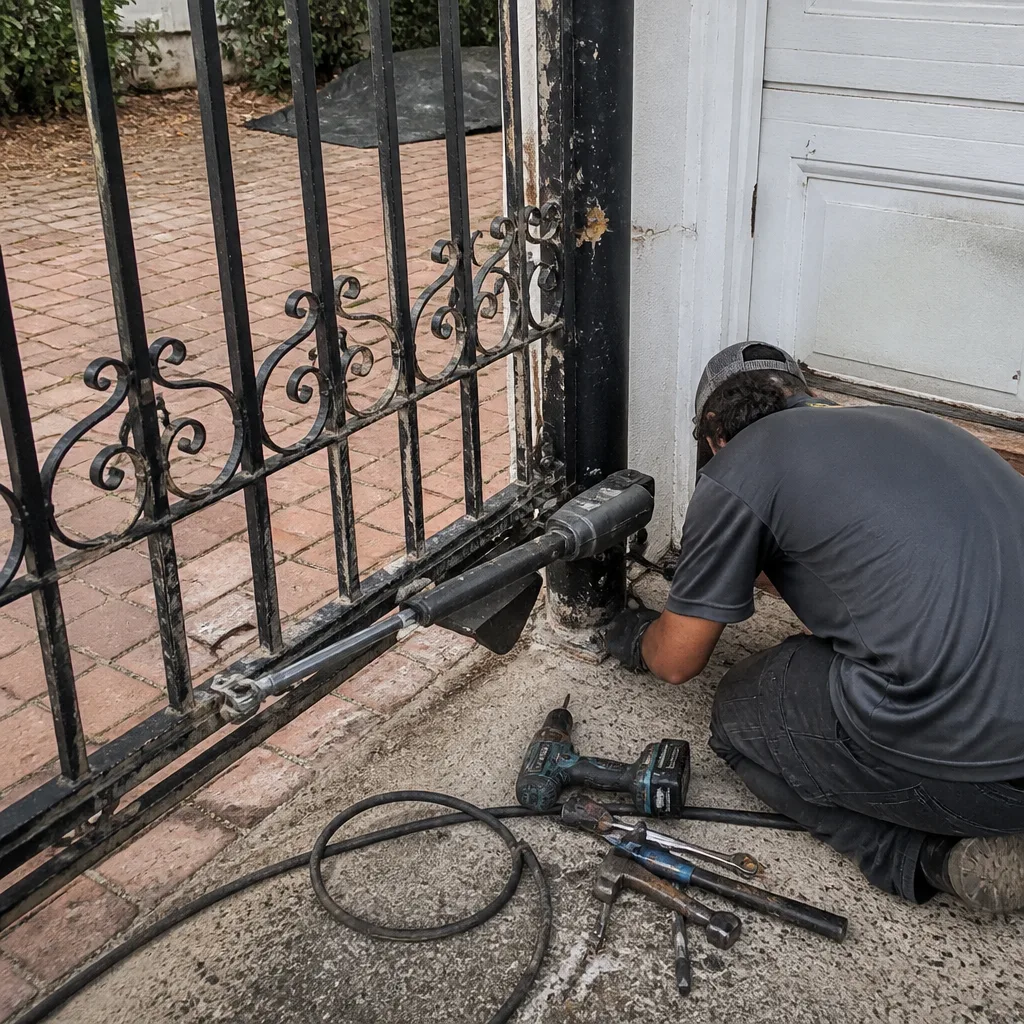 Before
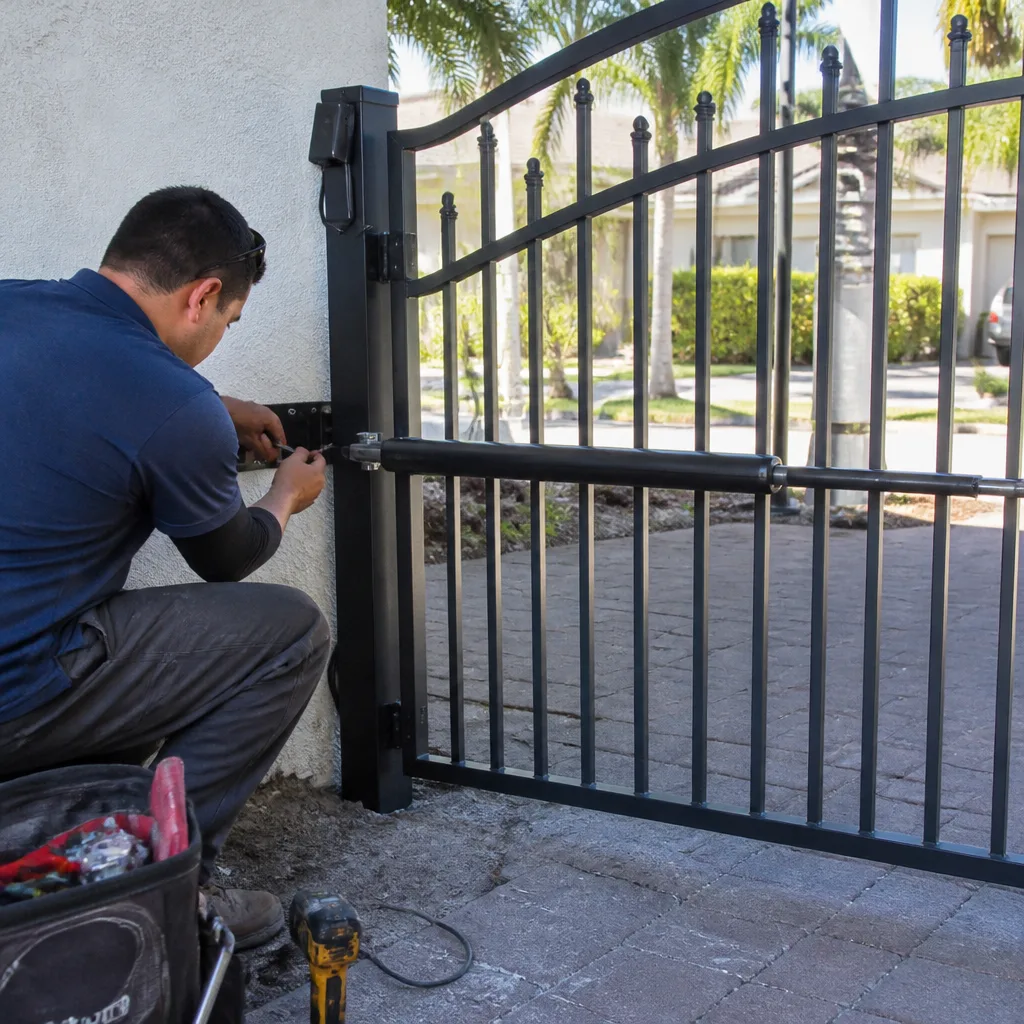 After
After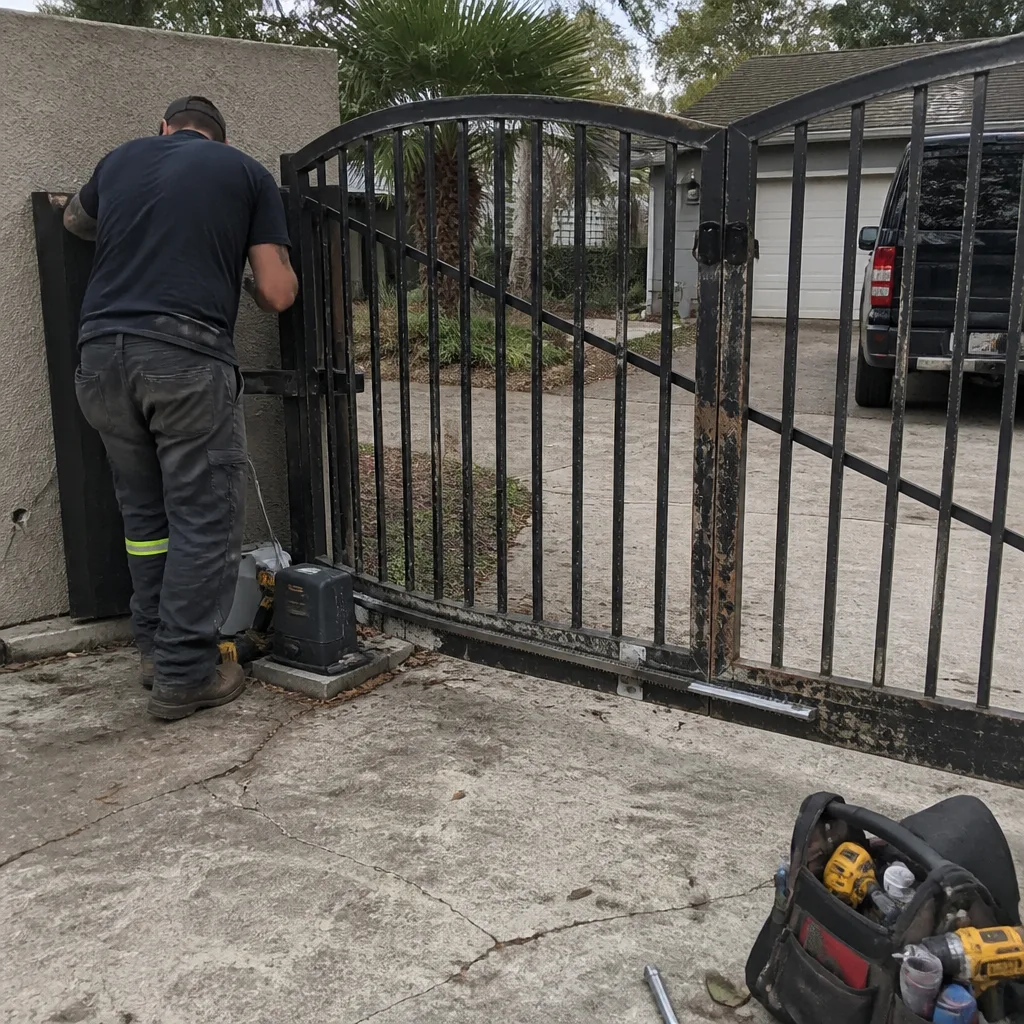 Before
 After
After