
Last updated October 17, 2026
 Wrought iron
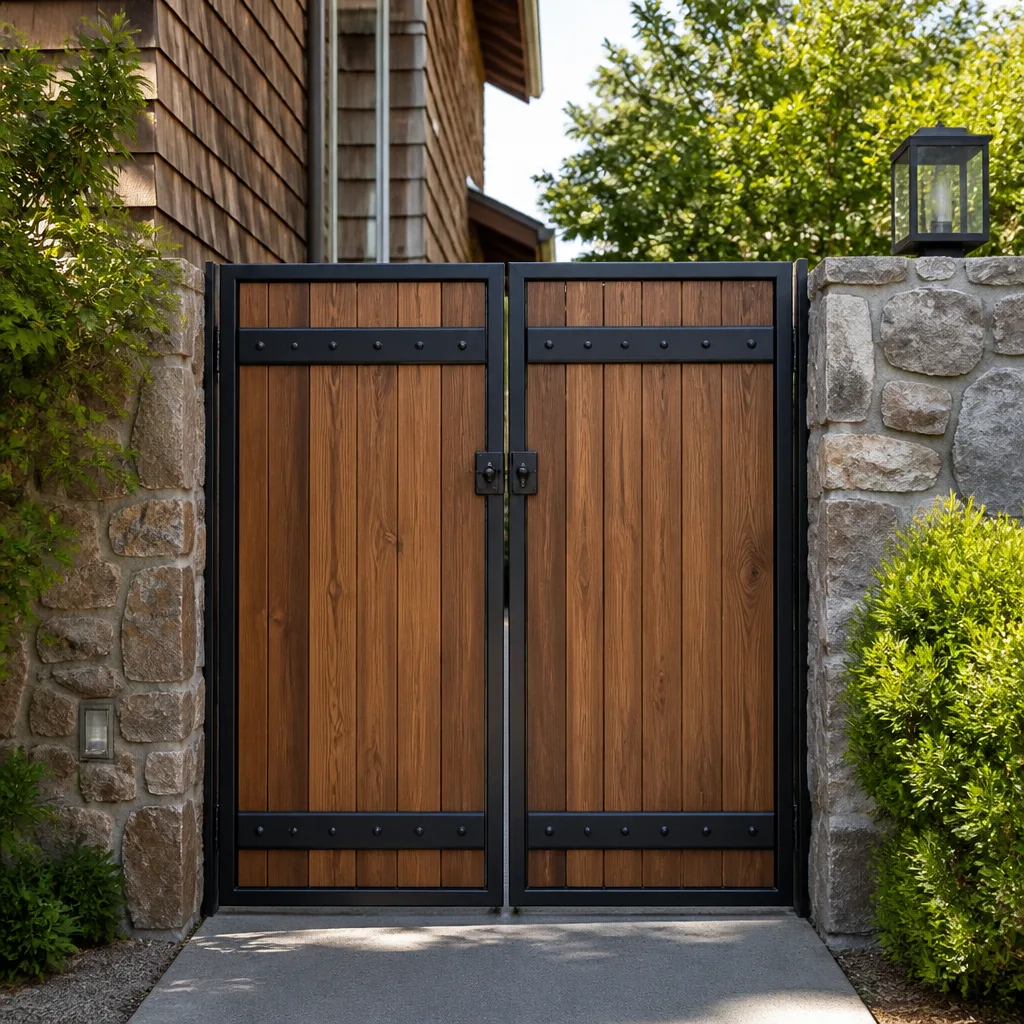 Wood & steel frame
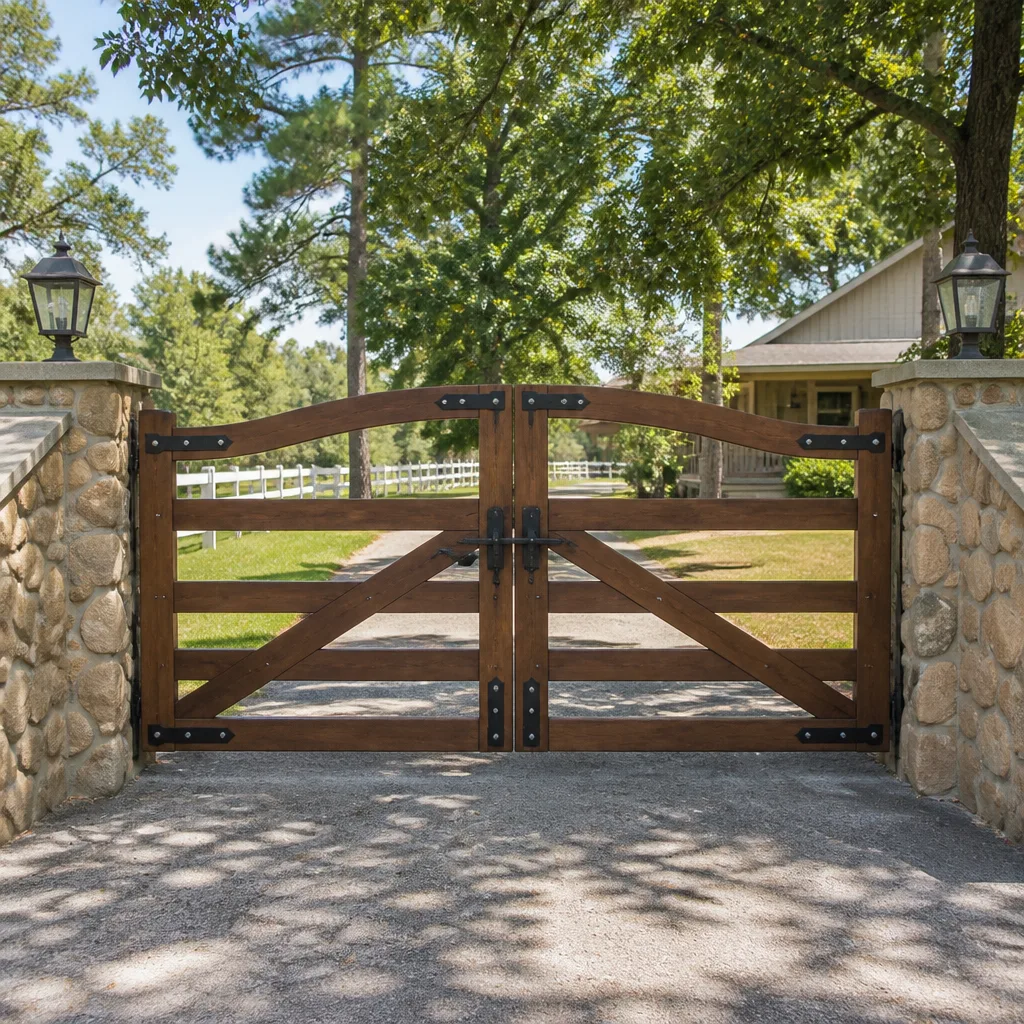 Farm & ranch
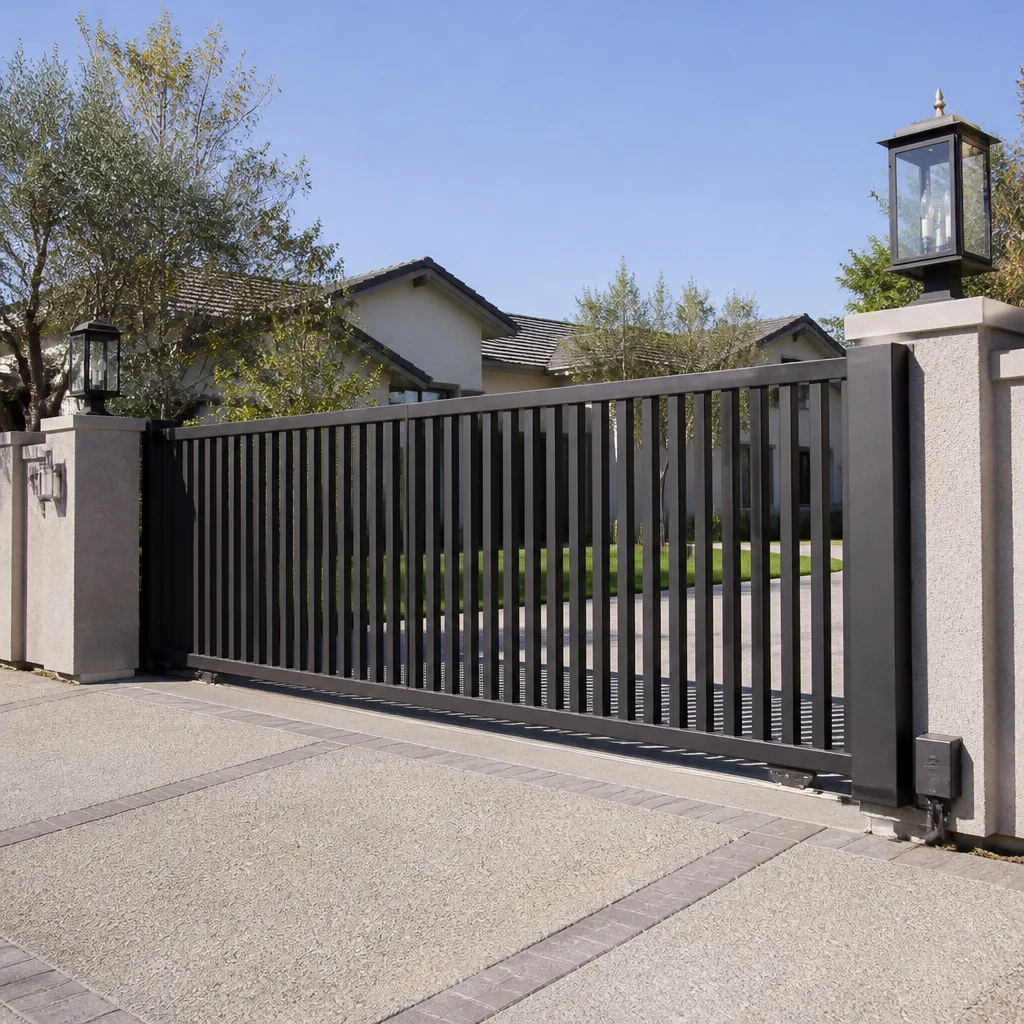 Sliding driveway gates
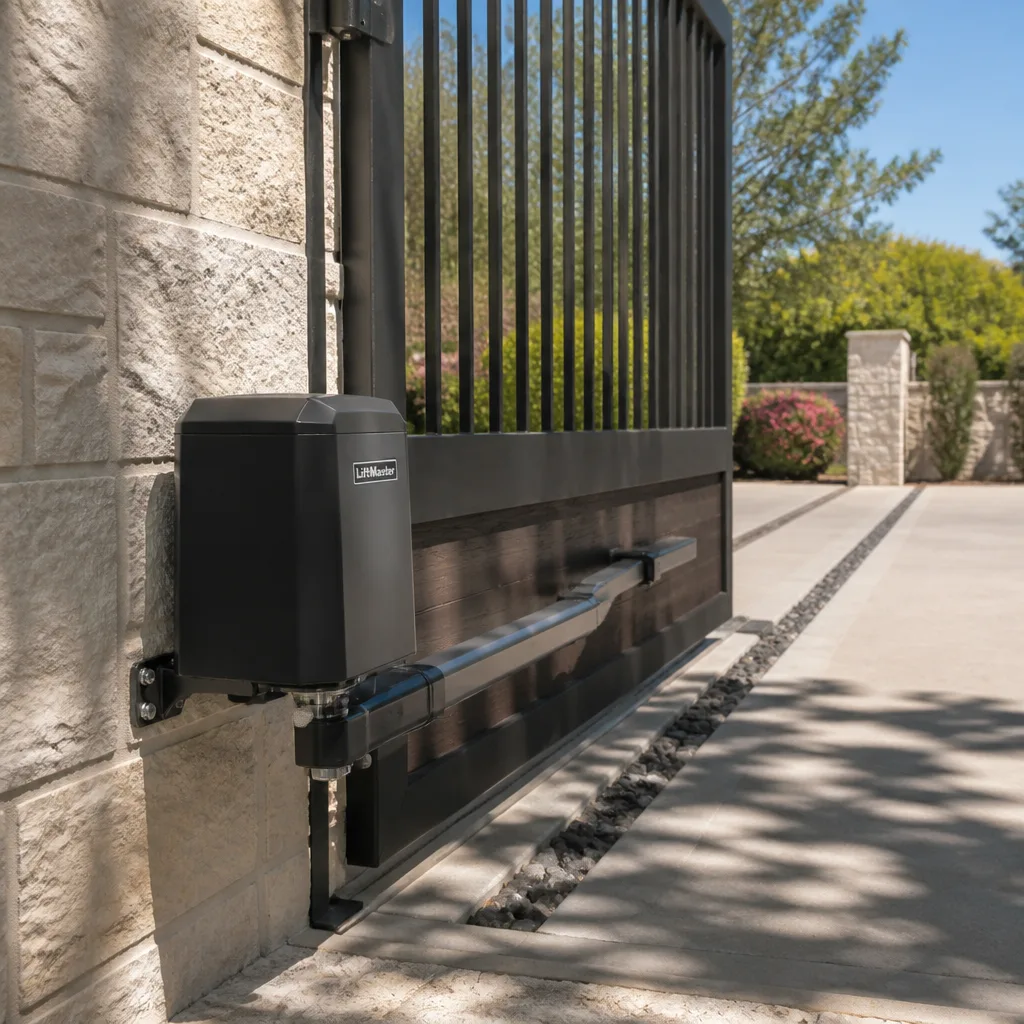 LiftMaster operators
Free on-site gate assessment - hinges, posts, and your LiftMaster or Nice gate operator checked before anything is quoted
The assessment is free and the quote is the invoice.
Get your free estimateThe Complete Guide to Gate Repair in Tampa
Tampa’s combination of salt air, afternoon thunderstorms, and sandy soil creates a corrosion and settling timeline roughly 40% faster than inland Florida cities. That single fact changes which parts fail first, how often a gate needs adjustment, and what a repair should realistically cost. This guide maps every gate type, failure mode, and honest price range to the specific conditions that cause them in Tampa. You’ll learn how to diagnose what’s wrong, what a fair quote looks like, and when a repair is smarter than a replacement. We’ve written it as the reference we wish every homeowner had before calling anyone.
Quick Answer
Gate repair in Tampa typically costs between $75 and $2,800 depending on the gate type and what failed. Basic latch adjustments run $75 to $180, hinge replacements $90 to $240, track and roller repairs $200 to $600, and full motor replacements $900 to $2,800. Most repairs take one to two hours on site, and the right call is to get a written price before any work starts so you’re never surprised by the invoice.
Styles & brands we work with
Table of Contents
- How Tampa’s Climate Attacks Different Gate Materials
- Gate-Type Repair Matrix: Swing, Slide, Bi-Fold, and Pedestrian
- The Tampa Gate Repair Cost Ladder: $75 to $2,800
- The Written-Price-Before-Work Rule, Explained
- What a Cedarwell-Family Gate Specialist Actually Does Differently
- Brand-Specific Notes: Mighty Mule, LiftMaster, DoorKing, and Elite
- What You Can Check Yourself (and What You Shouldn’t Touch)
- Repair vs. Replacement: How to Decide in Tampa
How Tampa’s Climate Attacks Different Gate Materials
Every gate material fails differently in Tampa, and knowing the first symptom for each one saves you from guessing wrong. The salt air off Tampa Bay and the Gulf doesn’t just sit on surfaces; it works into hinges, latches, and post anchors. The afternoon thunderstorms that roll through from June through September do something more subtle: they saturate the soil around gate posts, then the heat bakes it dry, and that cycle repeats hundreds of times a year. Sandy soil in neighborhoods like Westchase, Carrollwood, and New Tampa drains fast but shifts, which is why posts lean and gates sag here faster than in clay-heavy inland areas.
Aluminum Gates
Aluminum is the most common gate material in Tampa because it resists rust, but that doesn’t make it maintenance-free. The first symptom we see on aluminum gates is a white, chalky powder forming around screws, hinges, and where the gate meets the post. That’s galvanic corrosion, and it happens when the aluminum’s protective oxide layer breaks down in Tampa’s salt-heavy air. The powder itself is cosmetic, but it signals that the screws and fasteners are corroding from the inside out. Left alone, the gate eventually binds at the hinge or the latch stops catching. Aluminum gates also flex more than steel, so a gate that scrapes the ground on one corner usually means the post has shifted, not that the gate bent.
Wrought Iron and Steel Gates
Wrought iron gates in Tampa fail from the bottom up. The first symptom is almost always rust bloom at the base of the gate and around the bottom hinge, where rainwater splashes up and sits. You’ll see orange-brown staining that flakes when you rub it. Wrought iron is heavy, and once rust compromises the lower frame, the gate starts to sag and drag. In Tampa’s humidity, untreated rust can eat through a quarter-inch of steel in three to five years. The fix is faster and cheaper if you catch it at the rust-bloom stage: wire brushing, rust converter, and a proper primer and paint. If you wait until the gate scrapes the driveway, you’re often looking at welding or frame replacement, not just surface work.
Vinyl Gates
Vinyl gates don’t corrode, but Tampa’s UV index and heat cause a different failure: the material gets brittle. The first symptom is hairline cracks radiating out from screws and hinges, especially on the latch side. Vinyl expands and contracts a lot with Tampa’s temperature swings, and after five to seven years of Florida sun, the plasticizers that keep it flexible have broken down. A brittle vinyl gate doesn’t just crack; the hinge screws lose their grip in the softened post material, and the gate wrenches sideways. We also see vinyl gates warp when they’re installed with metal stiffeners that heat unevenly. The repair usually means replacing the post sleeve or the gate section, not just tightening screws.
Wood Gates
Wood gates in Tampa fight two battles: moisture and termites. The moisture comes from the same afternoon storms that soak the ground and wick up through the post. The first symptom is rot at the base of the post and the bottom rail, where the wood stays damp for hours after the rest of the gate has dried. You can probe it with a screwdriver; if it sinks in, the wood is compromised. Termites find that damp, softening wood quickly. A wood gate that sags, drags, or feels spongy at the bottom is usually past a hinge adjustment. The fix typically involves replacing the post or the bottom rail, and it’s the reason we tell Tampa homeowners that wood gates need a reseal every two years, not every five as they might up north.
Gate-Type Repair Matrix: Swing, Slide, Bi-Fold, and Pedestrian
Most Tampa gate guides treat every gate the same, but a Mighty Mule swing gate on a sandy lot and a LiftMaster slide gate on a poured concrete pad fail in completely different sequences. The repair path matters because it determines whether you need a $90 hinge fix or a $600 track replacement. Here’s what actually happens to each type in Tampa conditions.
Swing Gates: The Hinge-First Failure
Swing gates are the most common gate type in Tampa residential neighborhoods, and they fail in a predictable order. First, the hinges wear and the gate sags. Second, the sag puts pressure on the latch, which stops catching cleanly. Third, the opening motor, if there is one, starts straining against the misaligned gate and burns out faster than it should. This sequence means the $90 hinge replacement, caught early, prevents the $1,200 motor replacement later.
- First symptom: The gate scrapes the driveway or the latch doesn’t align with the receiver.
- Common cause in Tampa: Post settling in sandy or saturated soil, especially on slopes where water runs toward the post.
- Typical repair: Hinge replacement or post re-setting, $90 to $500 depending on the post’s condition.
- When it’s worse: If the post itself is rotted or rusted through at the base, you’re looking at a new post, not just new hinges.
Slide Gates: The Track and Roller Problem
Slide gates move on a track and rollers, and Tampa’s sandy soil is their enemy. Grit gets into the track, wears the rollers into flat spots, and the gate starts jerking or binding. The first symptom homeowners notice is a grinding sound or a gate that moves an inch and stops. On a poured concrete pad, the track is usually fine but the rollers are shot. On a gravel or dirt base, which we see in older Tampa properties and rural-lot edges, the track itself can shift out of alignment and need re-leveling.
- First symptom: Grinding, jerking, or the gate stopping partway and reversing.
- Common cause in Tampa: Sand and grit in the track, combined with humidity that rusts the roller bearings.
- Typical repair: Roller replacement $200 to $400; track re-leveling or replacement $400 to $600.
- When it’s worse: If the gate’s weight has bent the track or the motor has been fighting the drag long enough to burn out, the repair climbs toward $1,500.
Bi-Fold Gates: The Fastest, Most Complex Failure
Bi-fold gates, also called speed gates, are common on Tampa commercial properties and a few larger residential estates. They open fast, which is their appeal, and they wear fast, which is their problem. The failure sequence starts at the hinges connecting the folding panels, moves to the guide wheels at the bottom, and ends with the motor or the control board. Because the panels fold, any misalignment doubles the stress on every joint.
- First symptom: The gate opens slower than it used to or one panel lags behind the other.
- Common cause in Tampa: Humidity corrodes the guide-wheel bearings, and afternoon storms wash grit into the bottom track.
- Typical repair: Guide wheel and hinge service $300 to $700; motor and board work $1,200 to $2,200.
- When it’s worse: A bi-fold gate that slams shut or won’t stay open is a safety issue; this is a same-day repair call, not a next-week project.
Pedestrian Gates: The Forgotten Gate
Pedestrian gates, the small walk-through gates beside the driveway, fail quietly because they get used more than any other gate on the property but get repaired less. Every family member, every delivery, every dog walk goes through this gate. In Tampa, the most common failure is the latch, followed by the hinges, and then the spring closer if there is one. The symptom is almost always the same: the gate won’t stay latched, or it swings open on its own. A gate that won’t latch isn’t just an annoyance when you have kids and pets; it’s the gate they’ll slip through.
- First symptom: The latch doesn’t catch, or the gate drifts open.
- Common cause in Tampa: Post settling in sandy soil, or rust on the latch mechanism from salt air.
- Typical repair: Latch adjustment or replacement $75 to $180; hinge replacement $90 to $240.
- When it’s worse: If the post is rotted or corroded, the repair moves to post replacement, which starts around $400.
If you’re in Tampa and trying to figure out which gate type you have and what’s wrong, our Gate Repair in Tampa page walks through the diagnostic step by step, with photos of each failure mode.
The Tampa Gate Repair Cost Ladder: $75 to $2,800
Every Tampa homeowner deserves a straightforward answer on what gate repair costs, so here’s the honest ladder, from the smallest fix to the biggest. These ranges reflect what we see across Tampa, from South Tampa and Hyde Park to Brandon, Riverview, and Lutz. The exact number for your gate depends on its type, its material, and how long the problem has been developing.
- $75 to $180: Latch adjustment or replacement on a pedestrian gate. A misaligned latch, a sticky mechanism, or a worn spring closer on a walk gate.
- $90 to $240: Hinge replacement on a standard swing gate. Includes aligning the gate so it swings true and the latch catches.
- $150 to $350: Post re-setting or re-anchoring on a gate that’s leaning. Tampa’s sandy soil makes this one of the most common mid-range repairs.
- $200 to $400: Roller and bearing replacement on a slide gate. Includes cleaning the track and adjusting the gate’s travel.
- $300 to $700: Track re-leveling or replacement. For slide and bi-fold gates where the track has shifted or worn.
- $400 to $900: Control board replacement. For electric gates where the board has failed due to lightning, power surges, or age.
- $900 to $2,800: Motor or operator replacement. LiftMaster, DoorKing, and Elite motors are at the higher end; entry-level Mighty Mule operators sit lower.
One note on this ladder: it assumes the repair is caught before the failure cascades. A sagging swing gate that goes unaddressed for a year costs more than a hinge replacement because it will take the post, the latch, and eventually the motor with it. That’s the strongest argument for checking a small symptom early.
If you’re weighing repair against a new gate, our Gate Installation in Tampa page lays out what full installation includes and what it costs, so you can compare honestly.
The Written-Price-Before-Work Rule, Explained
The written-price-before-work rule is a consumer protection tool, not a sales gimmick. It means exactly what it says: before any work starts on your gate, you get a written price for the repair, and that’s the number you approve. You are never calling back later to find out the invoice grew. Every gate repair visit should start this way, and if a company won’t put the price in writing before they start, that’s a reason to call someone else.
What happens when hidden damage is discovered mid-job? It’s a fair question, and it’s how the rule actually protects you. Sometimes a technician opens up a gate motor and finds the control board is also cracked, or removes a hinge and discovers the post is rotted inside. When that happens under the written-price rule, the technician stops, explains what was found, gives you a new written price for the additional work, and waits for your approval before continuing. The original price doesn’t silently double. You decide, with the new details in front of you, whether to proceed.
At Latch and Post Gate Repair Tampa, this rule is non-negotiable under the Cedarwell Care Promise: a written price before work starts, every single visit, with no pressure to accept. It’s the reason we can quote a latch replacement at $110 and have it be $110 when the job’s done, not $110 plus “complications.” The price gets agreed before anything is touched, and you’ll find the same approach on our Electric Gate Repair in Tampa page for motor and board work.
What a Cedarwell-Family Gate Specialist Actually Does Differently
The phrase “gate specialist” gets thrown around loosely, but in practice it means a technician who has been trained on the failure patterns of multiple gate families and brands, not just one line of openers. A generalist who has worked mostly on garage door openers and occasionally on a gate will miss things a gate-focused technician catches: a post that’s leaning two degrees, a hinge that’s wearing unevenly, a slide track that’s settling at one end. Those are the details that decide whether a repair holds for years or fails again in months.
The Cedarwell-family distinction is more specific. Latch and Post Gate Repair Tampa has been operating since 2009 as part of the Cedarwell family of independently owned and operated gate specialists. Our technicians are factory-trained on the brands families in Tampa actually own: LiftMaster, FAAC, BFT, Linear, Viking, Ghost Controls, DoorKing, Elite, and Mighty Mule. A technician who knows all of them can tell you whether a Mighty Mule swing-gate operator is the right replacement for a LiftMaster that failed, or whether a DoorKing board is worth repairing. That cross-brand knowledge is the difference between a fix and a guess.
There’s a care side to this too, because a gate repair happens at your home, and how the crew leaves matters as much as the repair itself. Every gate comes down to two parts, the latch that holds it and the post that carries it, and that’s the job we focus on. When a Latch and Post technician works at your Tampa home, the Cedarwell C.A.R.E. values are in effect: Clean up like it is our own home, Ask before we move or touch anything, Respect the family’s time and quiet hours, Explain the price before the work. In practice, that means drop cloths on the floor and shoe covers on before we step inside, a photo of the clean-up before we leave, and quiet tools when kids are asleep. It’s the kind of thing most gate companies never put in writing, and it’s why the 365-Day Done Right Promise exists: if the repair or installation isn’t right, we make it right, no argument, no fine print.
Brand-Specific Notes: Mighty Mule, LiftMaster, DoorKing, and Elite
Tampa homeowners tend to own one of a handful of brands, and each has its own repair personality. Here are the four we see most often, with the honest truth about how they hold up in Tampa’s climate and what fails first.
Mighty Mule
Mighty Mule is the entry-level operator on lots of Tampa residential swing gates, and it’s a fine workhorse for a single-family gate that opens a few times a day. In Tampa conditions, the weakness is the control board, which doesn’t love humidity or the electrical surges that come with our afternoon lightning storms. The first symptom is intermittent operation: the gate works one day and not the next. Sometimes a simple board reset fixes it; more often, after three to five years in Tampa humidity, the board needs replacing at $400 to $700. The rest of the operator, the arm and the motor, usually has more life left, so a board replacement often makes more sense than a full new operator.
LiftMaster
LiftMaster builds slide-gate operators that are common on Tampa commercial properties and larger residential estates. They’re well-built, and in our experience they fail less often than the gates they drive. The first symptom we see is a burnout from fighting a gate that’s been binding for months. A LiftMaster motor that has been dragging a misaligned slide gate will eventually overheat and trip its thermal protection repeatedly before it dies. The fix, when caught at the thermal-trip stage, is usually the gate repair, not the motor. If the motor has fully died, replacement runs $1,200 to $2,500 depending on the model.
DoorKing
DoorKing operators are the most common on Tampa gates that get heavy use, and they’re genuinely overbuilt. The repair pattern we see is component-level rather than whole-unit: limit switches, loop detectors, or a control board capacitor. DoorKing boards are repairable in more cases than Mighty Mule boards, which changes the economics. A capacitor replacement might run $150 to $300, where a new board would be $600 to $900. If you own a DoorKing, the best maintenance move is an annual service call to catch the small components before they cascade.
Elite
Elite operators, also sold under the LiftMaster commercial line in some cases, are common on heavier slide and swing gates in Tampa. They fail the same way LiftMaster units do, which is usually as a consequence of gate binding, but the mechanical parts are robust. The first symptom is often a blown fuse or a tripped breaker, which is the operator protecting itself. If an Elite operator keeps blowing fuses, the problem is almost always in the gate’s mechanical movement, not the operator itself. Fix the gate, replace the fuse, and the operator typically runs for years more.
What You Can Check Yourself (and What You Shouldn’t Touch)
There’s a line between a homeowner check and a professional repair, and in gate work that line sits exactly where the dangerous parts begin. Here’s what to check yourself, and what to leave alone.
- Walk the gate by hand. Open and close it slowly, listening for grinding, feeling for resistance. A gate that moves smoothly by hand but jerks under motor power points to the motor or board; a gate that’s hard to move by hand points to mechanical wear.
- Look at the hinges and latch. Rust, white powder, or visible sagging are signs the hardware is failing. Wiggle the gate at the latch side; if it moves more than a quarter inch, something’s loose.
- Check the post bases. Look for cracks in the concrete around the posts, gaps between the post and the ground, or water pooling at the base. In sandy Tampa soil, post settling shows up as a lean, not a crack.
- Inspect the track and rollers on a slide gate. Clear visible debris, but don’t try to re-level the track. That’s a precision adjustment.
- Test the safety features. On an electric gate, block the beam sensor with your hand. The gate should stop and reverse. If it doesn’t, stop using the gate and call a professional.
What not to touch: gate springs and cables on swing gates, electric wiring and control boards, and any adjustment to the motor’s force settings. Gate springs and cables are under high tension and can cause serious injury if released incorrectly. Electric components carry live current and boards are sensitive to static. A trained professional has both the tools and the training to do this work safely. If your electric gate isn’t behaving, the safest move is a call, not a screwdriver. Our Electric Gate Repair in Tampa team handles the electrical side so you don’t have to open a panel.
Repair vs. Replacement: How to Decide in Tampa
The decision between repairing and replacing a gate in Tampa comes down to three numbers: the current repair quote, the age of the gate, and the cost of a full replacement. Here’s the simple version.
If the repair quote is under 40% of the replacement cost and the gate is under 10 years old, repair almost always wins. A $300 roller replacement on a $2,500 slide gate is a repair. A $1,800 motor replacement on a $3,000 gate is worth doing once, but not twice.
If the gate is over 15 years old and has needed two or more repairs in the last three years, replacement starts to look smarter. The math shifts faster in Tampa than inland because the corrosion timeline is compressed: an aluminum gate that’s been in Tampa salt air for 15 years has had the equivalent of 20-plus years of inland exposure. A neighbor in Carrollwood might get 12 years from a wrought-iron gate before it needs serious work; the same gate in a neighborhood closer to the bay might need structural attention at year 8.
When in doubt, get a written quote for both options and compare the five-year cost. A repair might cost $600 now and another $400 in three years, while replacement costs $2,800 now and almost nothing for a decade. We walk Tampa homeowners through this math on our Gate Installation in Tampa page, and you can always just call for a straight answer.
Common Mistakes to Avoid
- Ignoring a small symptom for months. A sagging gate, a sticky latch, or a grinding slide gate doesn’t fix itself in Tampa’s climate. Every month of drag wears the hinge, the roller, and the motor a little more, and the eventual repair bill climbs accordingly.
- Assuming all gate companies know your brand. A technician who only knows one brand of opener will often recommend replacing an unfamiliar board rather than repairing it. Ask upfront whether the company is trained on Mighty Mule, LiftMaster, and DoorKing before you book.
- Paying for a repair without a written price. Any gate company that won’t put the price in writing before starting work is leaving the door open for a bigger invoice. The written-price rule is the single best consumer protection in this trade.
- Lubricating hinges with the wrong product. In Tampa humidity, heavy greases attract grit and turn into grinding paste. Use a dry silicone spray on hinges and rollers, and wipe off the excess.
- Forgetting the pedestrian gate. The small walk gate gets used more than the driveway gate and fails more often, but it’s the one homeowners skip during maintenance. A $90 latch fix on a pedestrian gate is cheaper than realizing it won’t stay closed when the dog’s outside.
- Skipping the safety checks on an electric gate. If the auto-reverse isn’t working, the gate is dangerous to kids, pets, and visitors. Test it monthly and call a professional the day it fails the test.
See the difference
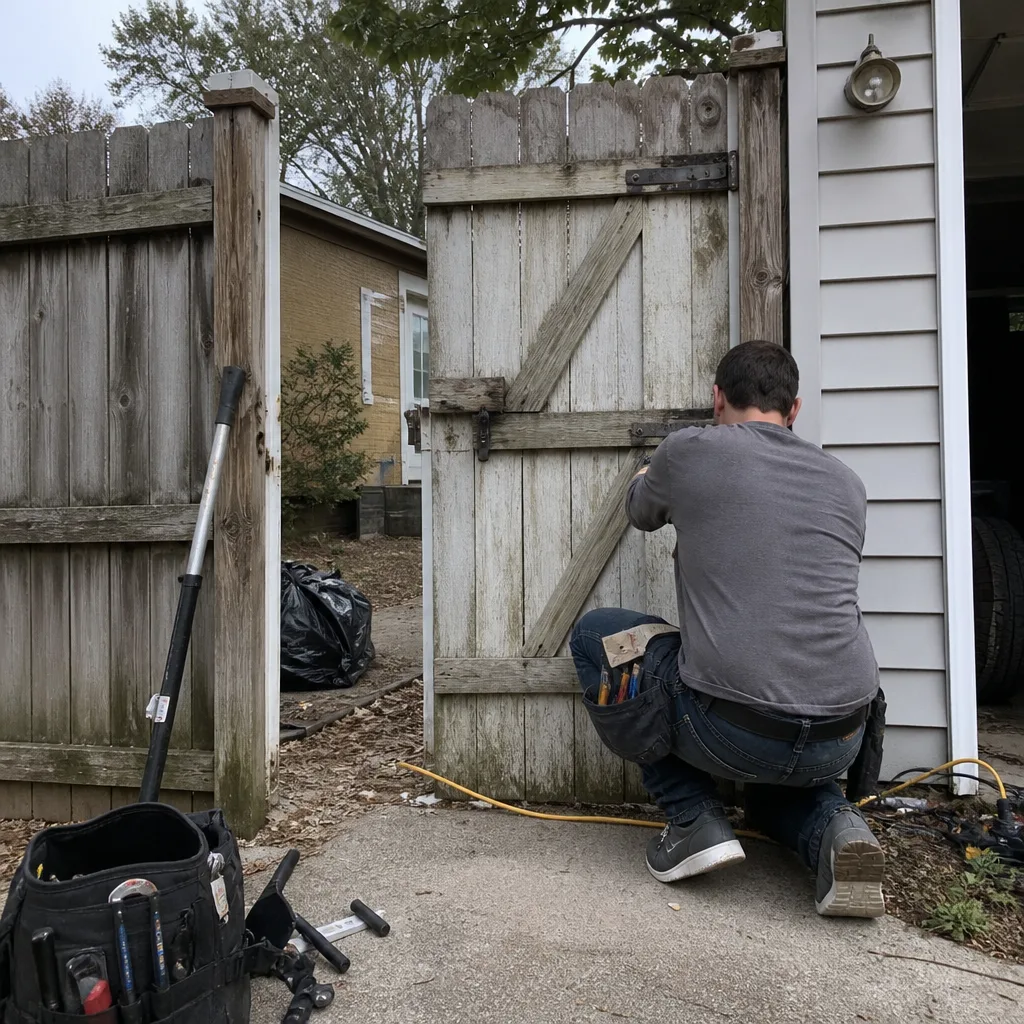 Before
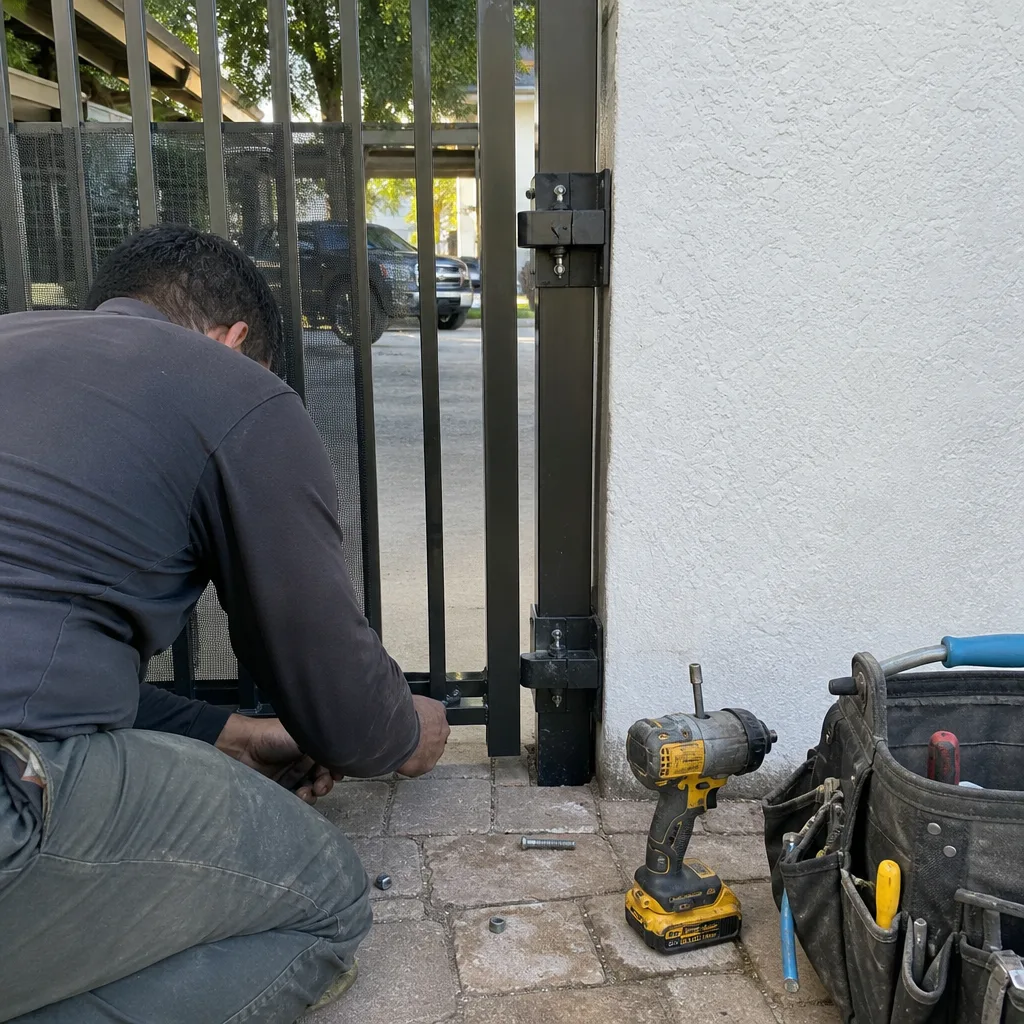 After
After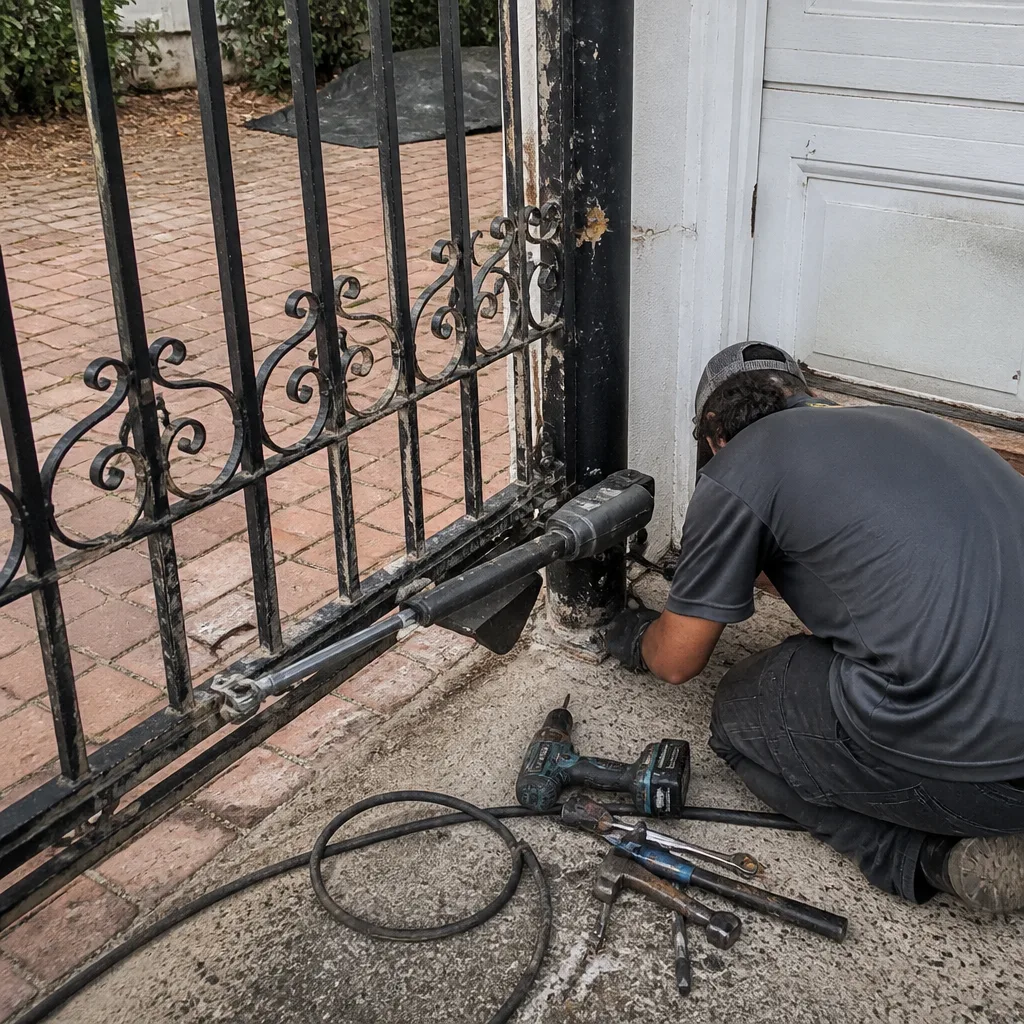 Before
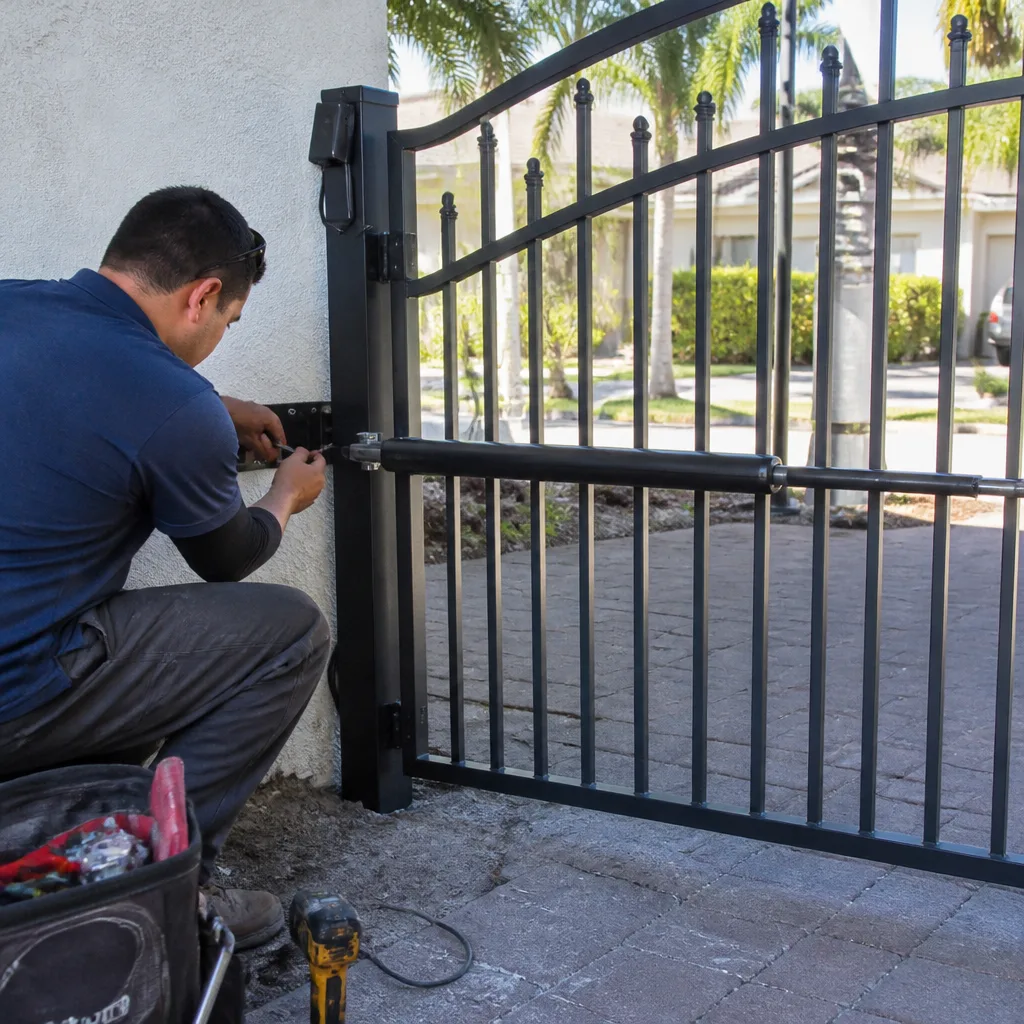 After
After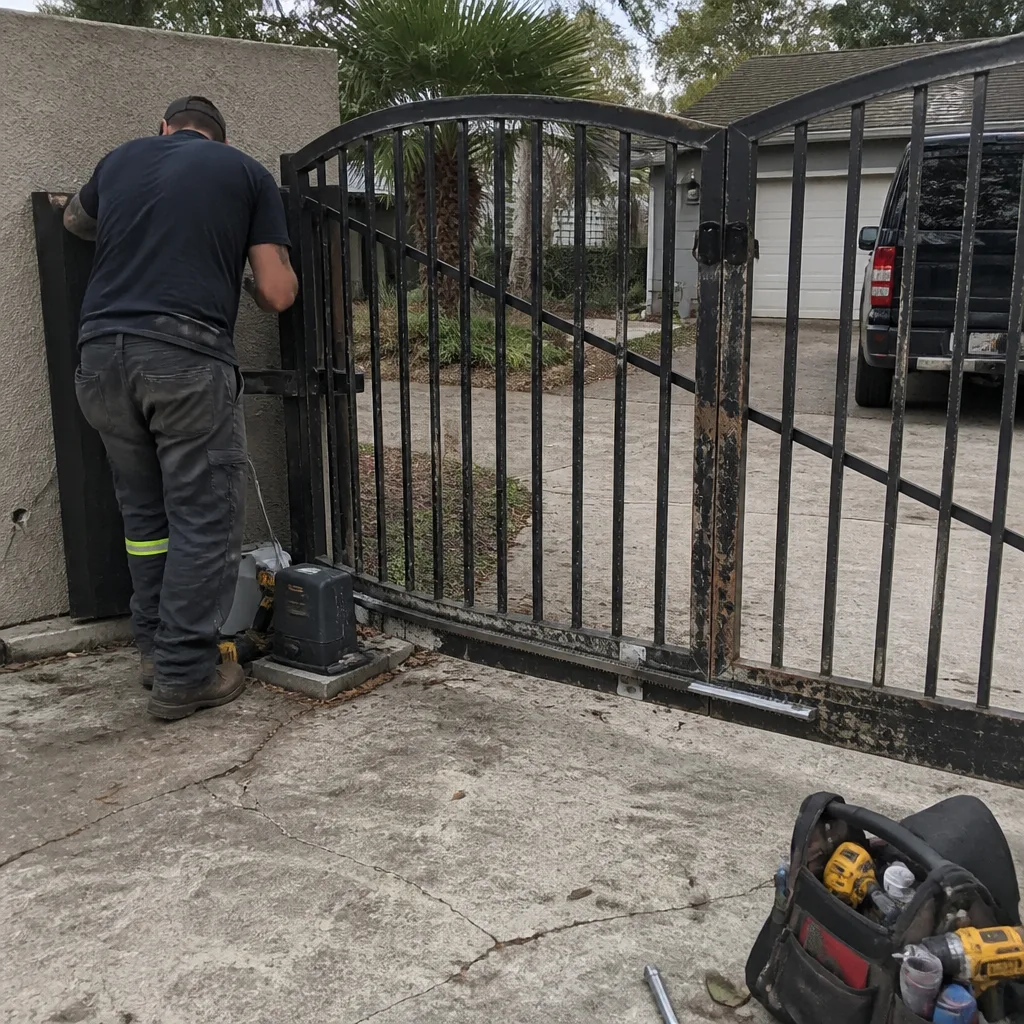 Before
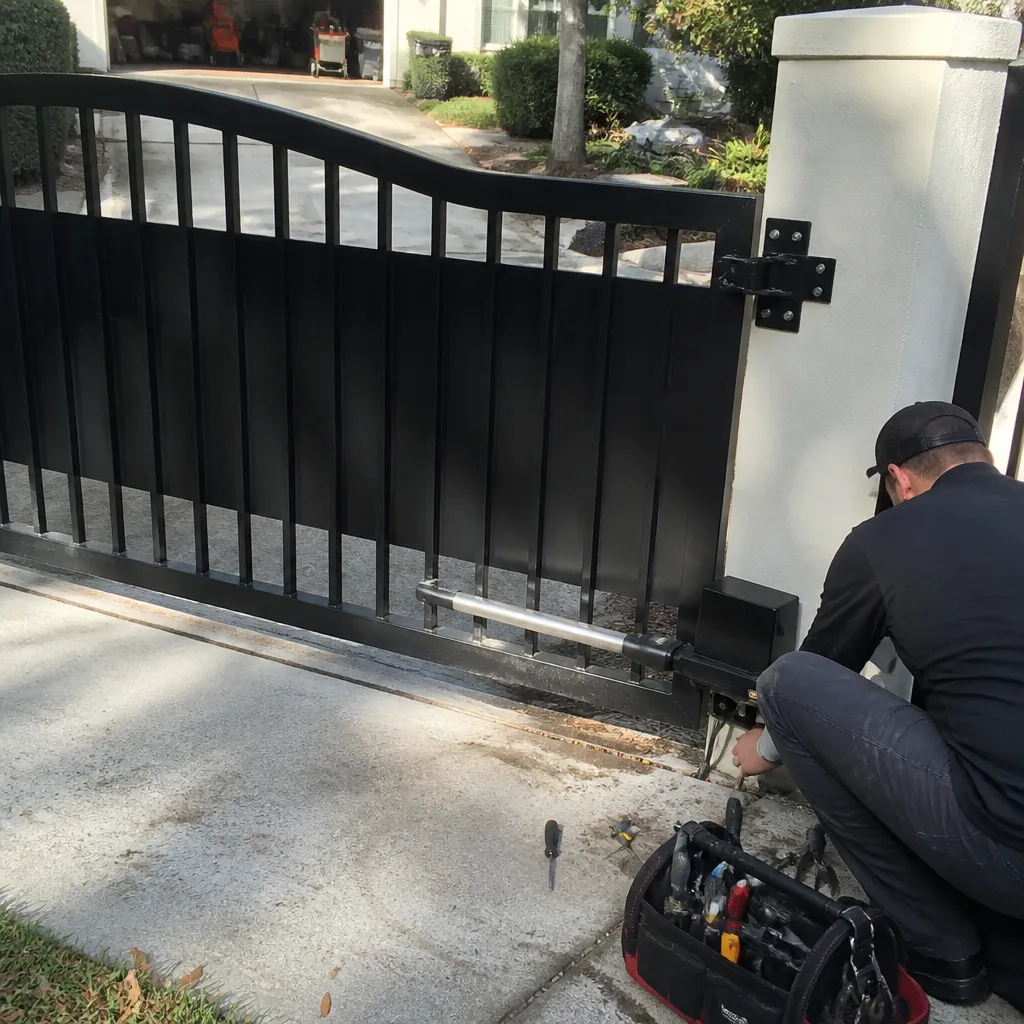 After
AfterWhen to Call a Professional
Call a gate professional when the gate won’t stay latched, scrapes the ground, grinds or jerks when opening, won’t respond to the remote, or has failed a safety test. Also call if the gate is leaning, the post is cracking, or the track looks misaligned. These are mechanical and electrical problems that get more expensive by the week. Latch and Post Gate Repair Tampa offers free estimates in Tampa. Call (850) 789-6299, and a live person will answer, day or night.
Frequently Asked Questions
Gate repair in Tampa ranges from $75 for a basic latch adjustment to $2,800 for a full motor replacement. Latch and hinge work runs $75 to $240, track and roller repairs $200 to $600, and control board replacements $400 to $900. Call (850) 789-6299 for an exact quote, estimates are free.
Most mechanical repairs like latch replacements, hinge work, and roller swaps can be done the same day in Tampa. Motor and board replacements sometimes need the part ordered, but we stock common LiftMaster, DoorKing, and Mighty Mule parts in our service vehicles. Call (850) 789-6299 and a live person will tell you straight what’s possible.
A full gate installation includes the gate itself, the posts and hinges, the latch, and the operator and wiring if you’re adding an electric gate. It also includes aligning the gate so it swings or slides true on day one. At Latch and Post Gate Repair Tampa, the written price comes before any work starts, and the entire install is covered under the 365-Day Done Right Promise.
Yes, electric gate work in Tampa includes the power run from the panel to the operator, the safety edge sensors, and the photo-eye beams. The electrical components are the part you should never attempt yourself; a gate circuit carries live current and the boards are sensitive to improper wiring. Call (850) 789-6299 for a free estimate on the full electrical scope.
Tampa’s sandy soil and heavy afternoon rain cycle cause gate posts to settle and shift faster than they do inland, which is why your gate sags sooner than a gate in Lakeland or Sebring would. A post that has settled in saturated sand will let the gate lean, and the lean cascades into hinge, latch, and motor wear. The fix is often a post re-set, not just new hinges.
It depends on where the damage is. Termite and rot damage in the bottom rail or the post base often means replacing those components, and if both are compromised, a new gate is usually the better use of money. A repair quote under 40% of a replacement’s cost is worth considering; above that, replace it. We’ll give you an honest comparison either way, and the estimate is free.
The Bottom Line
Gate repair in Tampa is a different job than the same repair 90 miles inland. The salt air, the afternoon storms, and the sandy soil each attack a different part of the gate, and the repair that works is the one that matches the gate type, the material, and the failure sequence. The cheapest fix is always the early one: a $90 hinge replacement in April beats a $1,200 motor replacement in October. Get a written price before any work starts, check the safety features monthly, and treat the pedestrian gate with the same respect as the driveway gate. If you’re in Tampa and need a straight answer on your gate, call Latch and Post Gate Repair Tampa at (850) 789-6299. A live person answers, the estimate is free, and the written price means no surprises. Our Latch and Post Gate Repair Tampa home page has everything in one place if you’d rather read first.
Written by Cody Beckman, Owner at Latch and Post Gate Repair Tampa, serving Tampa since 2009.