
Last updated October 17, 2026
 Wrought iron
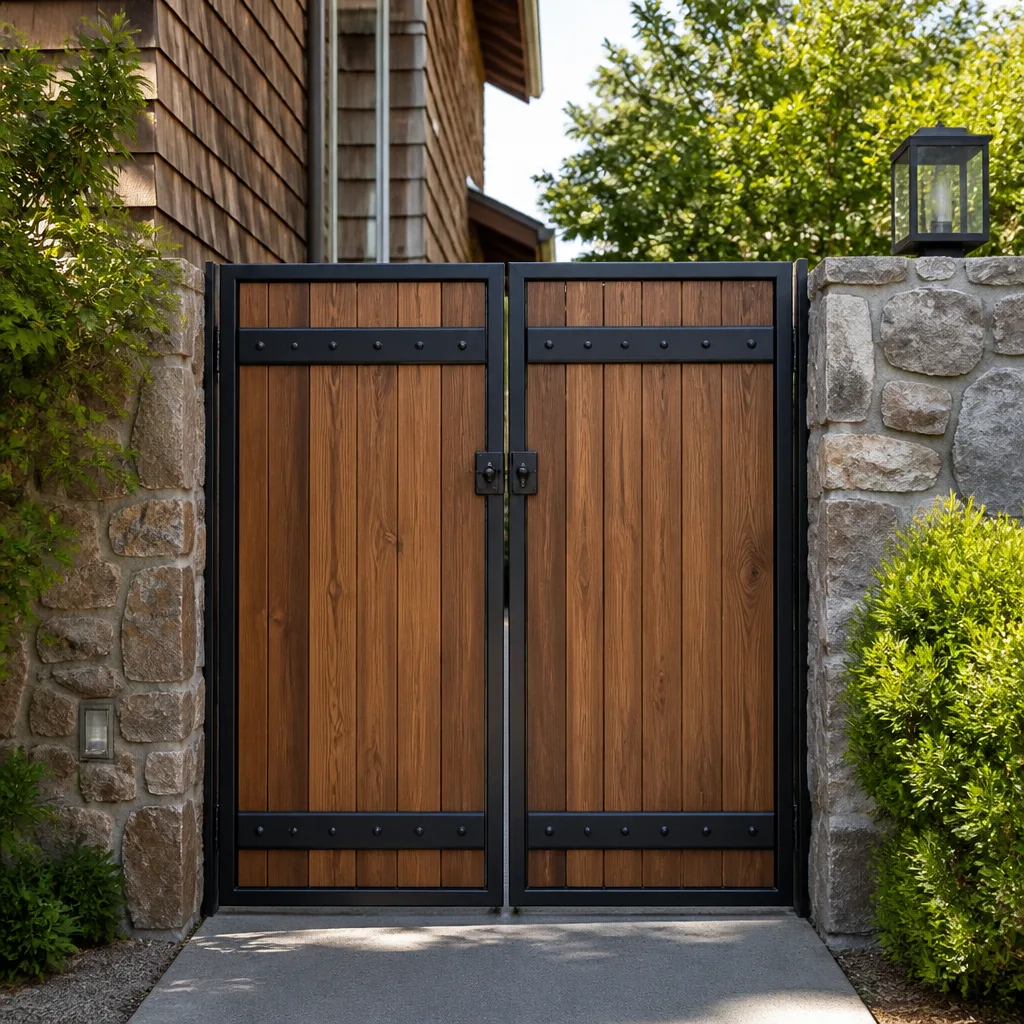 Wood & steel frame
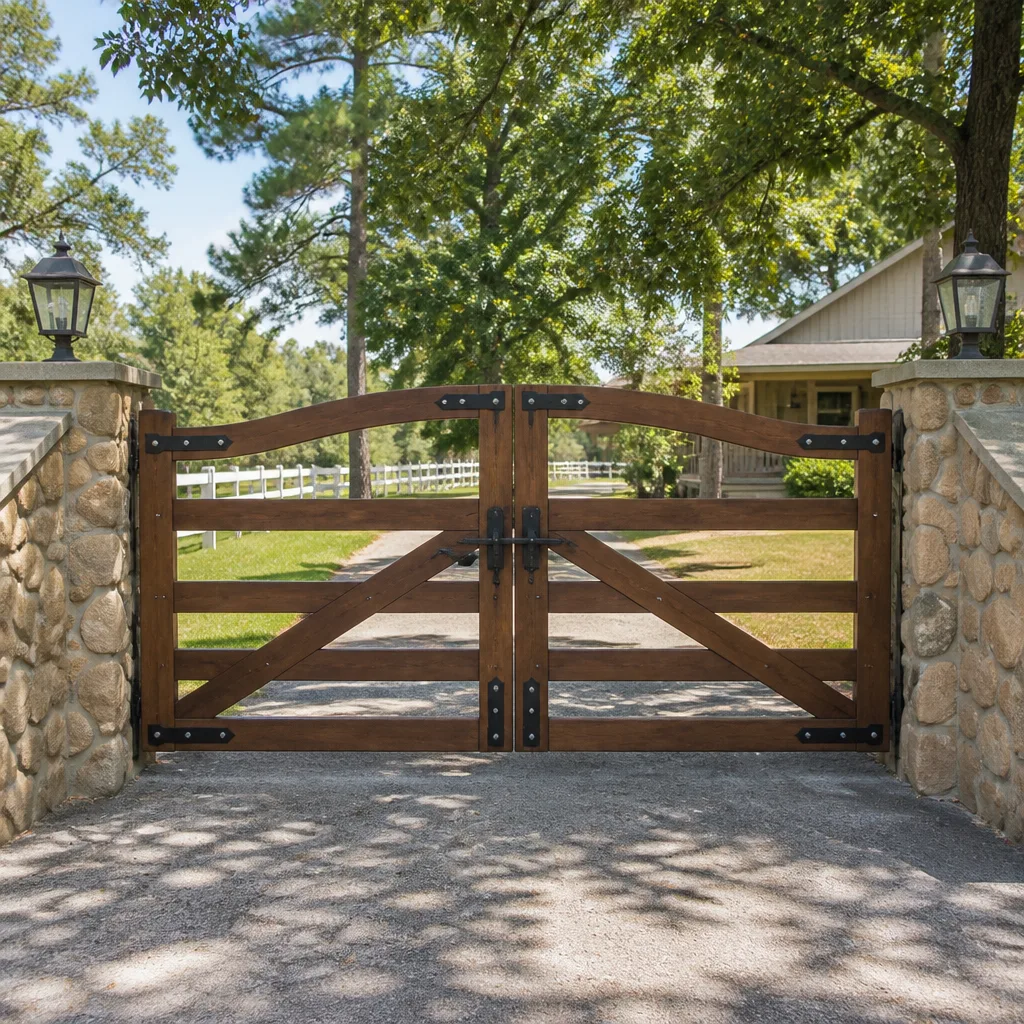 Farm & ranch
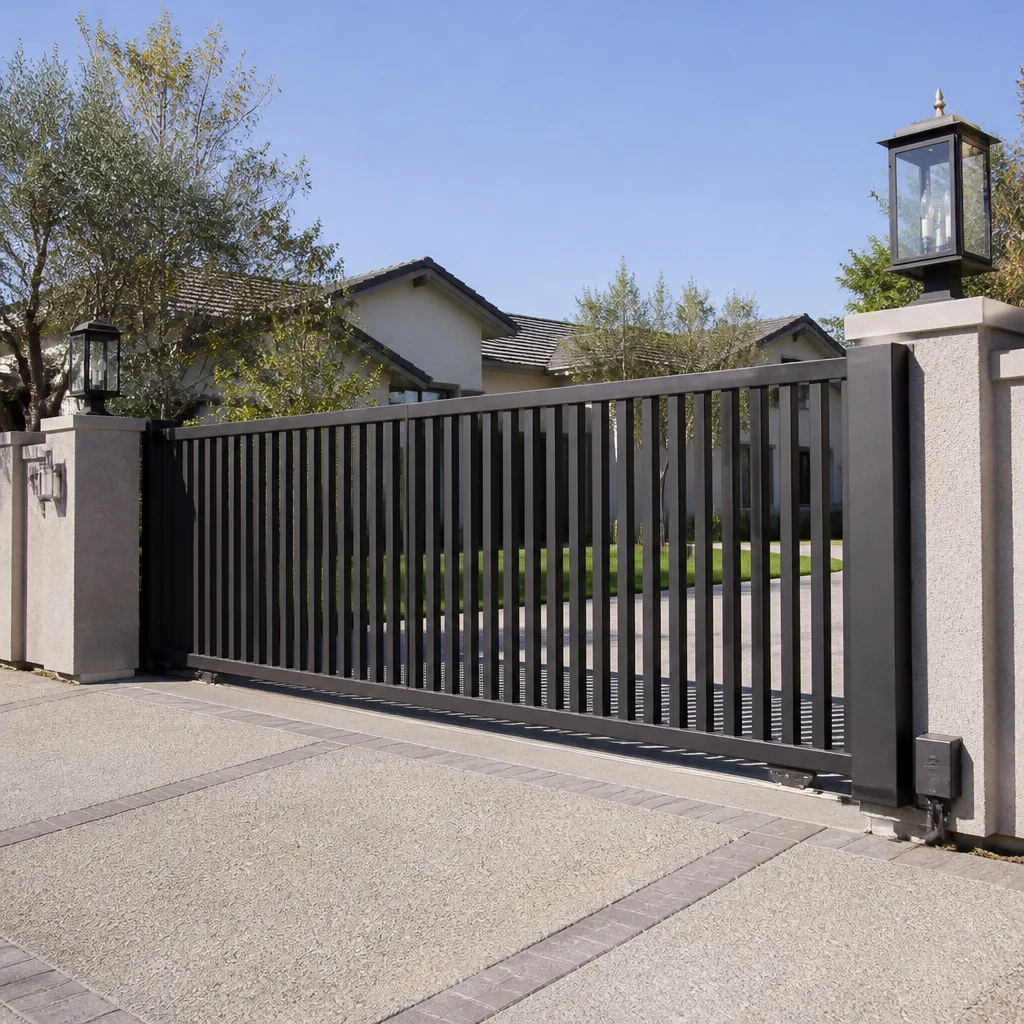 Sliding driveway gates
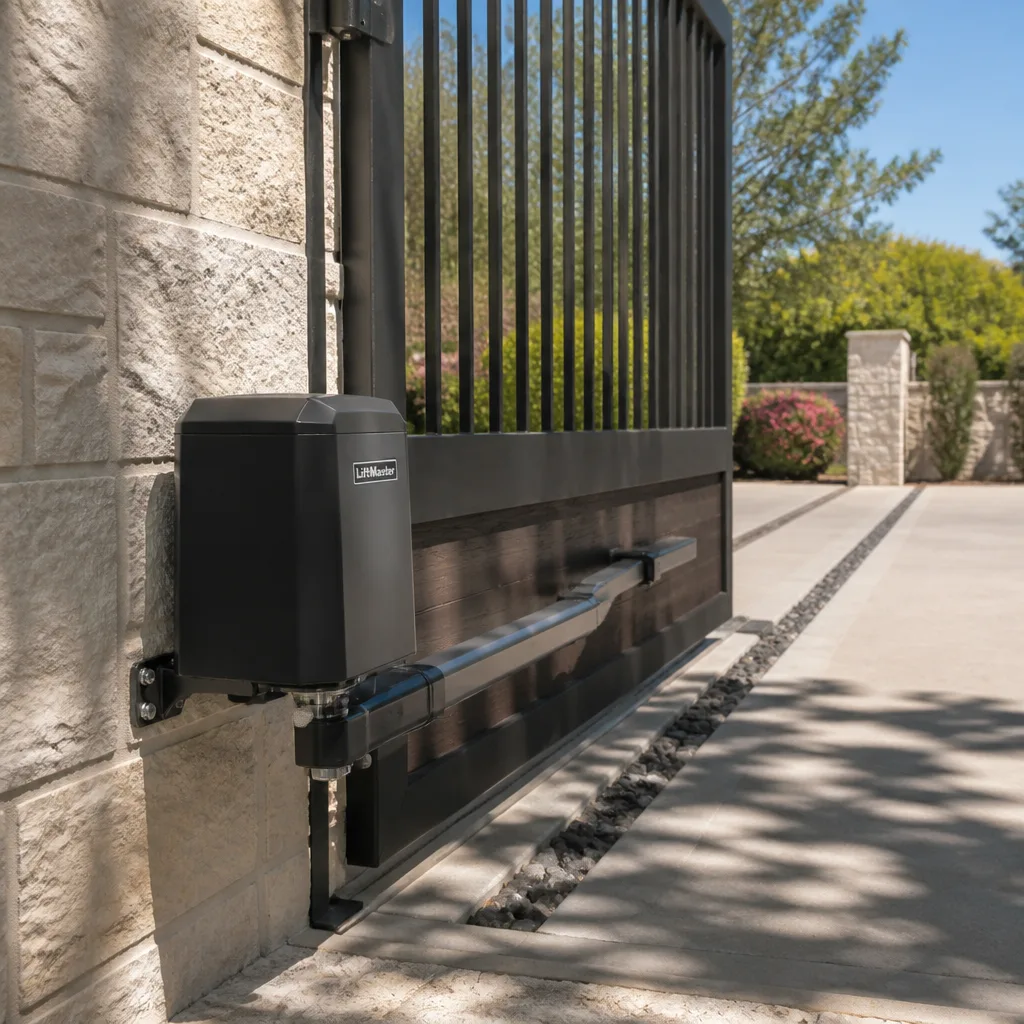 LiftMaster operators
Free on-site gate assessment - hinges, posts, and your LiftMaster or Nice gate operator checked before anything is quoted
The assessment is free and the quote is the invoice.
Get your free estimateSeasonal Gate Repair Care for Tampa: Year-Round Homeowner’s Guide
Here’s a number that surprises most Tampa homeowners: the gate failures we see in November are rarely caused by November. They’re the accumulated result of five months of wet-season neglect that finally crosses a threshold when the humidity drops and wood posts contract, pulling fasteners loose from their saturated holes. A gate that worked fine in September suddenly sags in late October. This guide walks you through twelve months of gate care built around Tampa’s actual climate, not a generic four-season calendar that was written for Maryland. By the end, you’ll know exactly what to check, when to check it, and what a fair price looks like when something does need Gate Repair services.
Styles & brands we work with
Quick Answer
Seasonal gate care in Tampa means preparing for the wet season in April and May, doing storm triage from June through September, and using October through March for sealing, hinge replacement, and anchor inspection. For DIY vs Professional Gate Repair: The Tampa Homeowner’s Decision Guide considerations, expect to spend roughly $150 to $400 per year on proactive maintenance. Expect to spend roughly $150 to $400 per year on proactive maintenance, compared to $600 to $2,500 for reactive repairs when a gate fails at its post or a control board fries after a lightning strike. A 20-minute quarterly walkthrough catches most problems before they become emergencies.
Table of Contents
- Wet Season Prep (April – May): The Five Tasks That Prevent 80% of Summer Failures
- Mid-Wet-Season Triage (July – August): Storm Inspection Without Voiding Your Warranty
- Summer Lightning Protection: A $35 Fix Versus a $900 Replacement
- Dry Season Transition (October – November): The Best Window for Sealing and Hinges
- The Annual Reset Check: A 20-Minute Walkthrough Anyone Can Do
- What Tampa Gate Work Actually Costs, by Season and Repair Type
- Common Mistakes to Avoid
- When to Call a Professional
- Frequently Asked Questions
- The Bottom Line
Wet Season Prep (April – May): The Five Tasks That Prevent 80% of Summer Failures
Tampa’s wet season runs from roughly mid-May through October, dropping 45 to 50 inches of rain on your gate’s hardware, motor housing, and wood posts. The failures we see most often during those months are predictable: rust migrating at welded joints, water sneaking into motor housings through worn gaskets, and wood posts rotting at the concrete collar where standing water pools. The good news is that a single afternoon of preparation in April or early May disrupts all three.
Here are the five tasks, in order of importance:
- Inspect and refresh the post-to-ground seal. Walk to each gate post and look at the concrete collar where it enters the ground. If you see a gap between wood and concrete, or if the old caulk is cracked and pulling away, water is getting in. Scrape the old sealant, let the area dry for one full sunny day, and apply a bead of exterior-grade polyurethane caulk. On a double gate, do both posts. This single step costs about $14 in materials and prevents the $700 to $1,200 post replacement we do every August.
- Check motor housing gaskets and weep holes. LiftMaster, FAAC, and Mighty Mule operator housings all ship with rubber gaskets that dry out in the sun. Run your finger along the gasket; if it’s stiff or cracked, order a replacement kit ($20 to $45 depending on brand) before the rains start. Also confirm the weep holes at the bottom of the housing are clean. Mud dauber wasps love those holes in spring, and a blocked weep hole turns a sealed box into a swimming pool.
- Lubricate every hinge and wheel with a wet-rated lubricant. Skip the WD-40. Use a lithium-based grease or a silicone spray rated for outdoor use. Tampa’s humidity washes thin oils away within weeks. Two minutes per hinge now saves you a seized hinge and a bent gate leaf in July.
- Test the safety reverse and photo eyes before storm season. Dry-season dust coats the photo eye lenses. Wipe them with a damp cloth, then test the reverse by placing a cardboard box in the gate’s path. If the gate doesn’t reverse, that’s a $150 to $300 sensor or board fix waiting to happen, and the wet season is when you actually need it.
- Document your gate’s baseline condition with photos. Take six photos: both hinges top and bottom, the control board, the motor housing, and the post bases. Store them in a folder on your phone. If a storm does cause damage, you’ll have pre-storm evidence for your insurance claim, and you’ll be able to tell what changed.
None of these tasks requires special tools. Together they take about two hours on a Saturday morning. And they cost less than the service call fee you’d pay a technician to do the same inspection after a failure.
Mid-Wet-Season Triage (July – August): Storm Inspection Without Voiding Your Warranty
When a named storm passes through Tampa in July, the first thing most homeowners do is go outside and inspect their gate. The second thing they do is open the motor housing to “see if it got wet.” That second thing can void the warranty on a LiftMaster or FAAC operator, because most manufacturer warranties are voided by unauthorized access to the control board compartment. So let’s talk about what you can safely inspect, what you should photograph, and what belongs in the hands of someone who does electric gate repair in Tampa every day.
What you can safely do after any major storm:
- Inspect the gate’s physical movement manually. With the operator disengaged (every brand has a manual release lever or key), push the gate open and closed by hand. It should move smoothly, without binding, grinding, or resistance. A gate that moves freely by hand but strains under power points to an operator problem, not a mechanical one.
- Check for debris in the track or under the gate. Storms drive leaves, soil, and small branches into slide gate tracks and under swing gates. A two-inch branch jammed under a swing gate can overload the operator and burn out a capacitor. Clear what you can see without disassembling anything.
- Inspect the post bases and anchors for new cracks or movement. Saturated soil softens, and gates that shifted during high winds sometimes pull at their concrete anchors. Compare what you see to your April baseline photos.
- Check the manual function of the keypad and any intercom. Water intrusion into keypads is the most common mid-summer call we get in South Tampa and Carrollwood. If the keypad is foggy or unresponsive, photograph it and cover it with a plastic bag until a technician arrives.
What belongs to a professional, and why:
- Any sign of water inside the motor housing. You can see it from the outside: condensation on the interior of the housing window, rust streaks below the cover, or a gate that hums but doesn’t move after heavy rain. Opening the housing yourself to dry it out is exactly what voids most warranties.
- Any damage that an insurance adjuster should see in person. If a falling branch dented the gate frame, or a surge appears to have damaged the control board, don’t attempt a repair first. Document it, keep the damaged parts in place, and get a professional assessment. The repair quote becomes part of your claim documentation.
- Any sudden change in how the gate operates: pauses, hesitations, reversing for no reason, or a gate that opens on its own at 3 a.m. after a storm. These are signs of water in the board or a compromised safety circuit, not problems that resolve themselves.
We’ve worked on thousands of Tampa gates since 2009, and the pattern is consistent: the homeowners who do the five-point walkaround after a storm and call early pay a fraction of what the ones who wait until total failure pay. A wet-season triage inspection takes 20 minutes. The alternative is a gate that fails at the worst possible moment, usually during the next heavy rain, usually when you’re already running late.
Summer Lightning Protection: A $35 Fix Versus a $900 Replacement
Tampa is the lightning capital of the United States. The corridor from St. Petersburg through Tampa to Lakeland records more cloud-to-ground strikes per square mile than any other metro area in the country. Your gate’s control board is a circuit board connected to a 120-volt line and a 30-foot metal structure. That’s not a question of whether lightning will eventually affect it. It’s a question of when, and how expensive the damage is.
The single best return on investment in all of gate maintenance is a surge protector installed at the operator control board or at the breaker panel feeding the gate. Here’s the math, from real Tampa-area invoices we’ve seen:
A basic in-line surge protector for a gate operator runs $35 to $60 for the part. Installation takes a technician about 30 minutes. A replacement control board for a LiftMaster operator typically runs $400 to $700 just for the part. For a FAAC or a BFT swing-gate operator, replacement boards can hit $900. Add labor, and you’re looking at a $500 to $1,200 repair versus a $35 part that absorbs the surge before it reaches the board.
Both of our gate installation and gate repair services in Tampa include a surge protection assessment as part of the written quote, because we’d rather install a $35 part than sell you a $700 board later.
If you already have surge protection, check its indicator light once a month during the wet season. Surge protectors are sacrifice devices; once they absorb a substantial strike, they stop protecting. A surge protector with a dark indicator light is a dead protector, and it’s doing nothing for your board. Replace it before the next storm, not after.
One more Tampa-specific note: it’s not just direct strikes. Strikes within a quarter mile of your home can induce enough voltage on the gate’s low-voltage wiring to damage the board even though the gate was never directly hit. Surge protection defends against this induced surge too, which is why we recommend it on every electric gate in Hillsborough County regardless of whether the gate is the tallest structure on the property.
Dry Season Transition (October – November): The Best Window for Sealing and Hinges
By mid-October, Tampa’s humidity drops from the 80s into the 60s, and the daily rain pattern finally breaks. For gate owners, this is the most valuable maintenance window of the year. Wood posts that spent six months saturated are drying out and contracting. Metal components are finally not actively rusting. And contractors, including gate specialists, have lighter schedules because the summer emergency rush has ended.
Three jobs belong in this window, and here’s why:
- Sealing wood gates and posts. Wood can only be properly sealed when its moisture content is low. Sealing a damp post in July traps water inside and accelerates rot. By late October or early November, wood posts have dried enough to accept a penetrating sealer, and the sealer will cure before the next wet season. A gallon of quality exterior sealer runs $40 to $60. A replacement wood gate post costs $400 to $900 installed. You do the math.
- Replacing worn hinges and rollers before they fail under load. Hinges and rollers wear gradually, and by late in the wet season many are on their last legs. Replacing them in October or November means the gate operates smoothly through the dry months, when you use it most for yard work, holiday visitors, and cooler-weather entertaining. Hinge replacement on a standard residential swing gate typically runs $150 to $350 including parts and labor. A gate that falls because a hinge snapped costs significantly more.
- Inspecting concrete anchors and post bases. The dry season is the only time of year when you can accurately assess anchor condition. During the wet months, saturated soil masks movement. In the dry months, a gate that still shifts or wobbles at its base has a real anchor problem, not a temporary soil condition. Anchor repair or replacement typically runs $300 to $800 depending on the post size and concrete work required.
One more reason the October – November window matters: scheduling. Most gate companies in Tampa are swamped from April through September with emergency calls. By late October, the influx of urgent repairs subsides, and we can schedule maintenance and sealing work within days rather than weeks. If you’ve been putting off any gate work all year, this is when you’ll get the fastest appointment and the most relaxed technician.
The Annual Reset Check: A 20-Minute Walkthrough Anyone Can Do
Every gate operator has three things that drift over time: the open travel limit, the close travel limit, and the sensitivity of the safety reverse. When the travel limits drift, the gate slams harder than it should at the end of travel, or doesn’t seal properly at the close. When the safety reverse drifts, the gate doesn’t retract when it hits something, or retracts too easily and won’t close fully. These aren’t failures; they’re maintenance items. And you can check all three in about 20 minutes with no special tools.
Here’s the annual reset check, in order:
- Close the gate and look at how it meets the stop or the latch. A properly adjusted gate should come to rest gently, without slamming, and should sit flush with the latch or the opposite leaf. If it’s slamming, the close travel limit needs attention. If it’s not sealing, the limit or the opening force is off.
- Place a cardboard box (about knee height) in the gate’s path and close the gate. The gate should reverse when it contacts the box, not crush it. If your gate has photo eyes, block one beam and check that the gate refuses to close or reverses immediately. Safety reverse failures are the most serious problem we find in Tampa, simply because a gate that doesn’t reverse is a serious hazard to kids and pets.
- Open the gate fully and check that it stops before the limit. A gate that travels too far and hits its mechanical stop every time is slowly damaging its own operator. Listen for a “clunk” at the end of travel. A properly adjusted gate should stop silently.
- Check the battery backup if you have one. Disconnect the main power at the breaker or unplug the operator, then cycle the gate. A healthy battery backup will open and close the gate at least once, often two or three times. If the gate is dead the moment you cut power, the battery needs replacement. Most backup batteries live 3 to 5 years.
- Look over every exposed wire for damage. Rodents chew through gate wiring more often than you’d think, especially in winter when they’re nesting. Check the low-voltage wire runs between the operator and the keypad, photo eyes, and vehicle loop detector. Sunlight and weed trimmers also damage underground and exposed wiring over the course of a year.
We perform this reset check on every gate we service in Tampa. It’s part of the written price, not an add-on. But if you’d rather do it yourself, this list covers what we’re looking at.
Write down the date you did each check. Next year, when something starts behaving differently, you’ll know exactly how long it’s been running correctly, and that’s useful diagnostic information for any technician.
What Tampa Gate Work Actually Costs, by Season and Repair Type
Gate repair pricing in Tampa has its own seasonal rhythm, and understanding it helps you plan. Some repairs are cheapest in the dry season. Others cost the same year-round. Here’s what we’ve seen on invoices across the Tampa area over the past few years:
| Repair Type | Typical Range | Best Season | Notes |
|---|---|---|---|
| Gate latch replacement | $120 – $280 | Any | Most common single repair. Parts $20 – $80, labor $100 – $200. |
| Hinge replacement (single gate) | $150 – $350 | Dry season (Oct – Mar) | Cheaper to schedule when contractors aren’t rushing between storm calls. |
| Wood post replacement | $400 – $900 | Dry season | Requires concrete work; dry soil makes for cleaner excavation. |
| Control board replacement | $500 – $1,200 | Any (storm surge season creates demand) | Part cost drives this; $35 surge protector prevents most of it. |
| Operator motor replacement | $400 – $1,000 | Any | Often repairable if caught before total burnout. |
| Full gate installation (single residential) | $2,500 – $8,000 | Dry season for scheduling | Material cost varies widely by style and material. |
| Electric gate panel / keypad replacement | $250 – $600 | Any | Water intrusion is the leading cause in Tampa. |
These are ballpark figures, not quotes. Your exact price depends on the equipment brand, the gate’s size and weight, and what the technician finds when they open the housing. What we can tell you is that our written price always comes before any work begins, and we don’t float a number that changes once the job is underway. If you want a free estimate for gate work in Tampa, call (850) 789-6299 and we’ll send someone to your address, look at the actual gate, and give you a number in writing.
Common Mistakes to Avoid
- Lubricating wood gates with motor oil or penetrant. Petroleum products break down wood fibers and attract dust into a paste that accelerates wear. Use a dry silicone spray on metal and a wood-safe penetrating sealer on wood. The wrong lubricant is worse than none.
- Waiting until a gate falls to fix a wobbling post. A post that wobbles is a post that hasn’t fallen yet. The $500 anchor repair becomes a $1,500 frame rebuild when the gate actually topples. In Tampa’s sandy soil, wobbling posts don’t heal themselves.
- Sealing wood gates in June. Early summer is the worst time to seal wood in Tampa. The wood is saturated, the rain will wash the sealer off before it cures, and you’ll have wasted a $50 gallon of good sealer and a Saturday. Seal in October or November.
- Ignoring the surge protector’s indicator light. A dead surge protector gives no warning when it’s passed its useful life. You have to look at it. Thirty seconds once a month beats a $700 control board.
- Opening the motor housing after a storm. The desire to check for water is understandable. But if your operator is under warranty, cracking that housing can give the manufacturer an out. Call a professional and let them document the damage properly.
- Using the gate as a play structure. Kids swing on gates. It’s what they do. A residential gate operator can hold a 300lb gate, but a kid hanging on the free leaf adds cyclic load it was never designed for. We see bent hinges and stripped post lags on gates that also happen to be near swing sets.
- Power washing the gate and operator housing. High-pressure water forces itself past gaskets and into electronics. A garden hose on low pressure, or better yet a bucket and a rag, is all you need to clean a gate and operator. The 2,500 psi blast that cleans your driveway is a death sentence for your control board.
When to Call a Professional
Watch for these signals, in approximate order of urgency: a gate that reverses on its own at random times; a gate that hums but won’t move; visible sag at the hinge side of a swing gate; rust that flakes off in sheets rather than dusting; water droplets inside the motor housing window; a keypad that requires multiple codes to respond; and fresh cracks in the concrete at the post base. If your gate shows any of these, call (850) 789-6299. Latch and Post Gate Repair Tampa offers free estimates in Tampa, and a technician can usually assess the problem in one visit. Every quote is written down before the work starts, so you’ll know exactly what the repair will cost. We won’t pressure you to move forward. We’ll just tell you what we found and what it takes to fix it.
Frequently Asked Questions
Most gate repairs in Tampa run between $150 and $800, depending on what’s failed. A latch replacement is typically $120 to $280. A hinge repair is $150 to $350. A control board replacement can run $500 to $1,200. The exact price depends on your gate’s brand, size, and what we find on site, but the written quote you receive before work starts is the number you pay. Call (850) 789-6299 for a free estimate at your house.
Yes, but only for actual emergencies. A gate that won’t close at all, a gate that has fallen, or a gate that’s jammed open when you need security at night are emergency calls. For emergencies, call (850) 789-6299 and a live person will answer, any hour of the day or night.
October through early March is the best window for major gate work in Tampa. The dry weather means wood is stable, the ground is drier for concrete work, and scheduling is more open. You’ll generally get on the calendar faster in November than in July, and the work will cure or set properly without rain delays.
Homeowners insurance may cover gate damage from storms, falling trees, and some lightning events, but it rarely covers routine wear, rust, or neglect. Home warranty policies are inconsistent; some cover the operator only, and most exclude the gate structure, hinges, and posts. We recommend checking your policy before filing a claim, and taking photos of your gate before storm season for documentation.
Install a surge protector at the operator control board or at the breaker feeding the gate. The part costs $35 to $60, and it absorbs the surge that would otherwise destroy a $500 to $900 control board. Check the surge protector’s indicator light monthly during the wet season, and replace it if the light is out. For electric gate work in Tampa, our technicians include surge assessment in every visit.
Our technicians are factory-trained on LiftMaster, FAAC, BFT, and Mighty Mule, among others, and we service residential and light commercial gates across Tampa. If you’re not sure what brand you have, we can identify it during the estimate visit. Every visit includes a written price before work starts, shoe covers and drop cloths inside your home, and a photo of the cleanup before we leave.
The Bottom Line
Tampa gate care comes down to two seasons: a wet season that corrodes and floods, and a dry season that cracks and bakes. Prepare in April and May with post sealing, hinge lubrication, and surge protection. Inspect after every major summer storm using the walkaround checklist, and call before water damage becomes a control board replacement. Use the October – November dry window for sealing wood, replacing hinges, and inspecting anchors. Do the 20-minute annual reset check once a year. Spend $150 to $400 per year on prevention, and your gate will outlast your neighbor’s by a decade. For more guides & resources, explore our maintenance library. Skip it, and you’ll meet us on the worst possible day, with a gate that won’t close and a repair bill in the four figures.
If you’re in Tampa and want a second set of eyes on your gate, we’re at Latch and Post Gate Repair Tampa home. Call (850) 789-6299 for a free estimate. Every quote is in writing. Every visit protects your floors, your kids, and your schedule. And every repair is backed by the 365-Day Done Right Promise: if it’s not right, we make it right, no argument, no fine print.
Written by Cody Beckman, Owner at Latch and Post Gate Repair Tampa, serving Tampa since 2009.
See the difference
 Before
 After
After Before
 After
After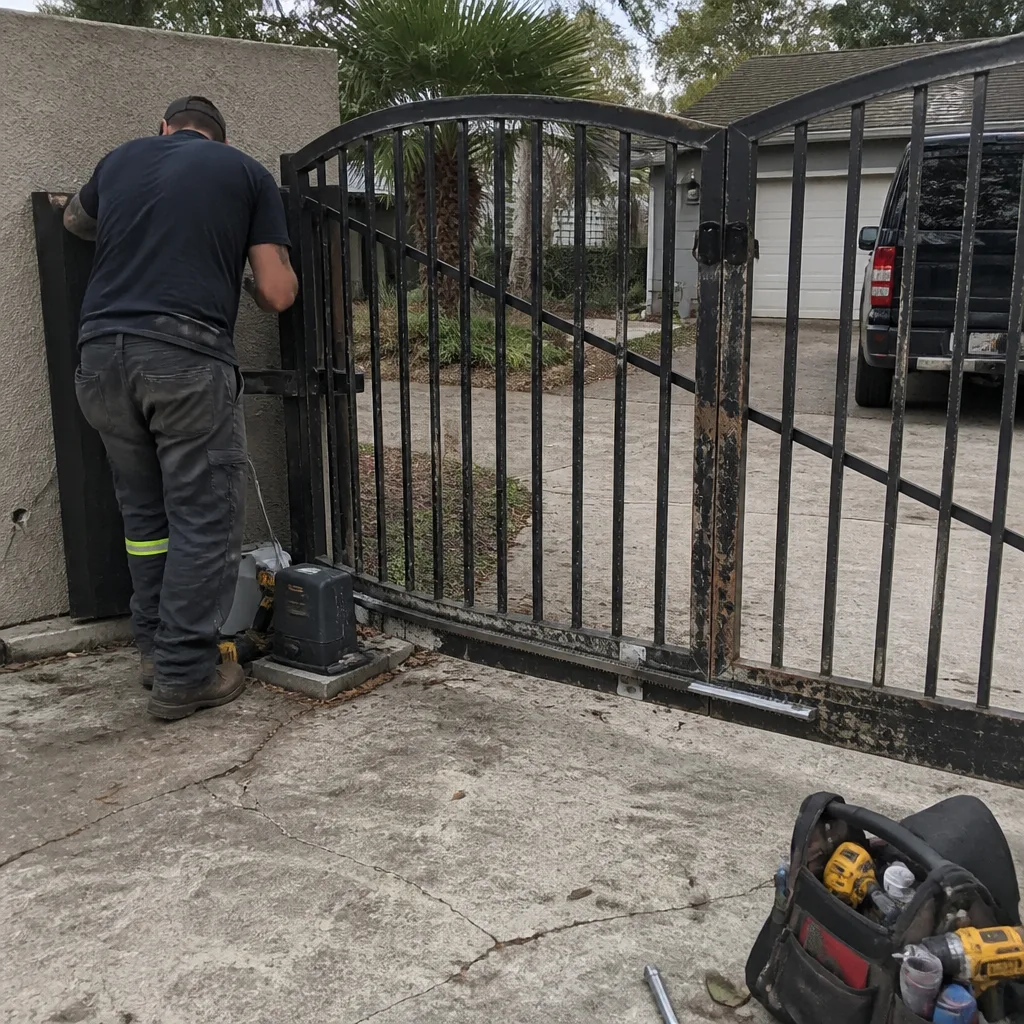 Before
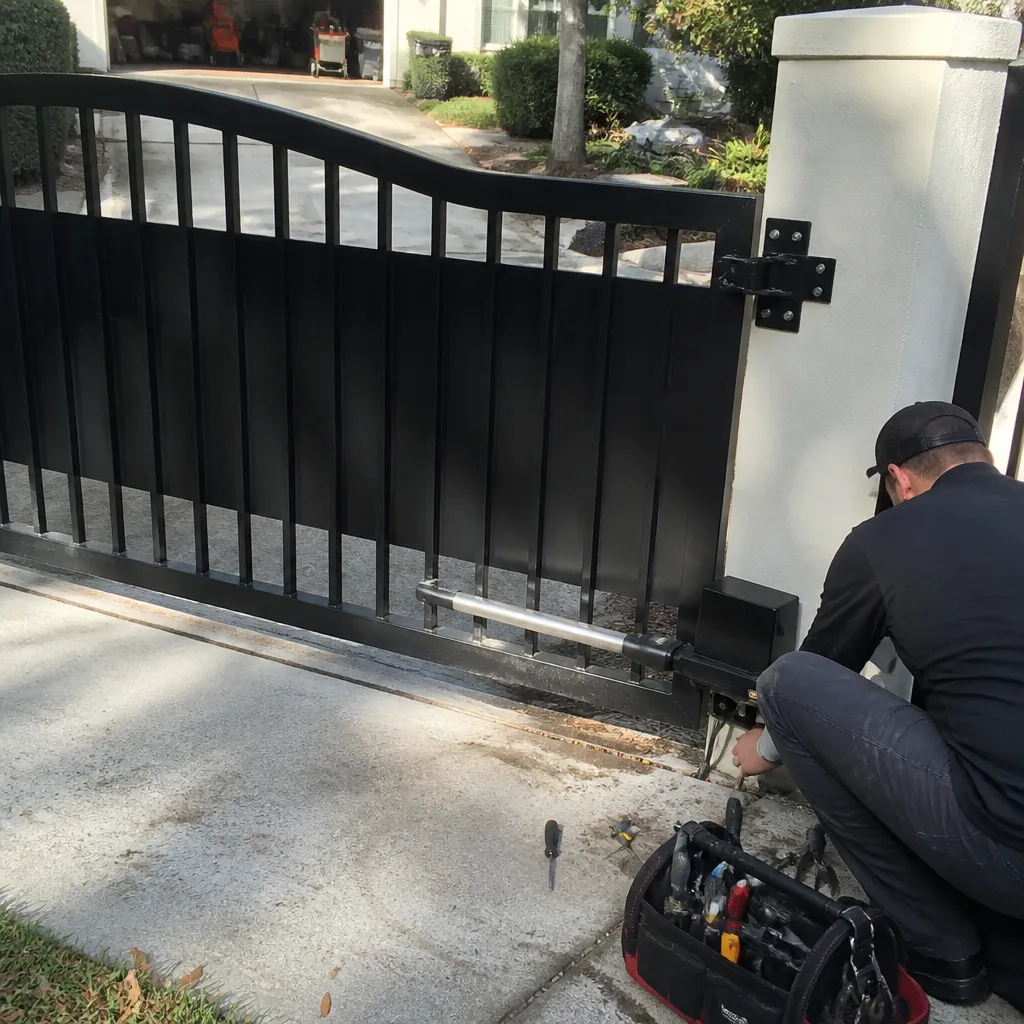 After
After