
Last updated October 17, 2026
 Wrought iron
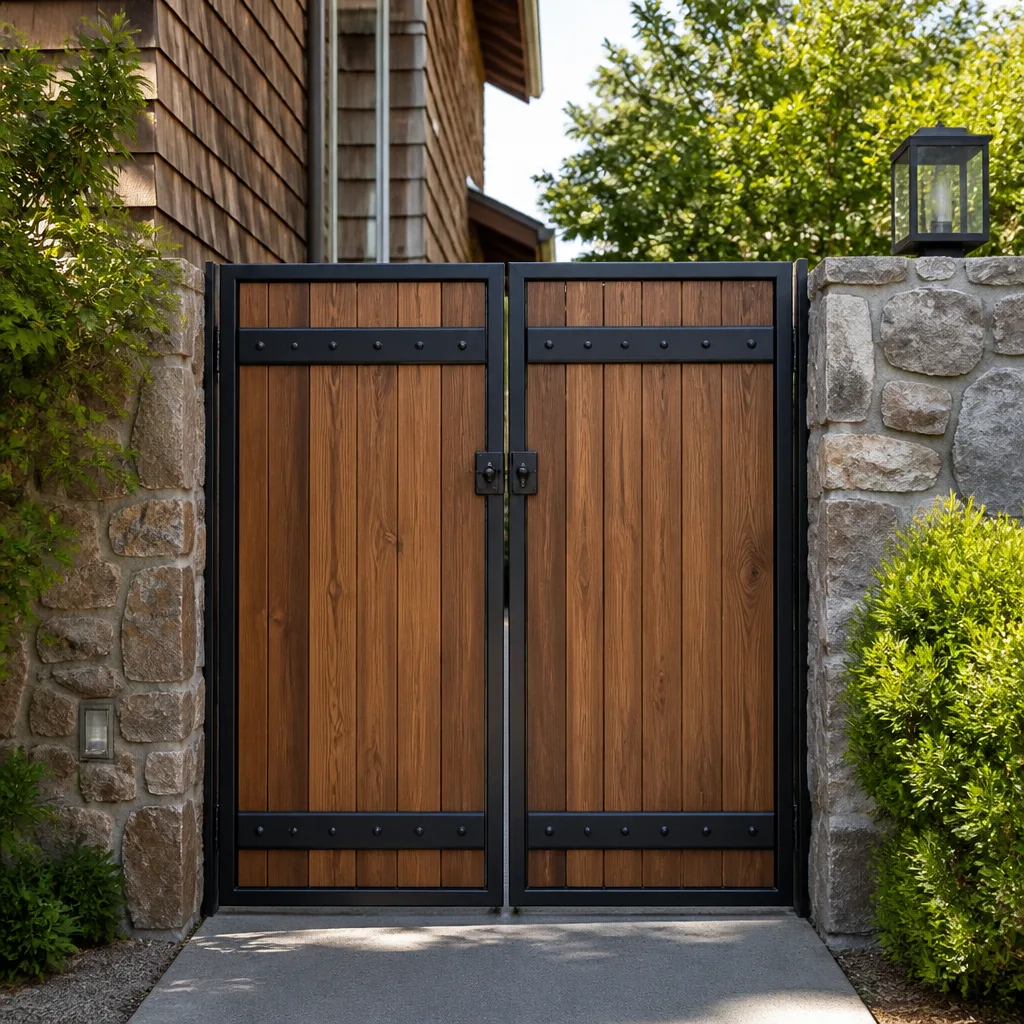 Wood & steel frame
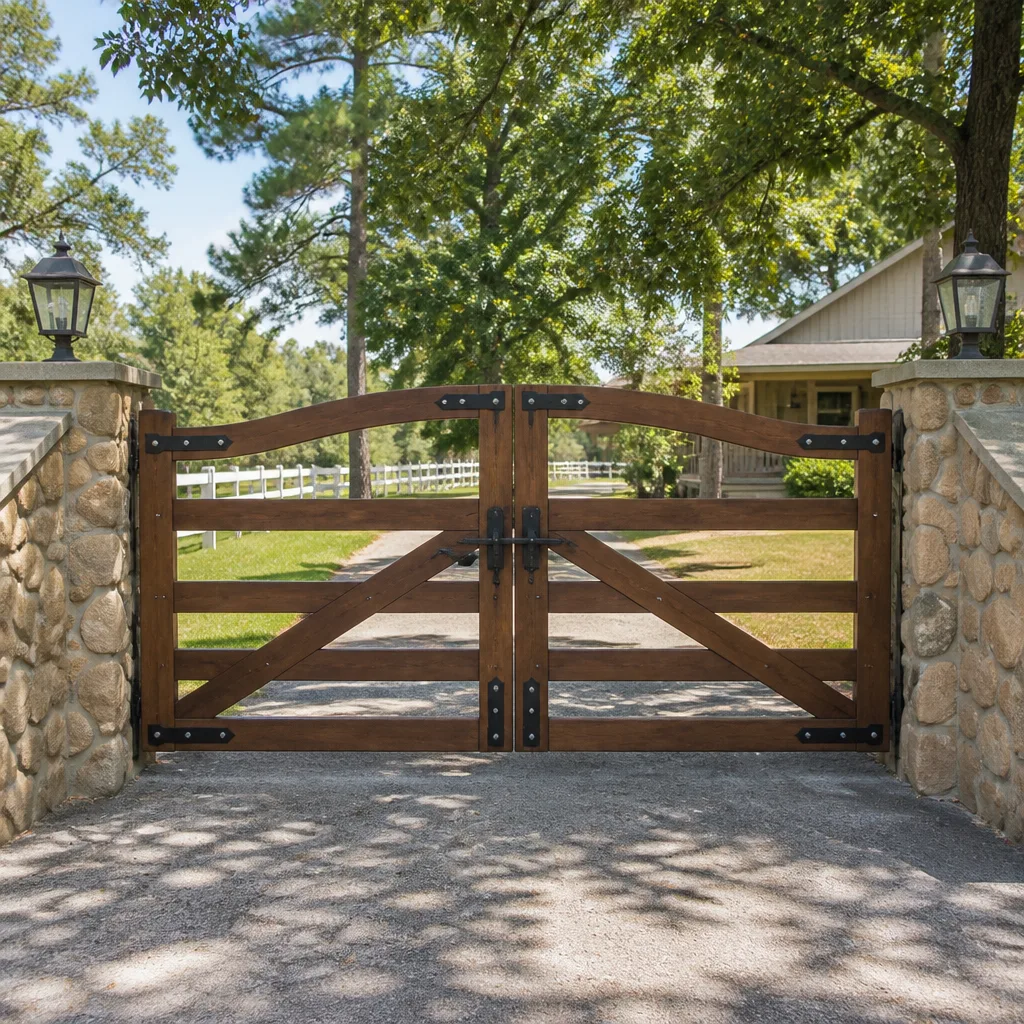 Farm & ranch
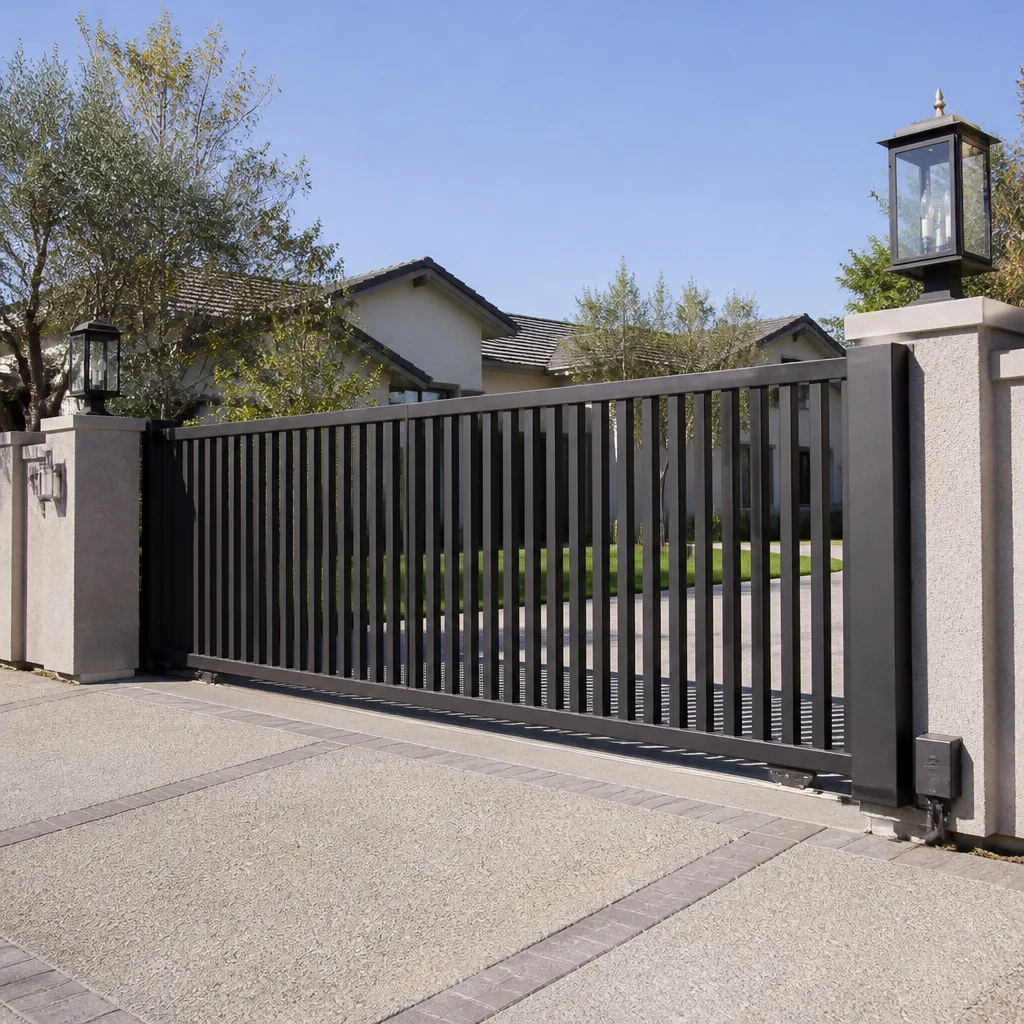 Sliding driveway gates
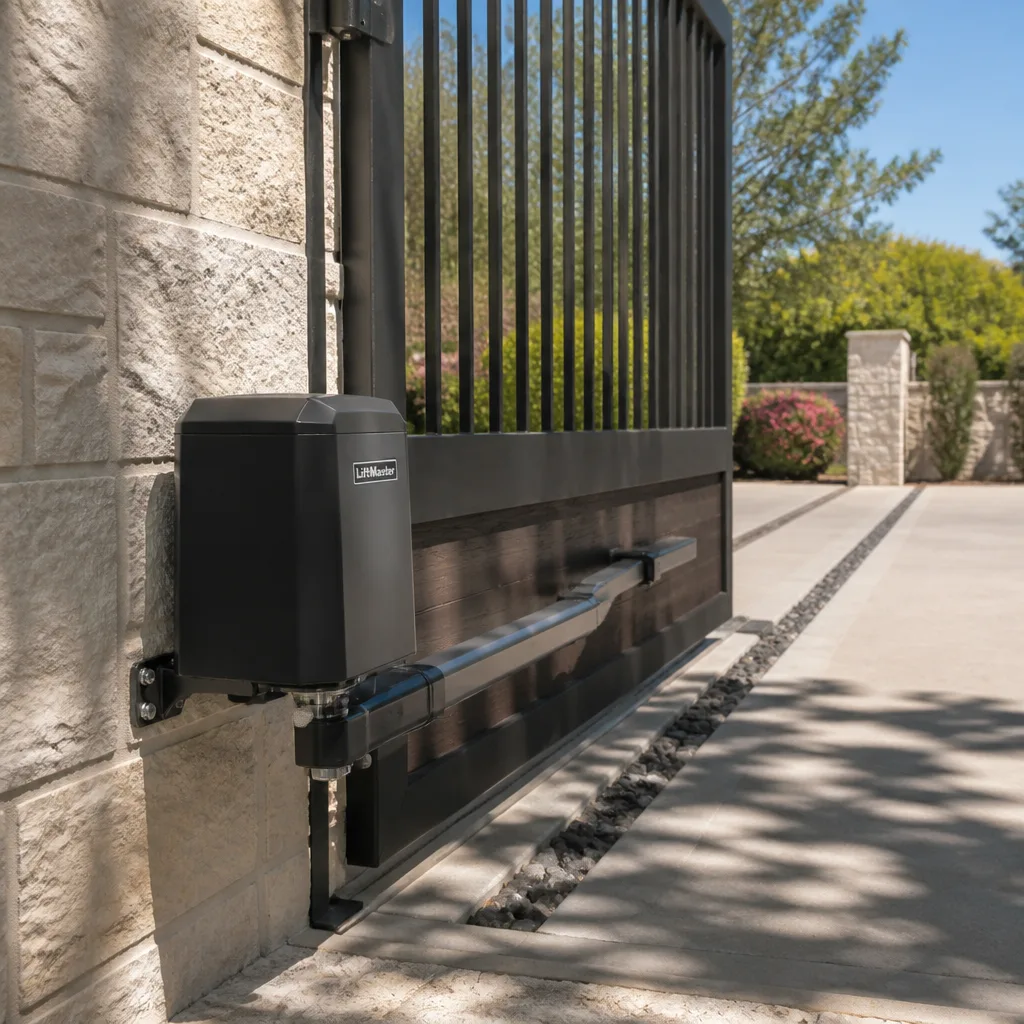 LiftMaster operators
Free on-site gate assessment - hinges, posts, and your LiftMaster or Nice gate operator checked before anything is quoted
The assessment is free and the quote is the invoice.
Get your free estimateGate Repair Permits, Codes & Inspections in FL: What You Need to Know
Here’s something most Tampa homeowners don’t expect to hear: a simple hinge swap is usually permit-free, but adding an electric gate operator to that same gate can trigger a permit requirement under Florida law. Not because the gate changed, but because the low-voltage wiring running from the operator to your electrical panel counts as electrical work under Florida Statute 489. This guide draws the exact line between repair, alteration, and new work so you know before the contractor shows up, not after the work is done. For more on what to watch for, see our Gate Repair Warning Signs: A Tampa Homeowner’s Reference Guide. You’ll learn what Hillsborough County actually enforces, how HOAs can be stricter than code, what happens at resale if a gate was automated without a permit, and the paperwork a good gate specialist should hand you when the job closes.
Quick Answer
Most gate repairs in Florida, including replacing hinges, latches, wheels, or even a like-for-like gate panel, do not require a permit under the 2023 Florida Building Code. Permits typically become necessary when the work changes the gate opening size, relocates posts, adds automation for the first time, or runs new electrical wiring. In Hillsborough County, a new electric gate operator almost always requires an electrical permit because the wiring falls under Florida Statute 489’s definition of electrical contracting.
Styles & brands we work with
Table of Contents
- The Repair vs. Alteration Line Under Florida Building Code 2023
- Hillsborough County Permit Thresholds and the Online Portal
- When the HOA Wants Sign-Off Before the County Does
- Electric Gate Operators: Why the Wiring Triggers a Permit
- What an Unpermitted Gate Operator Means at Home Sale
- How a Reputable Gate Specialist Handles Permitting
- Closing the Permit: Documentation You Should Receive
The Repair vs. Alteration Line Under Florida Building Code 2023
The Florida Building Code draws a distinction that most homeowners never see: repairs are exempt from permits, alterations are not. The test is whether you’re restoring something to its original condition or changing what’s there.
A repair, in the code’s language, involves restoring a component to its previous state. Replacing a worn-out gate hinge with a new hinge of the same size and type counts as a repair. Swapping a broken latch for an equivalent latch is a repair. Replacing a rusted gate wheel with a matching wheel is a repair. None of these require a permit, and a qualified gate technician can complete them in a single visit without pulling paperwork.
An alteration changes the structure, dimensions, or function of the gate system. Examples that typically trigger a permit:
- Widening a driveway gate opening from 10 feet to 12 feet, which requires new posts and new footings
- Moving a gate post to a different location, even if the gate itself stays the same size
- Adding an electric operator to a gate that was previously manual
- Running new electrical wiring from the home to the gate location
- Changing the swing direction or hardware configuration in a way that alters stress loads on the posts
In Tampa, we’ve seen homeowners run into trouble on exactly this boundary. A family in Carrollwood planned to replace a sagging wood gate and ended up needing a permit because the fix required moving a post six inches to catch solid footing. The gate looked the same when finished, but the work was a structural alteration, not a repair.
Here’s the practical rule we use on every estimate: if we’re unbolting old hardware and bolting on equivalent new hardware, no permit. If we’re pouring concrete, moving a post, changing the opening width, or touching electrical, we check the county requirements before we quote the job.
The 2023 Florida Building Code (which Florida adopted with amendments in 2024) also clarifies that “like-for-like” replacements of mechanical equipment do not require a permit as long as the replacement does not change the equipment’s capacity or electrical characteristics. For gate work, that means replacing a failed FAAC operator board with the same board is a repair. Replacing a FAAC operator with a BFT unit of different amperage and control logic may be considered an alteration requiring electrical review.
If you’re unsure where your planned gate work falls, our Gate Repair in Tampa page walks through common repair scenarios. And for larger projects, Gate Installation in Tampa covers what’s involved when an alteration means new posts, new footings, and county inspection.
Hillsborough County Permit Thresholds and the Online Portal
Hillsborough County processes residential permits through its online portal, and the good news is that checking whether your gate work needs a permit is free and takes about ten minutes. The bad news is that the threshold language is buried in county amendments that most homeowners never read.
Hillsborough County follows the FBC but adds local thresholds. For gate work specifically, the county generally treats fence and gate projects under the same section of the residential code. A freestanding gate repair with no electrical component and no post movement is exempt. A gate that is part of a new fence installation, or a gate where posts are being set in new footings, requires a permit with a site plan showing setback lines and property boundaries.
Here’s what the process looks like in practice:
- Check first. Before we schedule any job that might touch posts or electrical, we check the Hillsborough County online portal. Homeowners can do the same by searching “Hillsborough County permit search” and entering the property address to see existing permits and any open violations.
- Determine if an electrical subtype applies. For gate operators, the electrical portion of the work is the actual trigger. Hillsborough County requires an electrical permit for installing or modifying any circuit, including the low-voltage circuit that powers a gate operator.
- Submit with a scope description. The permit application must state exactly what work is being performed: gate repair, gate replacement, operator installation, or electrical rough-in for an operator. Vague descriptions get returned for revision.
- Wait for review. Residential gate permits in Hillsborough County typically process in 3 to 7 business days when submitted electronically. Electrical permits for gate operators often move faster because the county treats them as minor electrical work, sometimes same-day or next-day.
- Schedule the inspection. Once the work is done, an inspector must sign off. For gate operators, the inspection usually happens in one visit and covers the wiring method, the disconnect location, and the ground-fault protection.
The portal also shows whether a property has an open code enforcement case, which matters if you bought a home with an existing unpermitted gate and want to bring it into compliance before selling. Homeowners in New Tampa and South Tampa face the same county requirements; the code is county-wide. Pinellas County, just across the bay, has a similar but not identical process, and the thresholds differ slightly. If your property borders both jurisdictions, ask your contractor which one applies to your address.
We’ve found that the single most common reason a gate permit gets delayed in Hillsborough County is an incomplete site plan. The county wants to see the property line, the gate location, the setback distance from the street, and the swing arc of the gate clearly marked. A hand sketch on graph paper works for most residential gates, but it has to include those four elements.
For electric gate work, an Electric Gate Repair in Tampa estimate from our team includes the permit check before you sign anything, so there’s no surprise fee after the fact.
When the HOA Wants Sign-Off Before the County Does
Hillsborough and Pinellas County HOAs can impose approval requirements that are stricter than county code, and this is where we see families lose money. The county may not require a permit for a like-for-like gate panel replacement, but the HOA may still want to approve the panel style, color, and material before the work starts.
The HOA overlay works in layers:
- Architectural review. Most HOAs in planned communities like Westchase, FishHawk Ranch, and Tampa Palms require architectural committee approval for any change visible from the street, including gate replacement. This applies even if the county considers the work exempt from permitting.
- Material restrictions. Some HOAs prohibit certain gate materials or styles. A homeowner who replaces a wood gate with an aluminum one without approval can be ordered to remove it, even though the work was otherwise code-compliant.
- Electrical approval. If the HOA has community gates or shared easements, adding an operator to a private drive gate may require HOA review of the electrical plan, even though the county only cares about the wiring safety.
- Contractor access rules. Many HOAs require contractors to register with the property management office, show proof of insurance, and comply with hours of operation. This is separate from any county permit requirement.
Why get HOA sign-off before a contractor pulls a county permit? Because the order of operations protects your money. If the HOA denies a gate material or style after the contractor has already poured footings and the county has already collected the permit fee, you pay twice: once to remove non-compliant work, and again to redo it with approved materials. Getting HOA approval first, then pulling the county permit, costs nothing extra and removes that entire risk.
We recommend asking your HOA office for their “gate and fence guidelines” before you call any contractor. Most HOAs have a two-to-four-week review cycle, so factor that into your timeline. Some associations in the Brandon and Riverview areas approve gate replacements within the same meeting cycle if the request matches the original plat style. Others in older Tampa neighborhoods like Seminole Heights have no HOA at all, which simplifies the process considerably.
A gate specialist who works regularly in HOA communities knows to ask for the approval letter before scheduling the first day of work. We won’t touch an HOA-governed gate until we’ve seen the written approval, and we’ll note the approval reference number on our work order so it’s easy to trace.
Electric Gate Operators: Why the Wiring Triggers a Permit
Installing a new electric gate operator on an existing gate opening in Hillsborough County almost always requires a permit, and many homeowners only discover this when they try to sell. The reason is not the operator itself, it’s the wiring.
Florida Statute 489 defines electrical contracting to include “the installation, repair, alteration, addition, or maintenance of electrical conductors, raceways, or equipment.” When you add a gate operator, you’re running a low-voltage circuit from your home’s electrical panel to the gate location. That circuit carries 24 volts DC at the gate, but it originates from a line-voltage connection at the panel and requires a correctly sized breaker, proper burial depth for the cable, and a disconnect means at the gate. The statute does not exempt low-voltage work from the electrical contracting definition in the way some homeowners assume.
This has real consequences:
- The county permit is an electrical permit. The gate itself doesn’t need structural review, but the circuit does. An electrical inspector must verify the wiring method, the depth of the conduit or direct-burial cable, the breaker size, and the presence of a service disconnect near the operator.
- The installer must be a licensed electrical contractor or work under one. Florida law does not allow unlicensed individuals to perform electrical contracting, including low-voltage work that connects to a circuit. Gate operator installation that involves connecting to the home’s electrical system falls under this scope.
- The operator must be listed for the application. Florida requires that gate operators installed in residential use bear a UL 325 listing, which covers entrapment protection, force limitations, and the required safety edges or photo eyes. Installing an operator without the required safety devices is a code violation even if the wiring passes inspection.
Brands like FAAC, BFT, Linear, and Viking manufacture operators that carry UL 325 listings and are widely used in Hillsborough County. The listing matters because it determines what safety devices the inspector expects to see. A FAAC 412 operator, for example, requires a specific set of photoelectric sensors and an audio alarm before it’s considered code-compliant for residential use. The same is true for BFT and Linear units in the same class.
In our experience, the biggest mistake we see is a homeowner or handyman installing an operator with an extension cord temporarily, intending to run proper wiring later. The operator works, so the temporary fix becomes permanent. The problem is that extension cords are not permitted for permanent installations under the National Electrical Code, which Florida adopts, and any inspector or home inspector will flag it immediately. The fix involves trenching, installing proper conduit, and often reworking the panel connection. It’s cheaper to do the wiring right the first time.
The wiring depth requirement in Florida is 18 inches for direct-burial cable protected by GFCI, or 6 inches for cable run in rigid metal conduit under a driveway. If the gate is across a driveway from the house, plan for a directional bore or a saw-cut trench, both of which add cost but are required. The county inspector will check for proper depth before the trench is backfilled, which means scheduling the inspection before the landscaping crew comes through.
What an Unpermitted Gate Operator Means at Home Sale
This is the section that most guides skip, and it’s the one that costs Tampa homeowners real money at the closing table. Title companies now routinely check permit records when a home has a gate, an electric gate operator in particular, and they flag any discrepancy between the home’s listed improvements and the county’s permit history.
Here’s what actually happens at sale:
- The buyer’s inspector notes the gate operator. A standard home inspection in Tampa includes looking at the gate operator, checking for proper grounding, observing the safety devices, and sometimes testing the auto-reverse function. Since gate operators have become common in neighborhoods like Palma Ceia and Davis Islands, inspectors know what to look for.
- The title company pulls the permit history. If the home was built in 2018 but the county has no electrical permit on file for the gate operator, the title company flags it as an unpermitted improvement. Some title underwriters will refuse to insure the transaction until the issue is resolved.
- The seller faces a choice. Either obtain a retroactive permit, which requires an inspection and may require demonstrating that the wiring meets code, or remove the operator entirely and restore the gate to manual operation. The first option typically costs $500 to $1,500 including inspection fees and any required corrections. The second option destroys the value of the automation investment.
- The retroactive permit inspection is not guaranteed to pass. If the original wiring was buried too shallow, or the disconnect was omitted, or the operator lacks the UL 325 safety devices, the inspector will require corrections before signing off. That correction work can cost more than the original installation.
We’ve been called to homes in Tampa where sellers were three days from closing and needed a retroactive permit inspection scheduled, corrected, and closed. It’s doable in Hillsborough County if the original work was fundamentally sound, but it’s stressful and it’s always more expensive than doing the permit up front. If the original work was sloppy, the seller often has to pay for a full rewire before the county will sign off.
Buyers’ inspectors specifically check gate automation now because unpermitted low-voltage work has become a known pattern in Florida’s resale market. A buyer who discovers an unpermitted operator can demand a repair credit or walk away. Neither outcome is good for the seller.
The takeaway: if you’re adding automation to a gate in Tampa, pull the permit at the time of installation. If you already have an unpermitted operator and you’re planning to sell, address it before listing. The earlier you schedule the inspection, the more negotiating leverage you keep.
How a Reputable Gate Specialist Handles Permitting
A Gate Repair services in Tampa that never touches electrical or structure doesn’t need a permit, and a reputable specialist won’t invent paperwork just to inflate the bill. But when the work does cross the line into alteration or automation, the specialist should handle the permit process end to end, or refer you to a licensed electrician who will. Here’s what that looks like:
- They check before they quote. The first step is verifying the property address against the county portal. A gate specialist who has done this work in Hillsborough County can usually predict with accuracy whether a permit will be required, but they should still check the specific address for open violations or existing permits that affect the job.
- They tell you the permit status in writing. If the work is exempt, they should say so in the estimate and explain why. If the work requires a permit, the written quote should list the permit fee as a line item. Florida law requires that the permit be issued in the name of the contractor performing the work, not the homeowner, when a contractor does the job.
- They include the inspection in the timeline. The work can’t be final until the inspector signs off. This means the specialist schedules the inspection, gives you a time window, and ensures the work is ready to pass on the first visit. A specialist who doesn’t mention inspection timing is probably not planning to pull a permit at all.
- They hand over the closed permit at completion. When the job is done and the inspection passes, you should receive a copy of the final inspection report showing the permit number, the inspection date, and the passing result. This is the document you’ll need at resale.
At Latch and Post Gate Repair Tampa, we’ve built our process around this. We’re part of the Cedarwell family, and every job follows the same care routine: we check the permit status before we quote, we give you a written price before any work starts, and we close the loop with documentation when the job involves a permit. That is the standard we’d want for our own homes.
We also work with the operators that Tampa families actually have: Linear swing operators on older South Tampa driveways, Viking units on newer construction in Westchase, and FAAC and BFT operators in between. Knowing the brand matters because each one has different requirements for safety devices, disconnect locations, and manual release mechanisms, and the inspector will check whatever the UL 325 listing says must be present.
Closing the Permit: Documentation You Should Receive
When a gate job involves a permit, the job isn’t finished when the gate swings properly. It’s finished when the permit is closed. Here’s exactly what you should receive from your contractor at completion:
- The permit number. Hillsborough County issues permits with a unique identifier that you can look up in the public portal at any time. The contractor should give you this number, not just mention that a permit was pulled.
- The inspection report. After the county inspector visits, you get a report showing the permit number, the date, the inspector’s name, and the result. A passing result with a “final” designation means the permit is closed.
- The UL 325 documentation. For gate operators, the manufacturer provides documentation that the operator and its safety devices meet the UL 325 standard. Keep this in a file with your other home records, because a future buyer’s inspector may ask for it.
- The wiring diagram or as-built notes. If any electrical work was done, a simple note showing where the conduit runs, what size breaker was installed, and where the disconnect is located is valuable for future maintenance. It’s not required by code, but a careful specialist provides it.
- Your warranty or guarantee information. Here’s where our 365-Day Done Right Promise matters. If anything on that gate fails inside the first year, we make it right. No fine print. We state that in writing at completion so there’s never any question about what’s covered.
An open permit can block a sale just as surely as a missing permit. Hillsborough County records show open permits, and a title search will flag them. If a contractor tells you they’ll “close it later” and doesn’t, you’ll discover the problem years later at the worst possible moment. Reputable gate work in Tampa produces closed permits, and the documentation to prove it.
Start with a look at our Latch and Post Gate Repair Tampa home page to see our full service range and how our care routine works. Then Electric Gate Repair in Tampa covers automation issues where permits most often enter the picture.
Common Mistakes to Avoid
- Assuming all gate work is permit-free. Hinge and latch replacement is exempt, but automation, post movement, and opening changes are not. Learn the repair-versus-alteration line before you schedule.
- Treating low-voltage as no-permit. Florida Statute 489 includes low-voltage wiring when it connects to a circuit. A 24-volt gate operator still requires an electrical permit in Hillsborough County.
- Skipping HOA approval. In neighborhoods like Westchase and FishHawk Ranch, HOA architectural review is stricter than county code, and failing it can mean removing and redoing compliant work.
- Using an extension cord for a permanent operator. The NEC prohibits it, home inspectors flag it, and the fix is more expensive than proper wiring installed up front.
- Paying for work without a written price. Florida law supports consumers here, but only if you get the price in writing before work begins. A contractor who won’t put the permit fee on the quote is signaling trouble.
- Forgetting to close the permit. An open permit is as bad as a missing one at resale. Get the final inspection report in hand before you pay the final invoice.
- Ignoring UL 325 safety devices. Operators need photo eyes, force settings, and alarms to pass inspection. Omitting them to save money means failing inspection and redoing the work.
See the difference
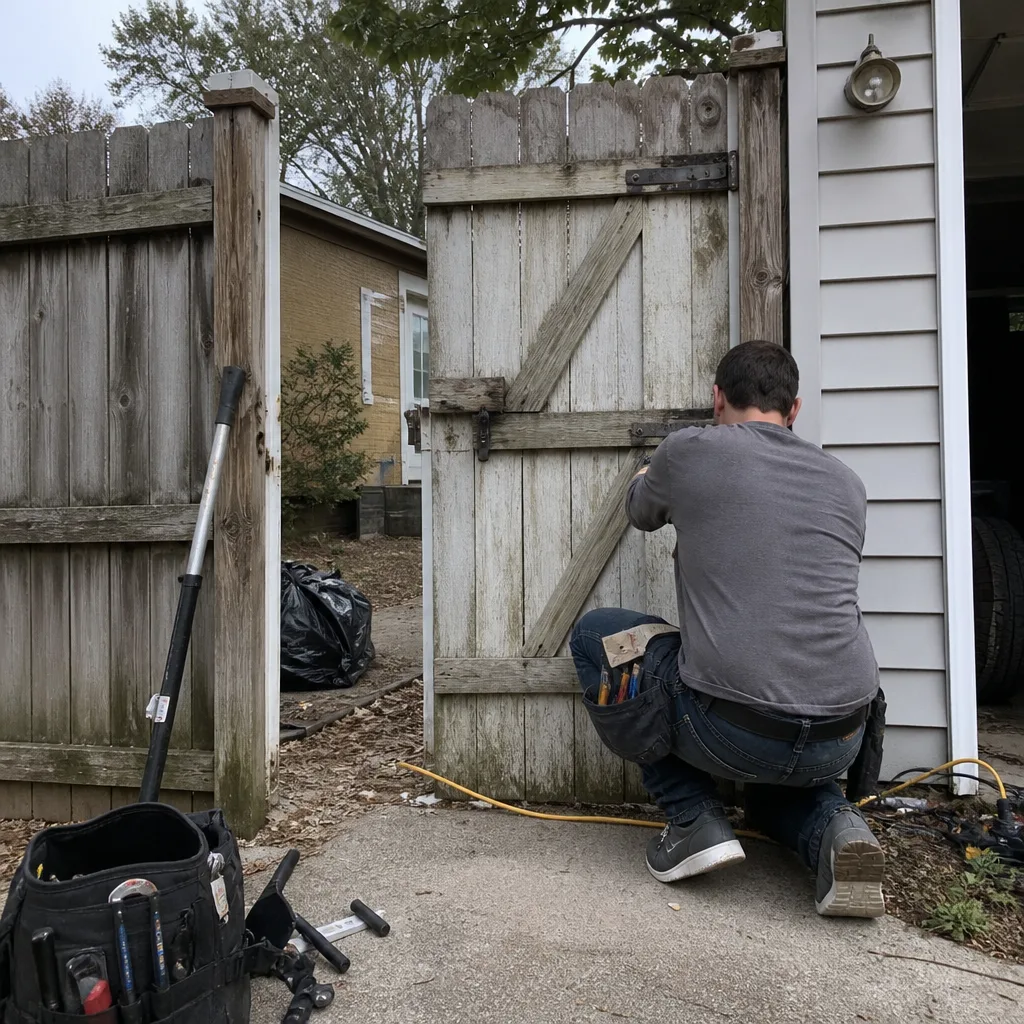 Before
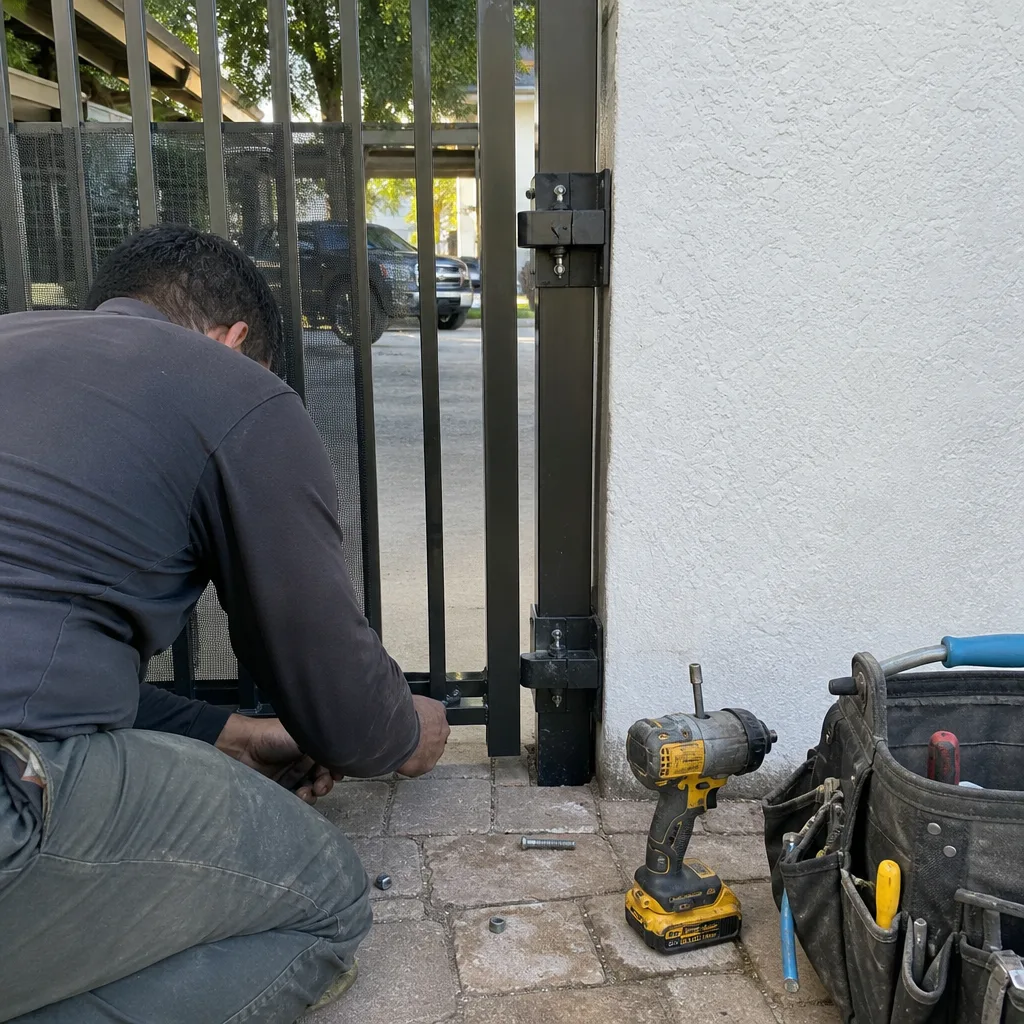 After
After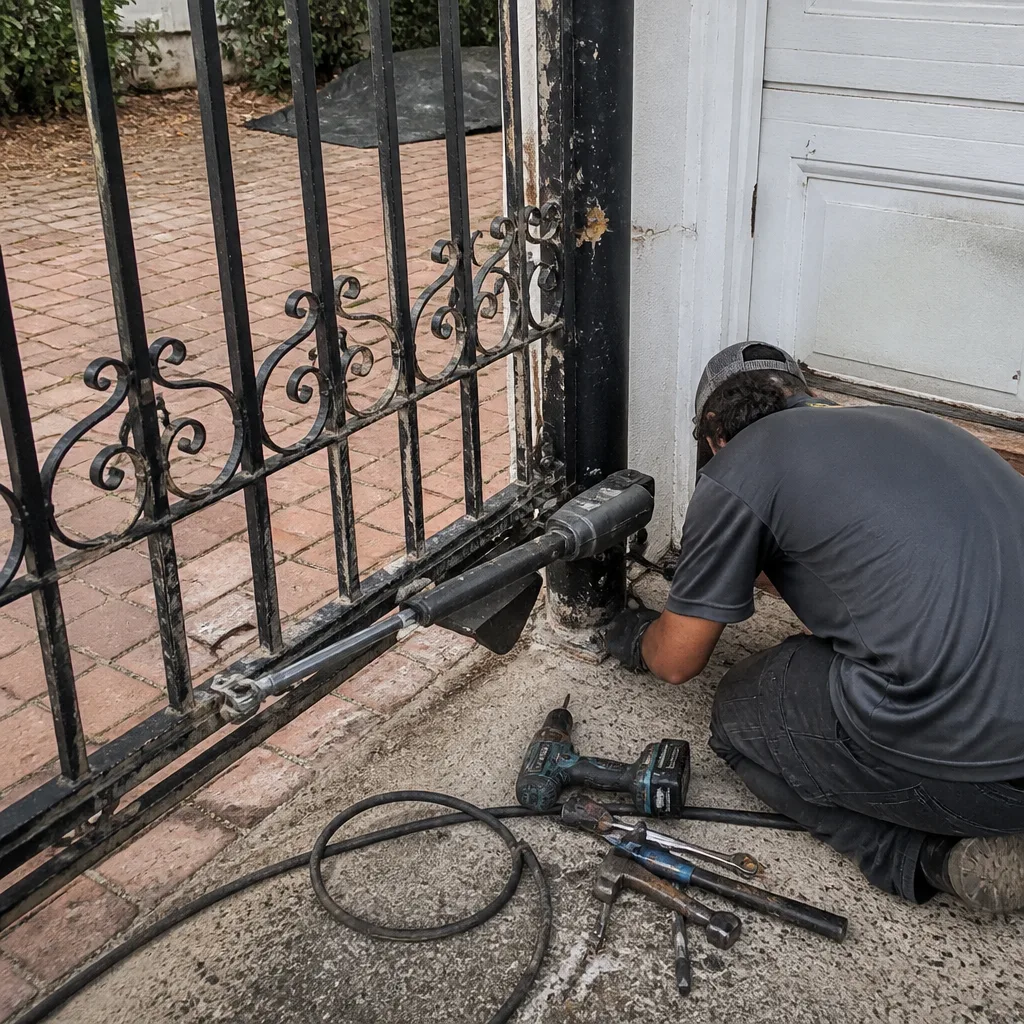 Before
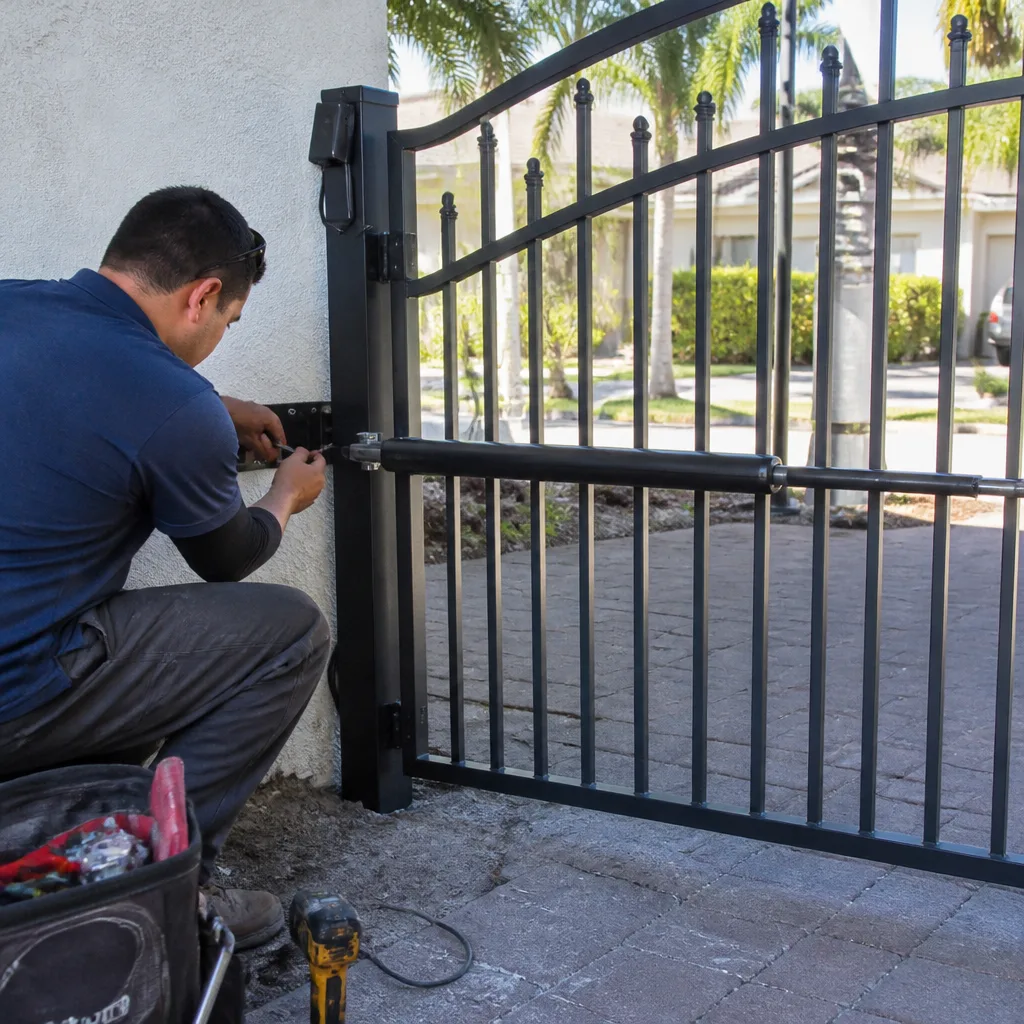 After
After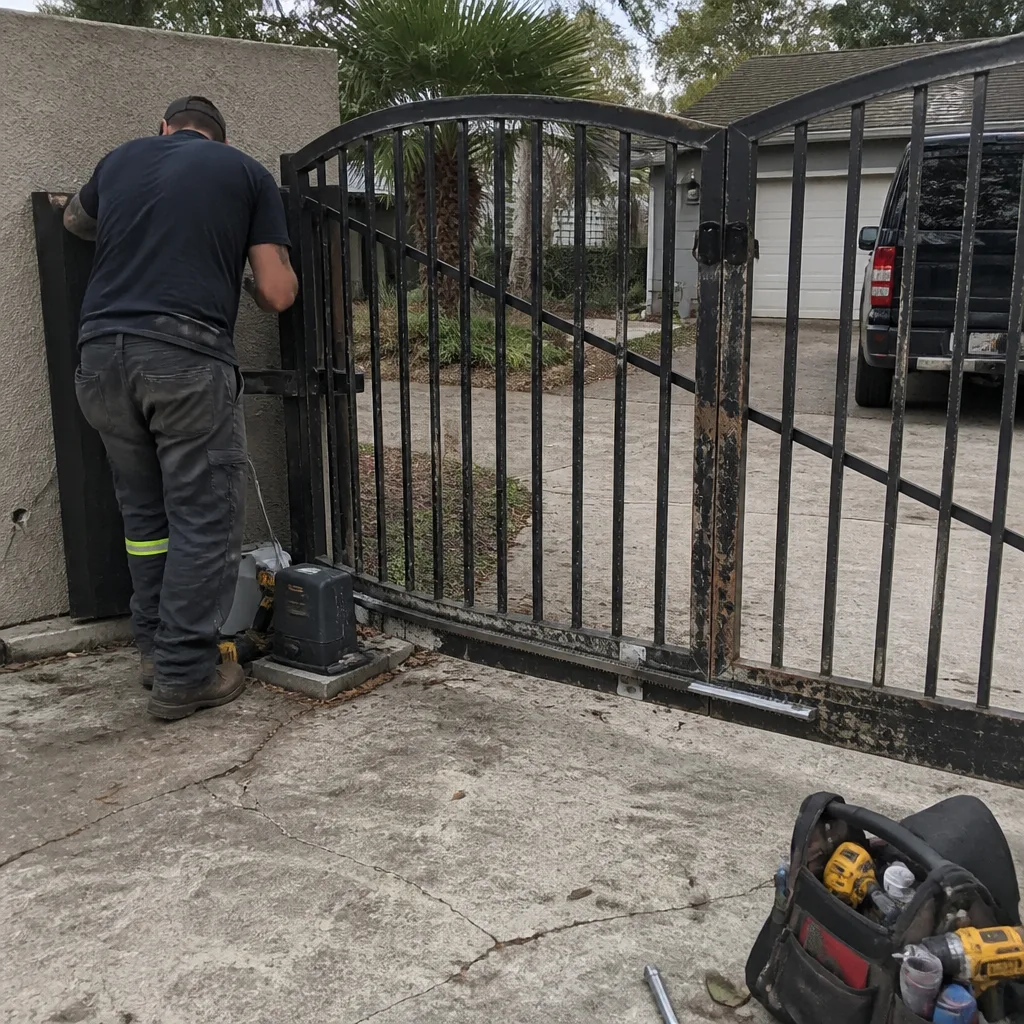 Before
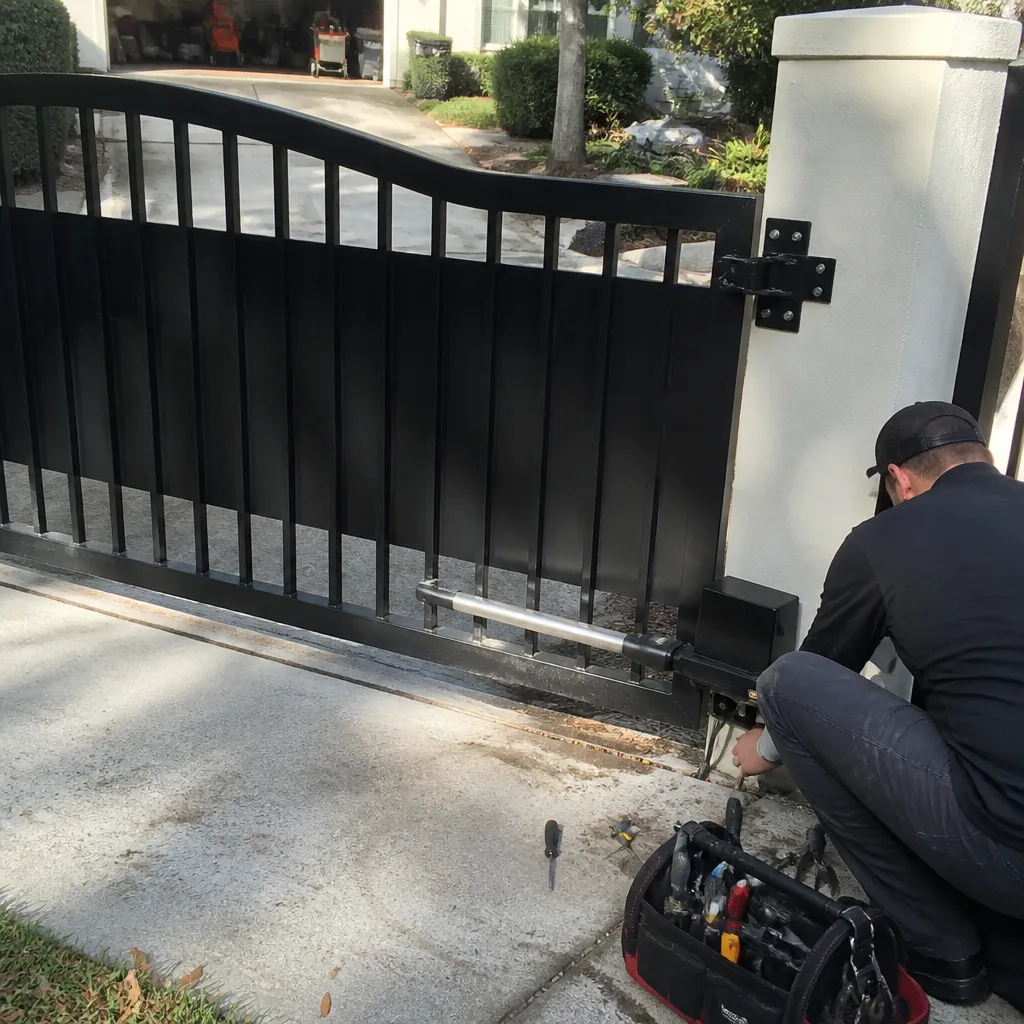 After
AfterWhen to Call a Professional
Call a professional when the work involves any of these: running electrical to a gate, installing a gate operator for the first time, moving posts, changing gate width, or replacing a gate under HOA review. For help choosing the right expert, read our How to Hire a Gate Repair Contractor in Tampa: A Step-by-Step Guide. Also call if you’re planning to sell and you know your gate operator was installed without a permit, or if you bought a home with an open permit connected to the gate. A specialist who knows Hillsborough County’s process can assess the work, quote it in writing, and handle the permit pull and inspection closure without you chasing paperwork. Latch and Post Gate Repair Tampa offers free estimates in Tampa, and our team handles permit checks as part of every electric gate estimate. Call (850) 789-6299 to walk through your specific project.
Frequently Asked Questions
Most gate repairs, including replacing hinges, latches, wheels, and like-for-like hardware, do not require a permit under the 2023 Florida Building Code. You only need a permit when the work alters the gate opening, moves posts, adds automation, or runs new electrical wiring. Call (850) 789-6299 if you’re unsure which category your repair falls into, and we’ll check the county requirements for your address.
A residential electrical permit for a gate operator in Hillsborough County typically runs between $100 and $350 depending on the scope, with the inspection fee usually included in that amount. Structural permits for gate posts and footings add more, typically $150 to $500. The exact fee is determined when the permit application is filed, and any reputable contractor will list it as a line item on your written quote.
If your gate operator was installed without a permit in Tampa, you can obtain a retroactive permit by scheduling an inspection and correcting any code deficiencies the inspector identifies. The correction work often costs more than the original permit would have. The issue will also surface at resale when the title company flags the unpermitted improvement, so it’s cheaper to address it before listing. Call (850) 789-6299 for an assessment of your specific setup.
Many HOAs in Hillsborough and Pinellas Counties require approval for any gate change visible from the street, including replacement of the gate panel itself, even when the county doesn’t require a permit. Check your HOA’s architectural guidelines before scheduling work. HOAs are not governed by the Florida Building Code’s permit exemptions; their rules are a separate contractual obligation.
You can install the mechanical portions of a gate operator yourself, but the electrical connection must be performed by someone licensed under Florida Statute 489 because it involves connecting a circuit to your home’s electrical panel. Installing safety devices incorrectly creates entanglement and pinch hazards, especially for kids and pets, which is why we recommend a trained professional for any operator that connects to power. Call (850) 789-6299 and we’ll explain what your specific operator requires.
You should receive the permit number, the final inspection report showing a passing result, the UL 325 documentation for any operator, and your warranty or guarantee information in writing. If the contractor cannot produce a closed permit, the job is not legally complete and the open permit will surface later at resale. Our 365-Day Done Right Promise covers every repair and installation we complete, and we document everything before we leave.
The Bottom Line
Gate repair in Florida is permit-free more often than homeowners expect, but the exceptions are specific and the consequences are real. Like-for-like hardware replacement needs no permit. Altered openings, moved posts, and new operator wiring all do. In Tampa and Hillsborough County, the electric gate operator is the most common permit trigger, and skipping it creates a resale problem that title companies now routinely catch. The fix is straightforward: check before you build, write the price down, close the permit, and keep the paperwork. Browse our more guides & resources for additional Tampa gate repair tips. A careful gate specialist handles all of that as part of the job, not as an add-on. When the work is done and the inspection is signed off, you have a gate that works and a home that sells clean.
Written by Cody Beckman, Owner at Latch and Post Gate Repair Tampa, serving Tampa since 2009.